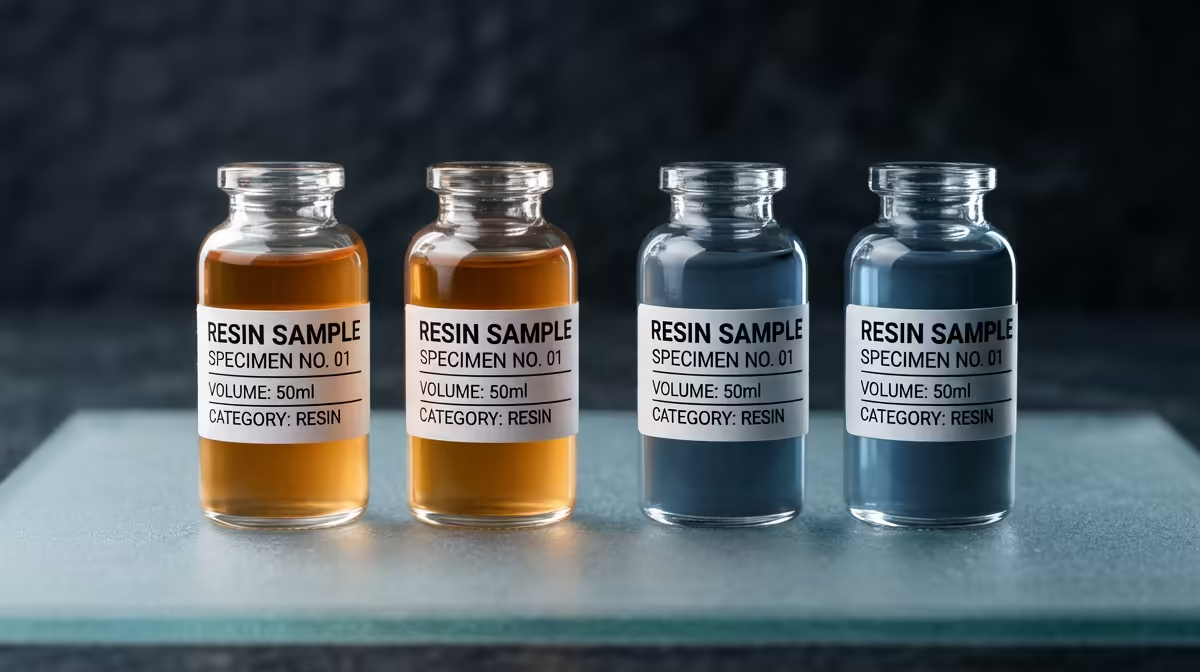
Pick the wrong resin and a model that looked perfect on screen snaps the moment you peel it off the plate. The four main resin types for 3D printing, standard, tough, water-washable and flexible, each cure into a part with very different mechanical behaviour, and matching the resin to the job is the single biggest factor in whether a print survives handling.
Quick Answer
Standard resin gives the sharpest detail but is brittle, so it suits display models and miniatures. Tough (ABS-like) resin trades a little crispness for impact resistance and works for functional parts. Water-washable resin cleans in plain water instead of isopropyl alcohol, and flexible resin cures into a rubbery, bendable part. Most SLA and MSLA printers run all four, so you choose per project rather than per machine.
Standard resin: detail first, durability second
Standard resin is the default bottle most people start with. It captures fine surface texture, thin walls and crisp edges, which is why tabletop miniatures, scale models and figurines almost always use it. The trade-off is brittleness. Drop a standard-resin part on a tiled floor and it can shatter, and thin sections like outstretched arms or sword blades crack under light pressure. For anything that sits on a shelf and is rarely touched, that fragility never becomes a problem. For a part that gets handled daily, it is a poor fit.
Tough and ABS-like resin: parts that take a knock
Tough resin, often sold as ABS-like resin, is formulated to absorb impact rather than fracture. It bends slightly before it breaks, which makes it the right choice for enclosures, brackets, snap-fit clips and prototype parts that get test-fitted repeatedly. You give up a small amount of fine detail compared to standard resin, and the cured surface can feel marginally less glassy, but a functional part that survives a drop is worth that compromise. If you are printing something that does a job rather than sits in a cabinet, start here.
Water-washable resin: skip the isopropyl alcohol
Conventional resin prints need an isopropyl alcohol (IPA) bath to rinse off uncured resin before curing. Water-washable resin removes that step. You rinse the part in plain water, which is cheaper, safer to store and far less smelly in a small SA flat or home office. The catch is that water-washed parts can be slightly more brittle than IPA-cleaned standard resin, and you should never pour resin-contaminated water down the drain. Collect it, let it cure under sunlight or a UV source, and dispose of the solids responsibly.
Flexible resin: rubbery, bendable parts
Flexible resin cures into a soft, elastic material rather than a rigid solid. It is the choice for phone bumpers, gaskets, wearable prototypes and any part that needs to flex and return to shape. Pure flexible resin is often blended with a portion of standard or tough resin to dial in the exact firmness, since a fully flexible part can be too floppy to hold its form. It is the most specialised of the four and the one you reach for least often, but nothing else does the job.
Matching resin to your printer and project
All four types work on standard SLA and MSLA machines, but check two things before buying. First, confirm your printer's LCD and light source suit the resin's cure wavelength, which is almost always 405nm for consumer resins. Second, match exposure settings to the specific bottle, since tough and flexible resins usually need longer cure times than standard. If you are still choosing hardware, the resin printer and curing gear in the 3D printing range stocked at Evetech covers the machines these resins are designed for. For the consumables side, gloves, spare FEP film and cleaning supplies turn up among the top-moving accessories on Evetech's best-seller list.
Frequently Asked Questions
Can I mix different resin types in one bottle?
Yes, and it is common practice. Blending flexible resin with standard or tough resin lets you tune the final firmness, and many makers cut tough resin into standard resin to add a little impact resistance without losing too much detail.
Do I still need to wash water-washable resin parts?
You do, but in water rather than isopropyl alcohol. Rinse the part thoroughly to remove all uncured resin, then UV-cure it. Skipping the rinse leaves a tacky, under-cured surface.
Which resin is best for tabletop miniatures?
Standard resin, because it holds the finest detail. Miniatures spend most of their life on a shelf or table, so the brittleness rarely matters, and the crisp edges show off the sculpt.
Is tough resin as detailed as standard resin?
Almost, but not quite. Tough resin gives up a small amount of fine surface detail in exchange for impact resistance, which is a fair trade for any part that gets handled or stressed.
How should I dispose of leftover resin and wash water?
Cure it solid first. Liquid resin and resin-contaminated water are hazardous, so expose them to UV or sunlight until they harden, then dispose of the cured solids with your normal waste.
Ready to start printing? Browse the resin printers and curing stations in Evetech's 3D printing range and match your machine to the resin your project needs.