Quick Answer
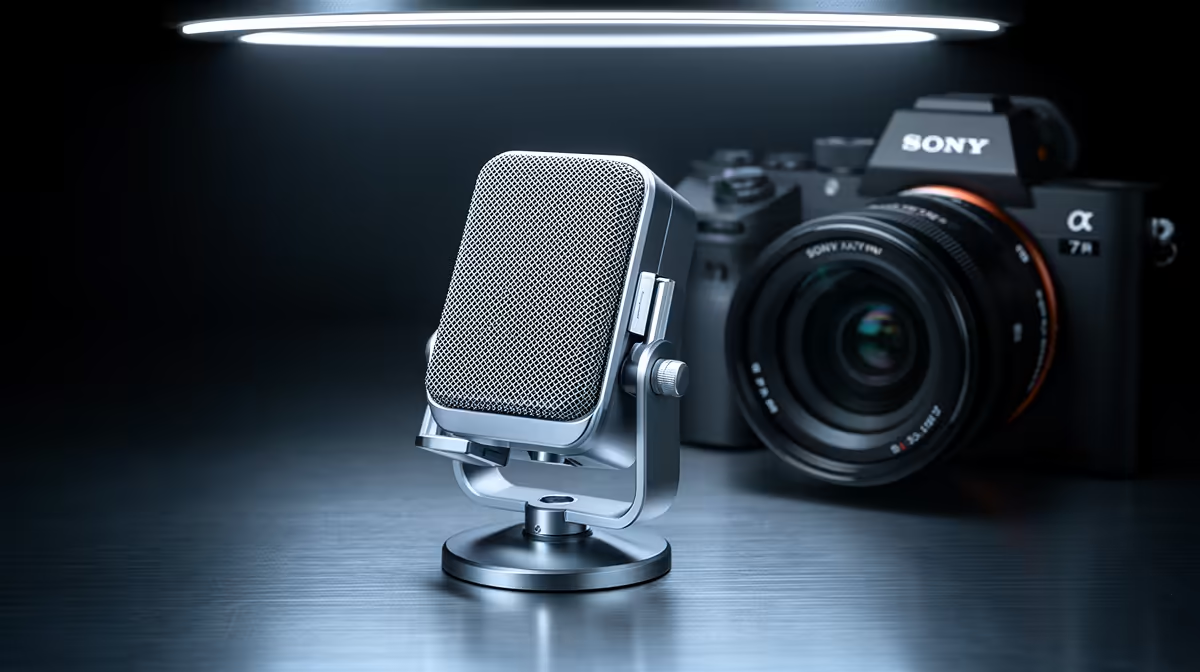
Cheap streaming mics under R600 almost always fail at the same three points: the USB cable's strain relief, the swivel mount, and the foam wind cover. Spend around R900 on a HyperX SoloCast or FiFine K669B and those failure points effectively disappear for the length of a degree.
Which part dies first on a budget mic
On sub-R500 USB mics sold for assignment recording, the micro-USB or USB-C connector is usually moulded straight onto a thin cable with no strain relief. After a semester of plugging and unplugging at a res desk, the solder joint cracks and audio cuts out mid-recording. The second weak point is the plastic yoke that holds the capsule: it loosens, so the mic slowly tilts off-axis and your voice drops 6-8 dB. A R900 SoloCast moves to an internal shock mount and a captive cable, which is why it survives where the R400 no-name does not.
What a R900 mic buys a varsity student
For voice notes, oral assignments and the occasional Discord study group, a cardioid condenser like the SoloCast or the FiFine K669B (around R600) is the sweet spot. Both run on USB bus power, need no audio interface, and reject most of the room behind them so a noisy res corridor stays out of your recording. Step up to a Rode NT-USB Mini near R3,000 only if you record a podcast weekly. For a one-off oral, the headset mic on a HyperX Cloud III is honestly fine and one less thing to carry.
FAQ
Is a USB mic better than a laptop's built-in mic for assignments?
Yes, noticeably. A laptop mic sits next to the fan and picks up keyboard clatter; a cardioid USB mic on a short stand cuts both. For a citable oral submission, a R600-R900 USB mic is the single biggest clarity upgrade you can make.
Do I need a pop filter or boom arm for student use?
Not for assignments. The bundled foam cover handles plosives at speaking distance, and the included desk stand is steadier than it looks. Add a boom arm later only if you start streaming regularly.
Will a budget USB mic work on a MacBook or Chromebook?
Most class-compliant USB mics, including the SoloCast and K669B, work plug-and-play on macOS, Windows and ChromeOS with no driver. Check the connector: many use USB-C now, so an older USB-A laptop may need a cheap adapter.
you submit", body="Record a 20-second voice sample at your actual res desk, then play it back on your phone speaker. If you can hear the fan or keyboard louder than your voice, move the mic 10cm closer and re-test before recording the real thing."