Quick Answer
Moving from console to PC, avoid overspending on a full-size RGB board you do not need. A R600-R1,400 tenkeyless mechanical (Redragon, Royal Kludge, Logitech) with reliable switches is the smart first keyboard. Skip R2,500+ premium boards until you know your switch preference.
Switches Over RGB Every Time
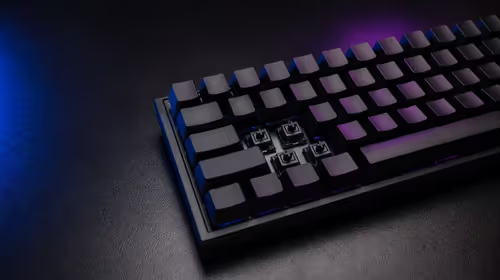
The switch under each key defines the feel: linear (red) for fast gaming, tactile (brown) for a typing bump, clicky (blue) if noise is fine. For console gamers moving to PC, a reliable mechanical with red or brown switches at R600-R1,400 outperforms a R2,500 RGB board with mushy switches. Hot-swap sockets let you change switches later without soldering, worth a small premium if you like to tinker.
Size, Wireless And Practical Fit
Full-size boards waste desk space; a tenkeyless (TKL) frees room for mouse sweep, and a 75% layout keeps arrow keys while shrinking further. Wireless mechanicals (R1,200-R2,500) tidy cabling but add a battery to manage; wired never lets you down for a fixed desk. For shared or late-night rooms, quieter linear or silent switches and a foam-dampened case keep the peace. Match the layout to your desk and your housemates.
What This Means For Your Budget
Anchor the decision to your actual use case and the price band that matches it. For console gamers moving to PC, that usually means a mid-tier pick from a known brand rather than the cheapest or the flagship. For students in res or shared digs, footprint and noise usually matter more than raw peak specs.
FAQ
Mechanical or membrane for a first gaming keyboard?
Mechanical is worth it for the feel and durability, and good ones start around R600. Membrane is fine on a tight budget but wears faster and feels mushier over time.
Which switch type should I pick?
Linear reds for fast, quiet gaming; tactile browns for a typing bump; clicky blues only if noise doesn't bother anyone nearby. Hot-swap boards let you change your mind later.
Is a tenkeyless keyboard better for gaming?
Often yes. Dropping the numpad frees desk space for low-sensitivity mouse sweeps. Keep full-size only if you regularly type numbers or use the numpad in apps.
switch type first (linear for gaming, tactile for typing), then a TKL or 75% layout to free mouse space; RGB and a numpad are the last things that matter.