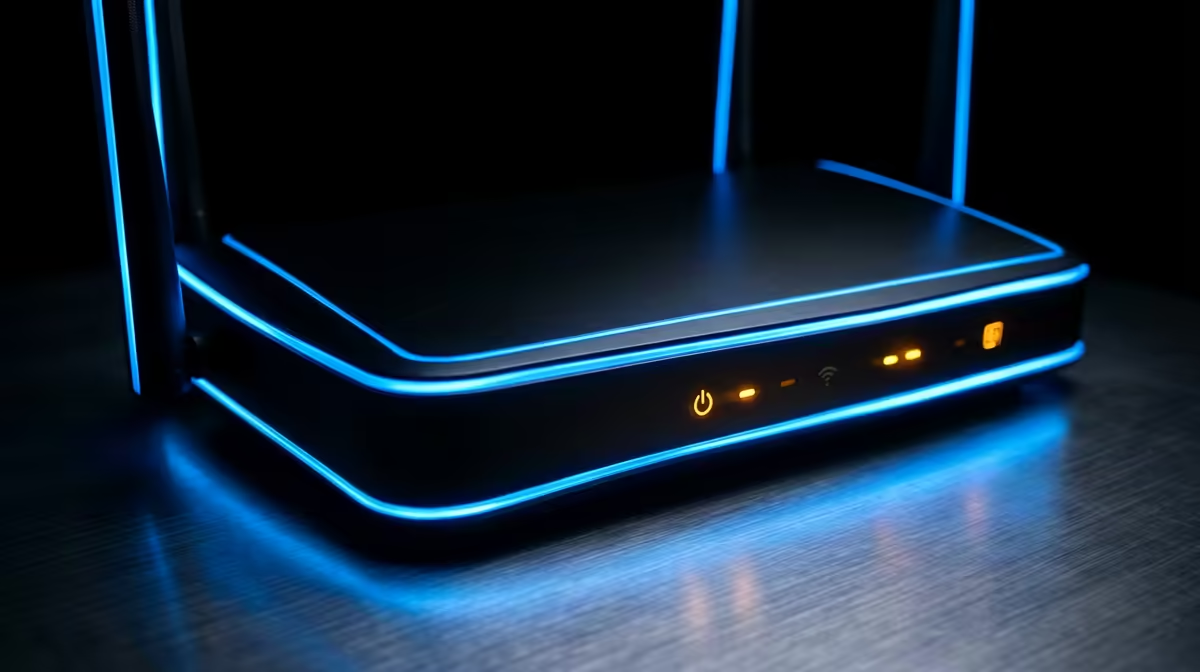
For the first time, a new Wi-Fi generation is not chasing a bigger headline speed. Ultra High Reliability is the official nickname for 802.11bn, the standard the Wi-Fi Alliance will brand as Wi-Fi 8, and the whole effort is built around making your connection steadier rather than faster. The goal is a link that holds up when the signal gets difficult, not one that posts a record number in ideal lab conditions.
Quick Answer
Ultra High Reliability, or UHR, is the IEEE 802.11bn nickname, and it targets dependability instead of peak speed. The headline aims are concrete: 25 percent better throughput in challenging signal conditions, 25 percent lower latency at the 95th percentile, and 25 percent fewer dropped packets, especially while roaming between access points.
What UHR actually promises
Every Wi-Fi standard before this one led with a faster top speed. Wi-Fi 8 changes the pitch. The IEEE set its targets around how the network behaves when conditions are not perfect, which is most of the time in a real home. The three numbers that define UHR are a 25 percent improvement in throughput when the signal is weak or congested, a 25 percent reduction in tail latency measured at the 95th percentile, and 25 percent fewer dropped packets when a device is moving between access points.
That 95th-percentile figure is the important one. Average latency on modern Wi-Fi is already low. What ruins a video call or a competitive game is the occasional spike, the worst one packet in twenty. UHR goes after those spikes directly, so the experience stays smooth rather than just looking good on a speed test.
Why reliability matters more than another speed bump
Most homes already have more Wi-Fi speed than their internet line or their devices can use. The pain points are different: a stream that buffers when someone walks into another room, a call that drops a word when the microwave runs, a game that lags for half a second at the worst moment. These are reliability problems, not bandwidth problems, and they are exactly what 802.11bn is engineered to fix. Steadier throughput in tough conditions and fewer dropped packets on the move is what a busy household actually feels.
When to expect it
Wi-Fi 8 is still in development. The standard is projected to be finalised around 2028, with Wi-Fi Alliance certification expected to begin in late 2027 and the first certified products following after that. In other words, this is the roadmap, not the shelf. Current Wi-Fi 7 and Wi-Fi 6E gear remains the right buy today, and you can compare what is available now in the networking range at Evetech. For a sense of which routers and adapters local shoppers are choosing, the accessories best sellers are a useful reference.
Frequently Asked Questions
Does Wi-Fi 8 make my internet faster?
Not in the way previous generations did. UHR is about consistency, not a higher peak. It aims to keep speeds steady in weak or congested conditions rather than raising the maximum number.
What does the 25 percent figure refer to?
The IEEE set three goals, each around 25 percent: better throughput in challenging conditions, lower 95th-percentile latency, and fewer dropped packets while roaming between access points.
Why focus on the 95th percentile of latency?
Average latency is already low on modern Wi-Fi. The rare worst-case spike is what disrupts calls and games, so targeting that tail delivers a smoother real-world experience.
When can I buy a Wi-Fi 8 router?
The standard is expected to finalise around 2028, with certification beginning in late 2027 and products following. Wi-Fi 7 hardware is the current sensible choice.
Is UHR the same as 802.11bn?
Yes. Ultra High Reliability is the nickname for the IEEE 802.11bn standard, which the Wi-Fi Alliance markets as Wi-Fi 8.
Upgrading your home network now? Explore the networking range at Evetech for current Wi-Fi 7 routers and adapters that deliver real gains today.