"It sounds quieter" is not evidence, however confident you feel saying it after swapping in a new set of fans. Memory of noise is unreliable, expectation bias is real, and the only way to actually know whether a fan upgrade changed anything is to measure the same thing twice under conditions you controlled deliberately.
Quick Answer
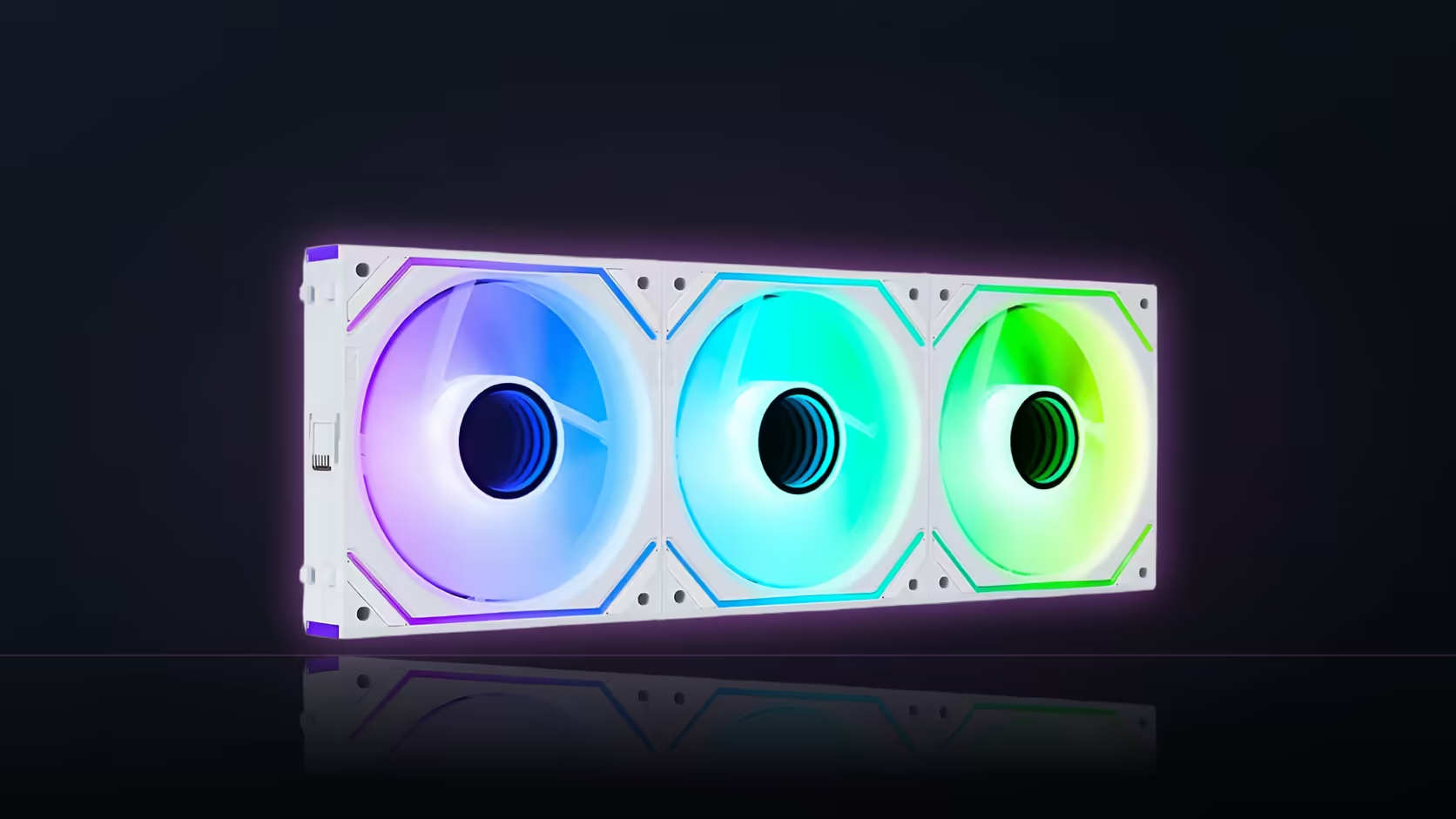
Proving that a noise reduction is real, rather than imagined or coincidental, means recording the same room under the same conditions before and after installing new fans such as AsiaHorse's Dawn Pro, which lists an as low as 6dB figure at the quietest point in its range. Same room, same time of day, same workload on the machine, both times. Nothing in the listing itself promises a reduction for any particular build, so the comparison has to come from your own machine, not from the spec sheet.
🎯 What has to stay constant between the two tests
Four things decide what you hear at any given moment: the room, the time of day, the position of the machine, and the workload it is running. Change any one of those between your before and after listening sessions and you are no longer isolating the fans as the variable, you are measuring a mix of everything that shifted.
💻 Choosing the right workload to test
Test whatever you actually use the machine for, not an artificial stress test that does not reflect real use. Idle noise and full-load noise behave very differently, and a fan swap that helps meaningfully at idle might make almost no audible difference once the system is under sustained gaming or rendering load, or vice versa.
📼 Recording tools that are good enough
A phone recording is not a calibrated instrument, but it does not need to be for this purpose. Two recordings made the same way, in the same spot, give you a usable comparison even without a trustworthy absolute decibel figure attached to either one.
🔁 Should the old fans be kept for the comparison?
Until the test is actually complete, yes. Being able to swap back to the original fans is the cleanest way to confirm a genuine difference rather than relying on memory of how the machine sounded before the change was made.
📉 What if the difference turns out to be small?
Then it is small, and that is a legitimate outcome rather than a failed test. Case design, component layout, and overall build quality often dominate what a machine sounds like far more than any single fan swap does, so a modest result does not mean the new fans are doing nothing. Vibration-dampening pieces from case accessories sometimes move the needle further than the fan swap itself did.
⚖️ Does the listing itself promise a reduction?
No. It states an as low as 6dB figure describing the fan's own quietest operating point, which is not a claim about what any specific build, case, or fan curve will sound like once installed. Any improvement you measure is a property of your particular build, not a guarantee carried by the product listing.
Matching fan curves between tests
If the before and after tests run at different fan curve settings, the comparison measures the curve change rather than the fans themselves. Keep the curve as close to identical as your board software allows across both tests for a fair result.
Frequently Asked Questions
What conditions need to stay the same between the two tests?
The room, the time of day, the machine's position and the workload it is running, since changing any of those affects what you actually hear.
Which workload is most useful to test with?
Whatever you actually use the machine for, since idle and full-load noise behave differently and a fan swap can help at one and not the other.
Is a phone recording good enough for a comparison?
Two recordings made the same way in the same location give a usable comparison, even if the absolute readings are not laboratory accurate.
Should the original fans be kept until testing is finished?
Yes, so a direct swap back remains possible as the clearest way to confirm whether a genuine difference actually exists.
What if the measured difference ends up being small?
That is still a legitimate result. Case design and other components often affect overall noise more than a single fan swap does.
Does the product listing itself promise a noise reduction?
No, it states an as low as 6dB figure for the fan's own quietest point, not a guarantee about how any particular build will sound.
Do fan curve settings need to match across both tests?
Yes, otherwise the comparison ends up measuring the change in curve rather than the actual difference between the fans themselves.
Want to test a fan upgrade properly instead of guessing?
Browse Evetech's case fan category to plan the swap before you start recording.