Two connectors that both carry lighting signals are not automatically interchangeable, and forcing the wrong one into the wrong header is exactly what good connector design tries to prevent. Addressable devices use a 5V three-pin ARGB connection, while older non-addressable lighting runs on 12V with four pins - two genuinely different systems that happen to sit close together on most boards.
Quick Answer
The two connectors are keyed and shaped differently precisely so a 5V three-pin plug cannot be forced into a 12V four-pin header, and vice versa. Every AsiaHorse lit accessory in this range, from R199 fans through to the R1,299 riser, connects over the 5V three-pin addressable standard throughout. If a device will not seat in a header, that mismatch is the design doing its job rather than a fault to work around.
🔍 What actually separates the two systems
A 5V three-pin ARGB connection carries an addressable data signal alongside power, letting each LED on a strip or device be controlled individually. A 12V four-pin RGB connection supplies power to non-addressable lighting, where the whole run changes colour together rather than LED by LED. They are electrically different systems built for genuinely different lighting technologies, which is why the industry keeps their connectors physically distinct rather than relying on labels alone.
Identifying a header correctly
Most current motherboards print a label beside each header naming it explicitly, and the pin count and spacing differ between the two types even before you read anything - three positions for addressable, four for standard RGB. Checking the label before connecting anything takes a few seconds and avoids any ambiguity.
🔌 If your board lacks a 5V header
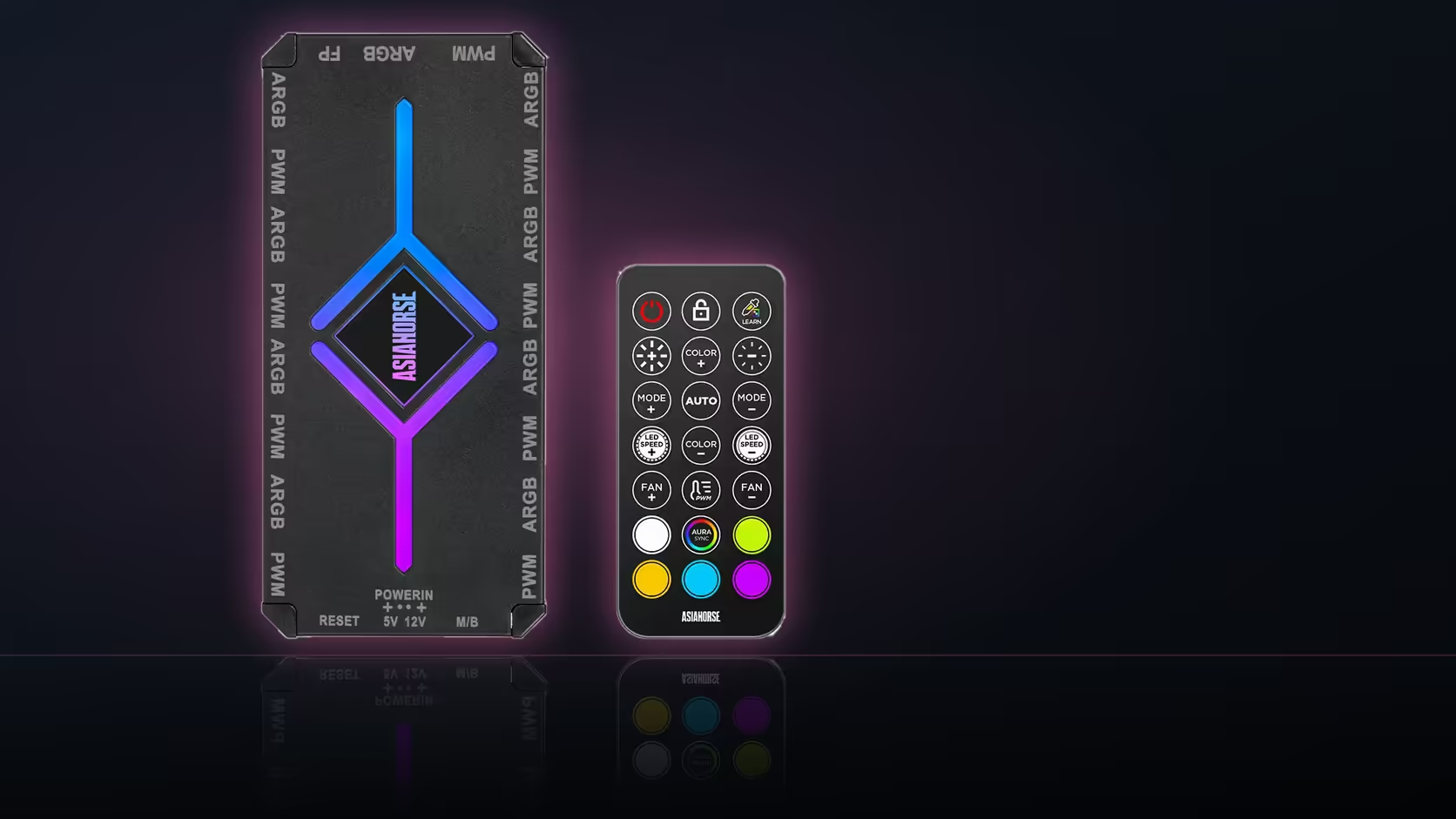
A board without a native addressable header still leaves a path to addressable lighting: a hub or controller that supplies the correct 5V three-pin connection, such as the AsiaHorse ASH-S1, which carries nine dedicated 5V three-pin ARGB ports independent of anything the motherboard itself offers.
There is no adapter that safely converts between the two systems, since they are different electrical standards rather than differently shaped plugs carrying the same signal - that distinction matters more than it might sound. Routing accessories for either connection type are available in the cable solutions range.
Frequently Asked Questions
How do the two connection types actually differ?
One carries an addressable data signal at 5V across three pins. The other supplies straightforward 12V power across four pins for non-addressable lighting.
Can the two be connected together at all?
The connectors are keyed and shaped differently specifically to stop a 5V device from seating in a 12V header, or the reverse.
Why keep the two systems physically separate?
Because they are electrically different standards, so treating the connectors as interchangeable is not something worth attempting even briefly.
Which system does this AsiaHorse range use?
Every lit accessory here, fans through to the riser, connects over the 5V three-pin addressable standard.
How do I identify which header is which on my board?
Boards label them directly, and the pin count and spacing differ too, with the addressable type carrying three positions rather than four.
What if my motherboard only has 12V headers?
A hub or controller providing the correct 5V three-pin connection, such as the ASH-S1, gives addressable devices a path even without a native board header.
Does an adapter exist between the two?
No - they are different electrical systems rather than differently shaped plugs, so an adapter is not the right answer here.
Getting your lighting connections right the first time?
Check the case accessories range for hubs that bridge missing headers, and the cable solutions category for the right leads.