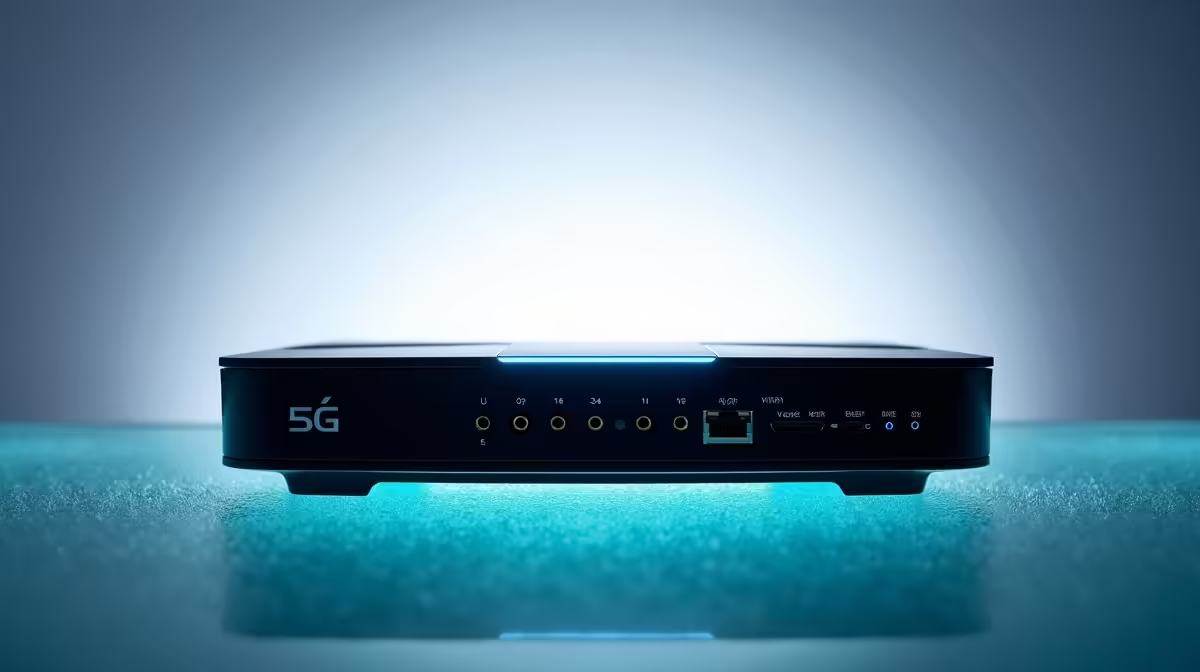
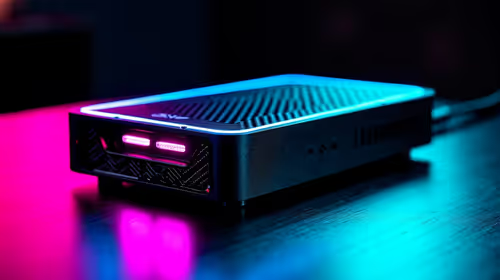
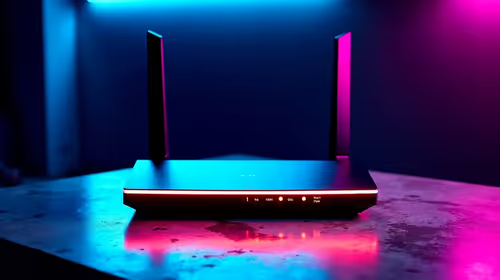
A 5G CPE router is the box that turns a mobile 5G signal into home Wi-Fi, no fibre trench or copper line required. CPE stands for Customer Premises Equipment, which simply means a device installed at your home that connects you to a network operator. Drop in a SIM, power it on, and it pulls the 5G signal from the nearest tower and shares it across your house as Wi-Fi.
Quick Answer
A 5G CPE router is a SIM-based device that receives the 5G signal from the nearest tower and broadcasts Wi-Fi through the home, acting as both modem and wireless access point in one unit. The Huawei H155, bundled by Vodacom and MTN, is a widely recognised SA example, offering Wi-Fi 6 and real-world metro speeds in the region of 450 to 650 Mbps.
What "customer premises equipment" means
The term sounds formal but the idea is plain: CPE is any networking device that sits at the customer's location to connect them to the operator's service. A fibre ONT is CPE. So is the router your ISP hands you. A 5G CPE router is the same concept for mobile broadband, the unit at your end of a Fixed Wireless Access link that bridges the operator's 5G network and your home devices.
How a 5G CPE router works
The device combines two jobs that used to need two boxes. First it acts as a modem, using its SIM to lock onto the strongest 5G signal from a nearby tower. Then it acts as a wireless access point, distributing that connection as Wi-Fi to your phones, laptops and TVs. Because it is wireless on both ends, there is no cable into the wall, which is the whole point: fibre-like speeds in areas where laying fibre is slow or impractical.
Placement matters more than with fibre. Since the unit depends on the tower signal, a spot near a window or higher in the home usually pulls a stronger, steadier connection than a cupboard on the ground floor.
The Huawei H155 as an SA example
The Huawei H155 is the model most South Africans will recognise, thanks to Vodacom and MTN bundles that have made it one of the country's popular home routers. It supports Wi-Fi 6, which means better stability and capacity for a household full of streamers and remote workers, with headroom for a large number of connected devices at once. While the operator quotes high theoretical peak figures, the realistic experience in metro areas on Vodacom or MTN 5G lands roughly in the 450 to 650 Mbps band, which is comfortably enough for 4K streaming, video calls and online gaming. To extend coverage to far rooms you can pair it with mesh units or extenders from the networking range.
When you actually need one
A 5G CPE router makes sense when fibre is not available at your address, when you want a quick connection without a lengthy installation, or when you need a portable home internet option you can move between properties. If you already have stable fibre, a CPE router is usually a complement for backup rather than a replacement. Coverage is the deciding factor: check that your area has solid 5G from your chosen operator before committing, because the device is only as good as the tower signal it receives. Useful add-ons like cables and mounts sit in the accessories best sellers.
Frequently Asked Questions
What does CPE stand for?
Customer Premises Equipment. It is any networking device installed at the customer's location to connect them to an operator's service, including a 5G CPE router, a fibre ONT or an ISP-supplied router.
Do I need fibre to use a 5G CPE router?
No. The whole point is that it works over the mobile 5G network using a SIM, so it suits areas where fibre is not available or where you want internet without an installation.
How fast is a 5G CPE router in South Africa?
Operators quote high theoretical peaks, but in metro areas on Vodacom or MTN 5G a realistic experience is roughly 450 to 650 Mbps, which handles 4K streaming, gaming and video calls comfortably.
Where should I place a 5G CPE router?
Near a window or higher up in the home, since it depends on the tower signal. A position with a clearer line to the tower gives a stronger, steadier connection than a ground-floor cupboard.
Is a 5G CPE router better than fibre?
Neither is simply better. Fibre is more consistent where available, while 5G CPE is faster to set up and works where fibre does not reach. Many people use 5G CPE as a primary link without fibre, or as a backup alongside it.