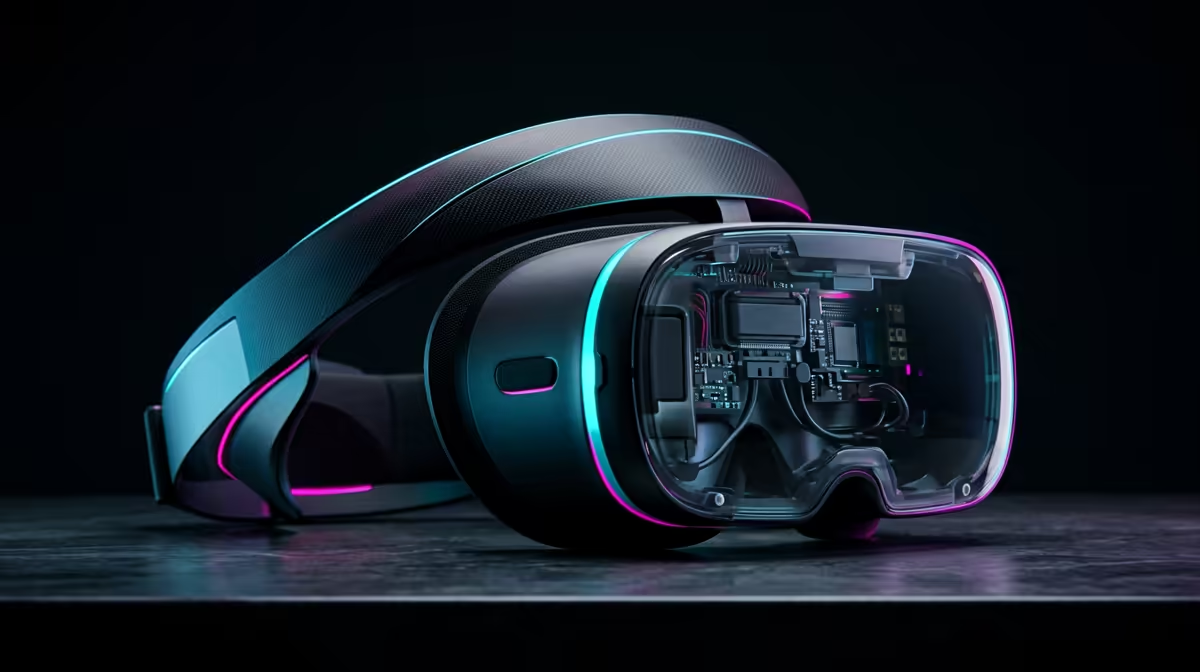
Three letters get thrown around as if they mean the same thing, and they do not. VR replaces everything you see with a rendered world, MR blends digital objects into a live view of your actual room, and AR layers information over reality through a phone or glasses. The confusion is understandable, because a single modern headset like the Quest 3 can do two of the three from one device, but the underlying ideas are genuinely different.
Quick Answer
VR fully replaces your view with a computer-generated world. MR blends virtual objects into a live camera feed of your real surroundings. AR overlays digital information onto the real world, usually through a phone or lightweight glasses. A colour-passthrough headset such as the Quest 3 delivers both VR and MR.
VR: a world that replaces your own
Virtual reality seals you off from your surroundings and drops you into a fully rendered environment. The headset's screens and motion tracking convince your senses that you are standing somewhere else, whether that is a game arena, a virtual cockpit, or a quiet design studio.
Because VR controls everything you see and hear, it is the most immersive of the three. That immersion is also why VR needs a clear, safe play space, since you genuinely cannot see the couch you are about to walk into.
MR and AR: where digital meets real
Mixed reality and augmented reality both keep the real world in view, but they differ in how deeply the digital layer interacts with it.
AR is the lighter touch. It overlays information, a navigation arrow, a label, a floating window, onto a view of reality, typically through a phone camera or a pair of AR glasses. The digital content sits on top of the world without truly understanding the space around it.
MR goes further. A mixed-reality headset reads the geometry of your room and places virtual objects that respect it, so a digital screen can hang on your actual wall or a game character can hide behind your real sofa. The Quest 3 does this through colour passthrough cameras that feed your real surroundings into the headset in real time, then composite virtual elements on top.
Where XR fits in
You will also see the term XR, short for extended reality. It is an umbrella, not a fourth technology: XR simply covers VR, MR, and AR together. When a product is described as an XR device, it usually means it can shift between immersive VR and passthrough MR depending on the app you launch.
Which one suits you
For gaming and total immersion, VR is the draw. For productivity, fitness apps that keep you aware of your room, or mixing virtual content with real surroundings, MR is the more practical mode, and it is why passthrough headsets have become so popular. AR through glasses or a phone suits quick, glanceable information rather than deep immersion. When you are ready to choose a headset or start with a pair of AR glasses, the accessories best sellers at Evetech round out whatever device you pick with the comfort and connectivity extras that matter.
Frequently Asked Questions
Is the Quest 3 VR or MR?
Both. It runs fully immersive VR games and, thanks to its colour passthrough cameras, also handles mixed reality by blending virtual objects into a live view of your real room.
What is the difference between MR and AR?
AR overlays digital content on the real world without understanding the space, usually via a phone or glasses. MR maps your physical room so virtual objects interact with real surfaces, which needs more sensors and processing.
Do I need a powerful PC for VR?
Not always. Standalone headsets like the Quest run on their own onboard hardware, while PC-tethered headsets need a capable graphics card. Check whether the headset is standalone or PC-driven before buying.
Can AR glasses replace a monitor?
Some AR glasses project a large virtual display for media and light work, but current models suit glanceable info and entertainment more than all-day productivity. The technology is improving quickly.
Is XR a separate technology?
No. XR is an umbrella term covering VR, MR, and AR together. A device marketed as XR usually means it can switch between immersive and passthrough modes.