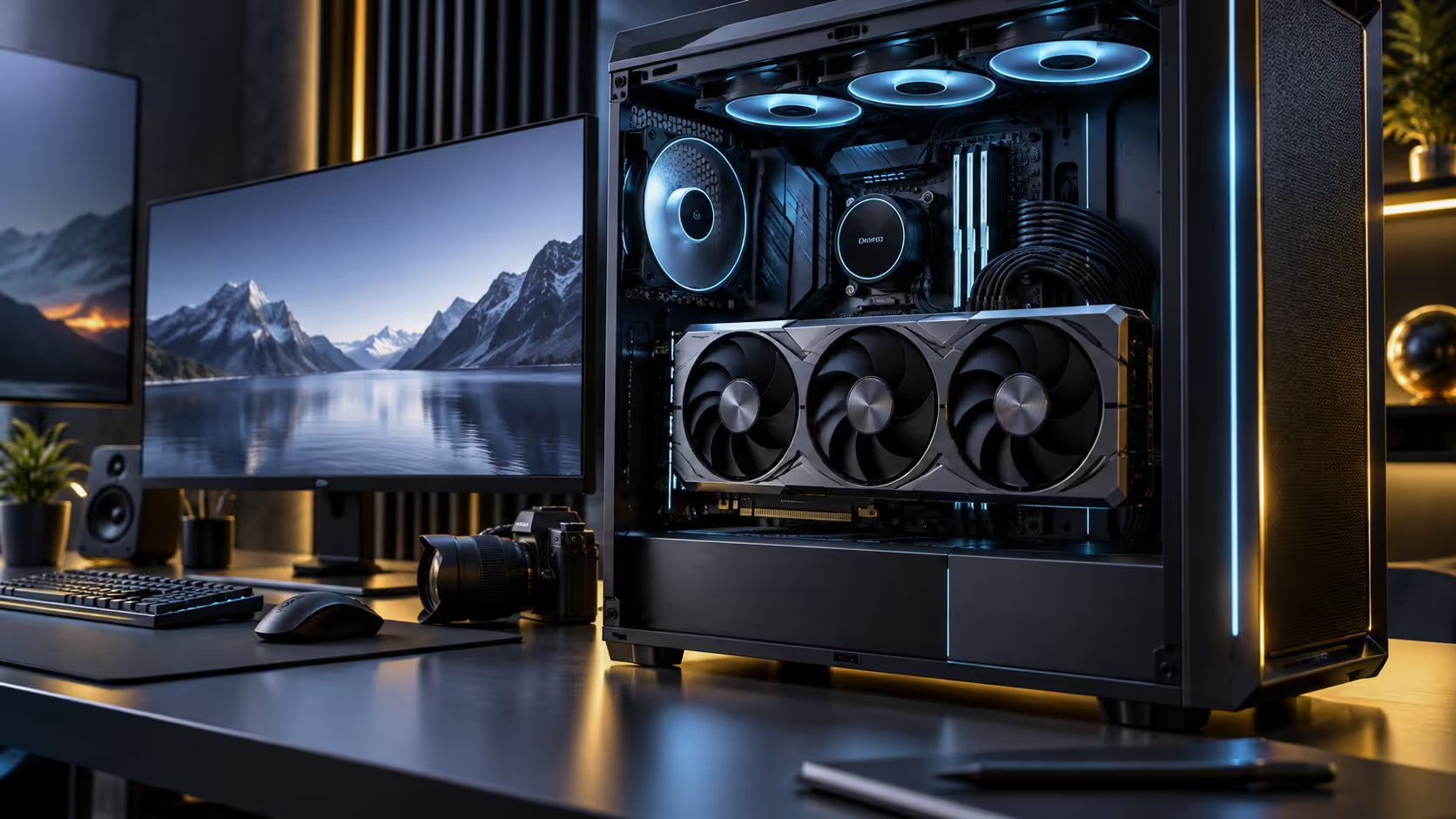
A card rated at 4.7 slots wide is not a spec you can eyeball from a product photo, and it is the single most common reason a flagship card gets returned within its first week. Checking slot width against your actual case before you buy avoids that trip entirely.
Quick Answer
Check slot height and card length against your case's published clearance, confirm the power connector your supply needs to provide, and confirm where the warranty is actually handled before paying for a 4.7-slot card. A card such as the R119,999 ROG Astral Edition 20 takes up nearly five rear bracket positions once installed, and that measurement is the one most builders skip.
📏 The measurement everyone forgets
Card length gets checked because it is the single number every listing leads with. On the ROG Astral Edition 20 that figure is 361mm, long enough to rule out most compact cases before height even enters the conversation. Height, meaning how far the card extends above the slot line toward the side panel, is published less consistently and is the dimension that actually determines whether the side panel closes on a wide card, particularly once a glass panel leaves little room to spare near the board.
Measure your case's clearance from the slot line to the glass, not just the advertised "supports large GPUs" language, and compare it against the card's stated height before ordering anything. Even a shortfall of 5mm between the two figures is enough to keep a tempered-glass panel from closing flush.
⚡ Confirm the connector, not just the wattage
A supply rated well above the card's power draw can still be the wrong supply if it lacks the specific connector the card actually uses. This model draws through a 16-pin power connector while a GC-HPWR contact in the slot handles a second path, and a cable set has to cover both, not just clear one wattage figure above 1000W.
🛡️ Where the warranty actually lives
On a card at this price, confirm the retailer handles warranty and support locally rather than routing a fault back through an international process. A local warranty path is the difference between a courier collection and weeks of waiting if something goes wrong on a card this expensive.
Check the case range for published clearance figures before you buy, and compare specific mid-tower cases if you are building around a card this size rather than retrofitting an existing case. A full tower typically offers 30 to 50mm more clearance than a mid-tower of similar price, which is often exactly the margin a card this size needs. Browse the graphics card lineup itself for the exact dimensions of the specific model you are considering before measuring anything else.
Frequently Asked Questions
What is the most commonly missed measurement on a 4.7-slot card?
Height from the slot line to the side panel, not length. Length gets checked because it is the headline number; height decides whether the glass actually closes.
Does a 4.7-slot card need a specific power supply wattage?
Wattage matters, but the connector type matters just as much, and the two are not the same question. A supply rated well above the card's draw is still the wrong choice if its cabling does not match the card's actual connector.
Should I buy this card if my case is a compact mid-tower?
Only after measuring clearance directly, since "mid-tower" covers a wide range of internal dimensions and a compact model may not clear a card this wide.
Why does warranty location matter for an expensive card?
A fault on a R119,999 card is expensive to be without for long. Confirming support is handled locally rather than internationally shortens that wait considerably.
Ready to check your case before you check out?
Measure height as carefully as length, and confirm the connector before you commit.