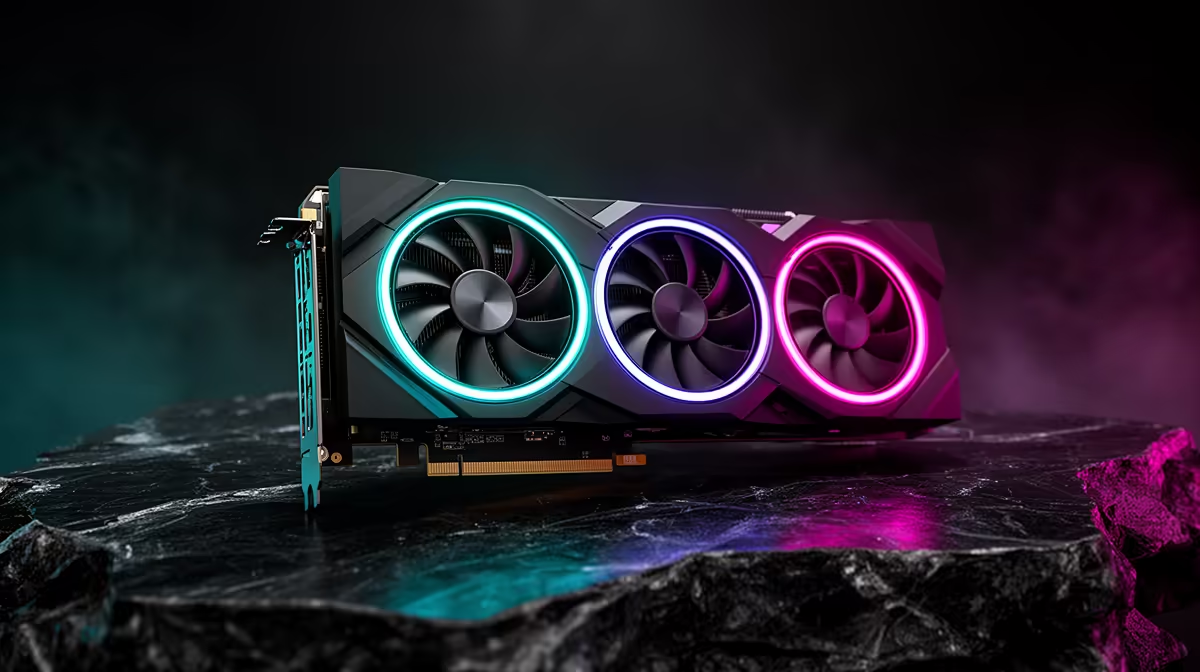
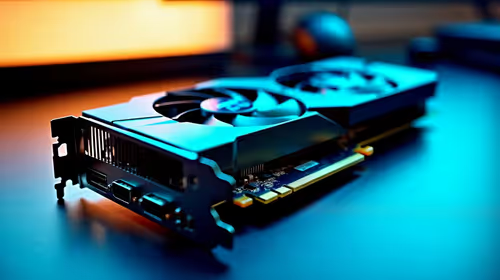
The instinct with any graphics card is to watch the price and pounce when it dips. That instinct is incomplete in 2026, because price is only one of several signals worth tracking. GPU makers reportedly trimmed consumer production by 30% to 40% in the first half of the year, which means a wait or buy GPU decision now hinges as much on whether the card you want is even in stock as on what it costs. In South Africa specifically, supply trends and VRAM headroom deserve a seat at the table next to the rand figure.
Quick Answer
Look beyond price at three things: VRAM headroom for the games and resolutions you actually run, current in-stock availability locally, and the supply trend. With production reportedly cut 30% to 40% in early 2026, a card that is well-priced and in stock today may not be in three months. If it meets your VRAM needs and you can buy it now, waiting carries real risk.
Why Price Alone Misleads You Now
In a normal market, waiting usually pays: prices drift down as a generation matures. A supply squeeze inverts that logic. When makers cut how many cards they push into the channel, the usual price erosion slows or reverses, and the cheapest moment may already be behind you. Scarcity tends to firm up prices rather than soften them.
That is why a 2026 decision starts with availability, not the sticker. A theoretical lower price on a card nobody can ship is worth nothing. You can sanity-check what is genuinely available by browsing the graphics card range at Evetech rather than chasing rumoured prices that may not survive the supply trend.
VRAM Headroom Is the Spec That Ages Worst
If you buy a card to keep for a few years, video memory is the spec most likely to bite you. Modern games at higher resolutions and with detailed texture packs lean hard on VRAM, and a card that runs fine today can stutter tomorrow as titles demand more. A small raw-performance gap between two cards matters less over a card's life than a difference in memory capacity.
Match the VRAM to how you actually play. For 1080p gaming, a mid-tier card with a healthy memory buffer covers most titles comfortably. Step up to 1440p or 4K, or run memory-hungry games and creative apps, and headroom decides whether the card stays usable in two years. The card with more VRAM is usually the safer hold, even at a slightly higher price.
Reading the SA Supply Trend
South African buyers feel global production cuts on a delay, because stock has to clear distribution before it reaches local shelves. When makers reportedly pull 30% to 40% of consumer production in the first half of the year, the practical effect locally is thinner availability and a narrower window to buy at a given price. The downside of being too patient is no longer just a missed discount, it is a card that is simply harder to get.
The sensible move is to treat in-stock availability as a buy signal in its own right. If the card meets your VRAM needs, sits at a fair rand price, and is in stock, that is hard to improve by waiting in a constrained market. Keeping an eye on the top-selling GPUs gives a quick read on what is realistically obtainable right now.
Frequently Asked Questions
Should I buy a GPU now or wait in 2026?
If the card meets your VRAM needs, is fairly priced, and is in stock, buying now is the safer call this year. Reported production cuts of 30% to 40% mean availability can tighten, so waiting risks both a higher price and the card being harder to find.
How much VRAM do I need for gaming in 2026?
It depends on resolution. For 1080p a solid mid-range memory buffer handles most titles, while 1440p and 4K, or texture-heavy games, want more headroom. Since memory demands keep rising, erring toward more VRAM helps the card stay usable longer.
Why does production being cut affect my decision?
Fewer cards entering the channel slows the usual price drops and thins availability. That removes the main reward for waiting and adds the risk of the card selling out, which is why availability now weighs as heavily as price.
Does the supply situation hit South African buyers differently?
Yes. Local stock arrives after clearing global distribution, so production cuts reach SA shelves with a delay and less buffer, making in-stock availability a stronger buy signal locally.
Is a slightly more expensive card with more VRAM worth it?
Often yes, for a card you plan to keep. A small price gap matters less over a few years than a difference in memory, the spec most likely to limit a card as games grow more demanding.
In a tighter 2026 market, the right GPU is the one that meets your VRAM needs and is actually in stock, not the one you are still waiting to drop in price. Check live availability and current rand pricing on the graphics card range at Evetech and make your wait-or-buy call with the full picture.