Quick Answer
DDR5 speed becomes a bottleneck when you run the slow 4800 default instead of the rated 6000 MT/s — that gap costs 10–15% in CPU-bound gaming. Above 6000, extra speed rarely helps: AMD's Infinity Fabric sweet spot is 6000, and most gaming is GPU-bound at 1440p/4K anyway. A 32GB DDR5-6000 CL30 kit (around R2,800–R3,400 at Evetech) with EXPO/XMP enabled clears speed as a concern.
The Speed Bottleneck That Is Real
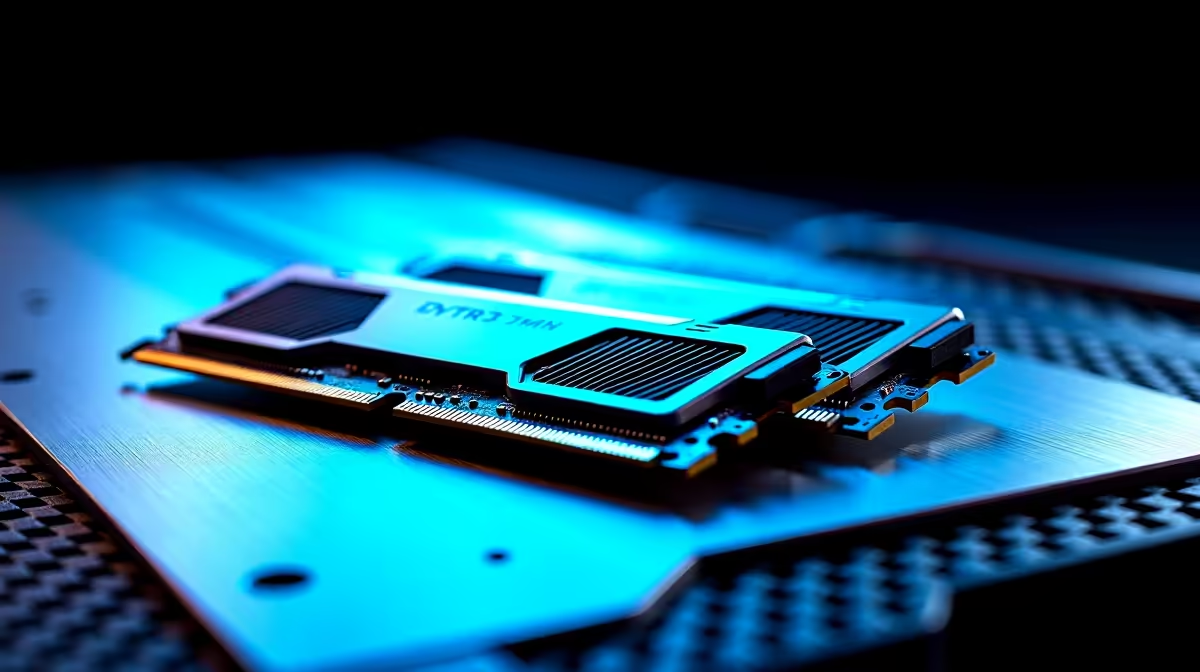
The genuine speed bottleneck is leaving RAM at its 4800 default — failing to enable EXPO (AMD) or XMP (Intel). That starves the CPU of bandwidth and costs 10–15% performance in CPU-bound titles. Enabling the rated 6000 profile removes this bottleneck for free. So the first speed question is not "how fast" but "did I turn the profile on."
When Higher Speed Stops Helping
Past DDR5-6000, gains shrink fast. On AMD, the Infinity Fabric runs best at 6000 — pushing to 6400+ can force it to decouple and even raise latency. On Intel, higher clocks help some productivity tasks but give single-digit gaming gains. And in GPU-bound 1440p/4K play, the GPU is the limit, so RAM speed barely registers regardless of platform.
The Right Target
For nearly every build, DDR5-6000 CL30 is the speed to buy — fast enough to avoid bottlenecking the CPU, well-priced, and stable. Enable EXPO or XMP and verify 6000 in CPU-Z. If you still feel limited after that, the bottleneck is the CPU (1080p) or GPU (1440p/4K), not RAM speed.
FAQ
When does RAM speed bottleneck gaming?
When it runs at the slow 4800 default instead of rated 6000 — that costs 10–15% in CPU-bound titles. Enable EXPO or XMP to fix it. Above 6000, extra speed gives little, especially at 1440p/4K.
Is DDR5 faster than 6000 worth it?
Rarely for gaming. AMD's Infinity Fabric peaks at 6000; beyond that latency can worsen. On Intel, higher clocks give single-digit gaming gains. A 6000 CL30 kit is the practical best for most builds.
How do I know RAM speed is not my bottleneck?
Enable EXPO/XMP and verify 6000 in CPU-Z. If performance still feels limited, the cause is the CPU at 1080p or the GPU at 1440p/4K — not RAM speed, which is handled at 6000.
speed bottleneck is the 4800 default — enable EXPO or XMP for 6000 and verify in CPU-Z; past that, look at the CPU or GPU, since faster RAM gives little beyond the sweet spot.