Quick Answer
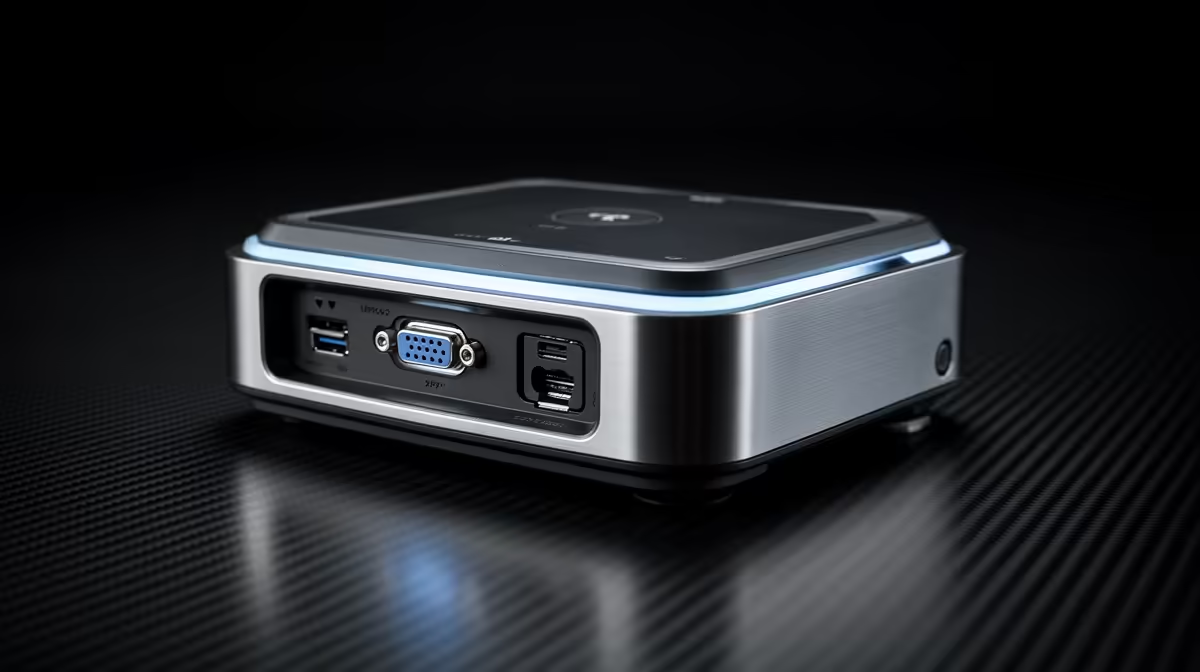
Premium docking stations are worth it when they remove a real bottleneck: ports, power, display support, noise or reliability. For a robotics project, pay in the R700-R4,500 range only when USB-C Power Delivery, HDMI 2.0, gigabit Ethernet and 10Gbps USB changes daily work.
When Premium Spend Makes Sense
Start with the part of the docking station that gets used every day. A shortlist built around Dell WD19S, UGreen Revodok and Anker 555 USB-C hub is useful only after you confirm the desk space, port type, power draw and device support in the actual room. SA buyers should also allow for delivery time, warranty support and one small accessory such as a cable, mount, pad or adapter.
Price And Spec Floor
The spec floor is USB-C Power Delivery, HDMI 2.0, gigabit Ethernet and 10Gbps USB. Anything below that can still work, but it leaves less headroom for a new monitor, laptop, game, class project or shared-room layout. Keep the first spend around R700-R4,500 unless the workload clearly proves that a higher tier saves time every week.
SA Compatibility Checks
Do not let the upgrade steal budget from the part that actually affects use. If the current limit is heat, noise, weak Wi-Fi, poor mic clarity, low storage or desk wobble, solve that first. If the issue is only cosmetic, a balanced docking station beats the premium tier.
FAQ
What is a sensible docking station budget for a robotics project?
Use R700-R4,500 as the working SA budget. Below that, check carefully for underpowered USB-C, single-display limits, heat and missing Ethernet; above that, the upgrade must add a feature you will use every week.
Which docking station spec should I check first?
Check USB-C Power Delivery, HDMI 2.0, gigabit Ethernet and 10Gbps USB before comparing cosmetic extras. That single check prevents most mismatches with monitors, laptops, routers, cases or shared-room layouts.
When should I skip the premium docking station?
Skip premium when a balanced option already solves the daily job. Spend more only if the better model removes a real limit such as heat, noise, weak ports, poor battery life or unstable 60fps capture.
measure the space, confirm the port or socket, and compare one named option against your current device so the upgrade fixes a real limit.