Quick Answer
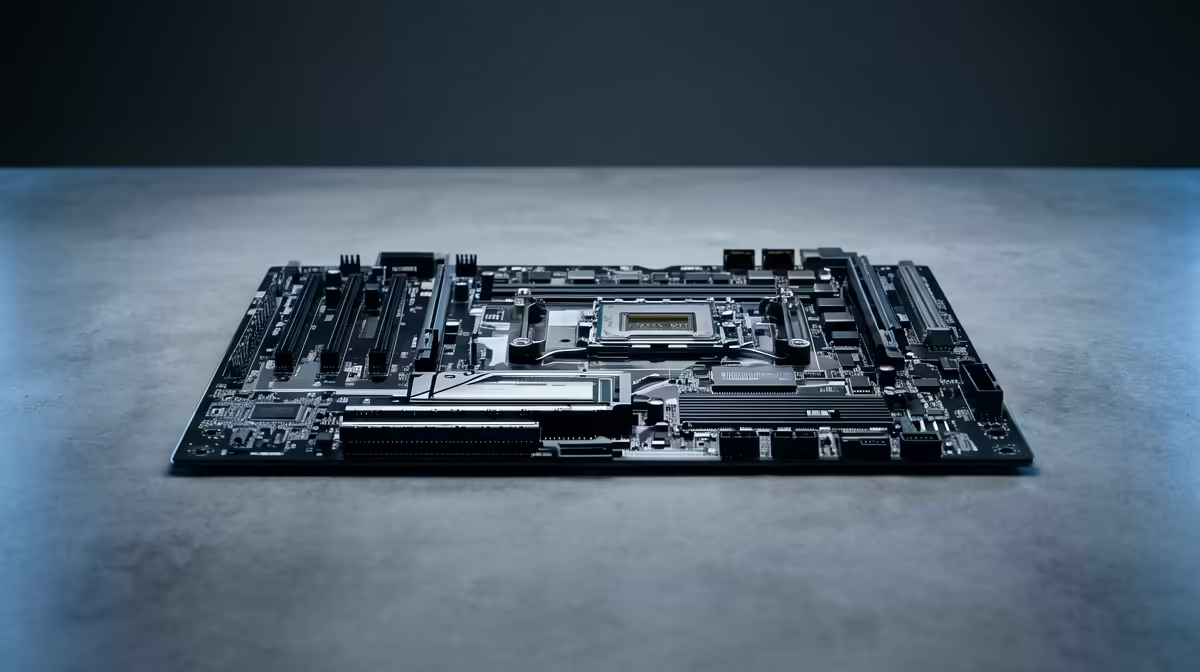
For home-lab servers, a solid B650 (AMD) or B760 (Intel) motherboard in the R3,000 to R5,500 band at Evetech covers nearly every build with good VRMs, an M.2 heatsink and Wi-Fi 6. You do not need an X670E/Z790 flagship unless you run extreme overclocking or many M.2 drives. Spend on VRM quality and connectivity, not RGB and badges.
Chipset and VRMs that matter
The chipset sets features; the VRMs set how well it powers a CPU under load. A decent B650 or B760 board feeds any mainstream and most high-end CPUs comfortably. For home-lab servers, look for an M.2 heatsink, Wi-Fi 6, enough USB and a reputable VRM rather than the most expensive board on the shelf.
Connectivity and clean builds
Front USB-C, well-placed fan and ARGB headers, and two or more M.2 slots make a tidy, expandable build. Pre-installed I/O shields and clear labelling speed assembly. For home-lab servers, a board with good header placement makes the cable-managed result look and run better without spending on a flagship.
FAQ
Do I need an expensive motherboard?
No, a good B650 or B760 board in the R3,000 to R5,500 range has solid VRMs, an M.2 heatsink and Wi-Fi 6, covering nearly every build. Flagship X670E or Z790 boards only pay off for extreme overclocking or many drives.
What motherboard features actually matter?
Quality VRMs, an M.2 heatsink, enough M.2 and USB, and Wi-Fi 6 matter most for a reliable, expandable build. Header placement and front USB-C make a clean cable-managed result easier, which beats paying for RGB and badges.
Will a mid-range board limit my CPU?
Not for normal use, since a decent B-series board powers any mainstream and most high-end CPUs without throttling. You only need a high-end board for aggressive manual overclocking, which most SA buyers never do.
Buyer's tip
Before checkout, confirm the board has an M.2 heatsink, Wi-Fi 6 and the right socket for your CPU; a R4,000 B-series board covers almost every build without the flagship premium.