Quick Answer
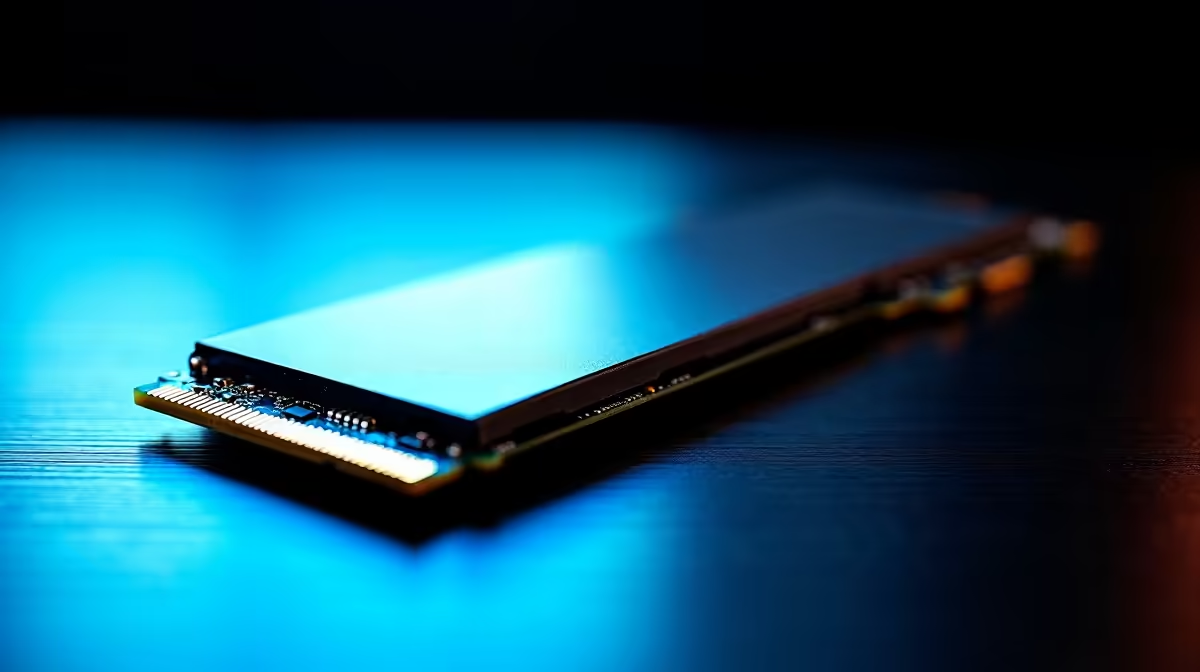
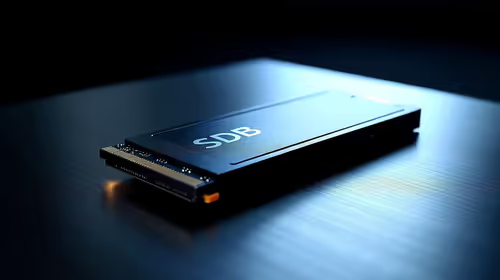
For most SA buyers a 1TB Gen4 NVMe drive at sequential reads around 5,000–7,000MB/s is the sweet spot — expect roughly R1,200 to R2,200. Spend up for premium drives only when sustained write speed or DRAM cache genuinely matters to your workload. For pure capacity, a 2TB SATA SSD or a HDD remains cheaper per gigabyte.
Gen3 vs Gen4 vs Gen5 — what you actually feel
Game load times and app launches barely differ between Gen3 (3,500MB/s) and Gen4 (7,000MB/s) drives because most games are not bandwidth-bound. Gen5 drives hit 12,000MB/s but run hot and cost far more, so they only make sense for heavy content creation. For everyday gaming and study a good 1TB Gen4 drive is the value pick at roughly R1,200 to R2,200.
When premium drives earn their price
DRAM cache and high sustained write speeds matter for video editing, large dataset work and frequent big-file transfers, where cheap DRAM-less QLC drives slow to a crawl once their cache fills. If you record gameplay, edit 4K or move tens of gigabytes daily, the premium TLC drive pays back. For a boot drive and a game library, it is overkill.
Capacity planning for SA buyers
Modern AAA titles run 80–150GB each, so a 500GB drive fills after a handful of installs. A 1TB drive is the practical floor; 2TB if you keep a big library or do creative work. Pair a fast 1TB NVMe boot-and-active drive with a cheaper 2TB SATA SSD or HDD for archives to balance speed and cost.
FAQ
Is a Gen5 NVMe SSD worth it for gaming?
Not yet for most gamers. Games rarely saturate Gen4 bandwidth, so a Gen5 drive adds heat and cost with little real-world speed gain. Put the money toward more capacity or a better GPU instead.
How much SSD storage do I really need?
1TB is the practical minimum for gaming since AAA titles run 80–150GB each. Go 2TB if you keep a large library or edit video, and add a cheap secondary drive for archives.
Does a DRAM-less SSD matter for everyday use?
For light browsing and a few games it is fine. For sustained large writes — video editing, big backups, dataset work — a DRAM-cached TLC drive holds speed far better once the cache fills.
sustained write spec, not just peak reads — cheap QLC drives can drop below 200MB s once their cache fills during big transfers.