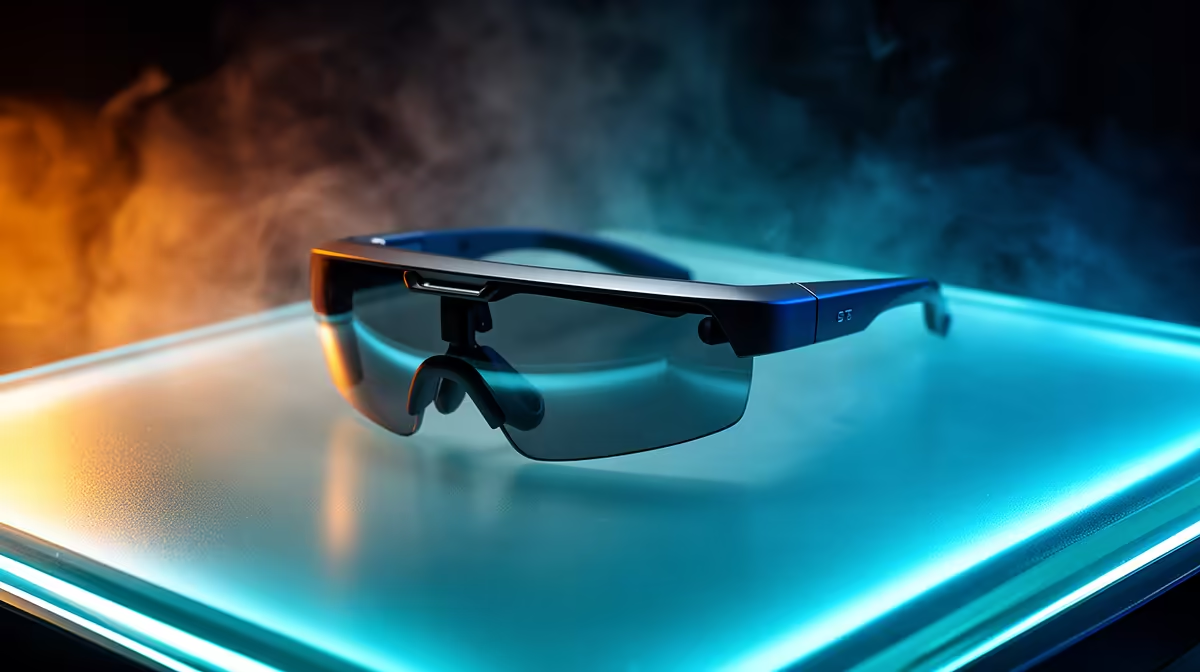
AR glasses are best understood as a portable big-screen display, so judging them on panel quality and comfort beats getting swept up in mixed-reality marketing.
Quick Answer
For university assignments, AR glasses earn their keep as a portable big-screen display rather than full mixed reality: a pair with a sharp micro-OLED panel and comfortable fit, around R5,000 to R12,000, suits study and media. Display quality and comfort beat flashy feature lists.
What AR Glasses Are Really For
Most affordable AR glasses act as a wearable monitor, mirroring a phone or laptop onto a large virtual screen. For %s that means a portable second display for reading, note-taking or media, not room-scale mixed reality. Set expectations there and the value is clear; expect full spatial computing at this price and you will be disappointed.
Display, Comfort And Eye Strain
A crisp micro-OLED panel with good brightness and a usable field of view makes text readable without strain, which matters for university assignments. Weight and nose-bridge fit decide whether you can wear them for a full study session. Adjustable focus or dioptre support helps spectacle wearers, and a wider eye-box keeps the image clear as the glasses shift slightly.
Connectivity And What To Ignore
Confirm the glasses connect cleanly to your phone or laptop over USB-C DisplayPort, since some devices need an adapter or extra battery. Ignore the hype around features you will not use; for university assignments, sharpness, comfort and reliable connection matter far more than a long spec list. A local warranty is worth confirming, since niche imports can be hard to service.
FAQ
Are AR glasses a replacement for a monitor?
As a portable big-screen display, they can be for reading and media on the move. They suit a travel or study second screen rather than replacing a desk monitor for long precision work, where comfort and resolution still favour a panel.
Will cheap AR glasses cause eye strain?
They can if the panel is dim, low-resolution or the fit is poor. A sharp micro-OLED panel, a comfortable nose fit and focus adjustment make longer sessions far easier on the eyes.
Do AR glasses work with any device?
Most connect over USB-C with DisplayPort support, but some phones and laptops need an adapter or extra power. Confirm compatibility with your specific device before buying to avoid an awkward workaround.
glasses as a portable display, prioritise a sharp panel and comfortable fit, then confirm clean USB-C DisplayPort support with your device.