Quick Answer
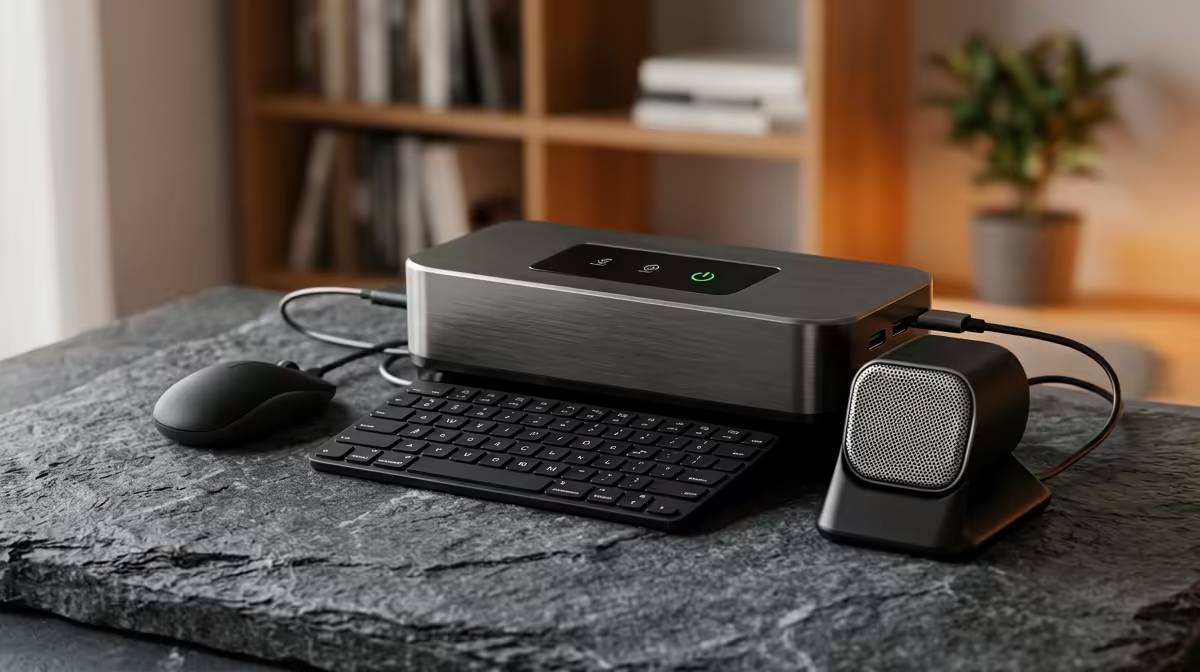
Cheap docking stations become expensive for Python data analysis when their unstable Gigabit Ethernet drops mid-transfer, corrupting a large dataset sync, or when a weak USB controller disconnects an external data drive. The reliable floor is a dock with native Gigabit Ethernet and a solid USB 3.2 controller, around R1,000-R2,500 at Evetech.
Where the hidden cost shows up
A R500 dock seems fine until a 20GB dataset transfer to your NAS drops at 80% because the Ethernet port shares a weak USB controller. Or an external SSD holding your working data disconnects mid-write, risking corruption. Re-running a long data pipeline or recovering a corrupted file costs far more time than the dock saved. The cheap dock is expensive in lost work.
The minimum dock spec for data work
Aim for native Gigabit (or 2.5G) Ethernet, a USB 3.2 controller that holds external drives stably, and 65W-85W power delivery to keep an ultrabook charged through long analysis sessions. A 4K at 60Hz output for a second screen helps you view notebooks and results side by side. That floor sits around R1,000-R2,500.
SA buyer notes
The dock does not speed up analysis; the laptop's CPU and RAM do. Buy a stable dock locally for warranty and put any saved budget into more memory.
FAQ
Why does a cheap dock cost more for data work?
Unstable Ethernet and a weak USB controller can drop transfers or disconnect data drives mid-write, corrupting files and forcing you to re-run long pipelines.
What dock spec is reliable for Python analysis?
Native Gigabit or 2.5G Ethernet, a solid USB 3.2 controller, and 65W-85W power delivery, around R1,000-R2,500.
Does the dock affect analysis speed?
No. Speed comes from the laptop's CPU and RAM. The dock matters only for stable networking, storage links, and extra screens.
work, prioritise a dock with native Gigabit Ethernet and a stable USB 3.2 controller; a dropped 20GB transfer or a disconnected data drive costs far more than the dock saved.