Quick Answer
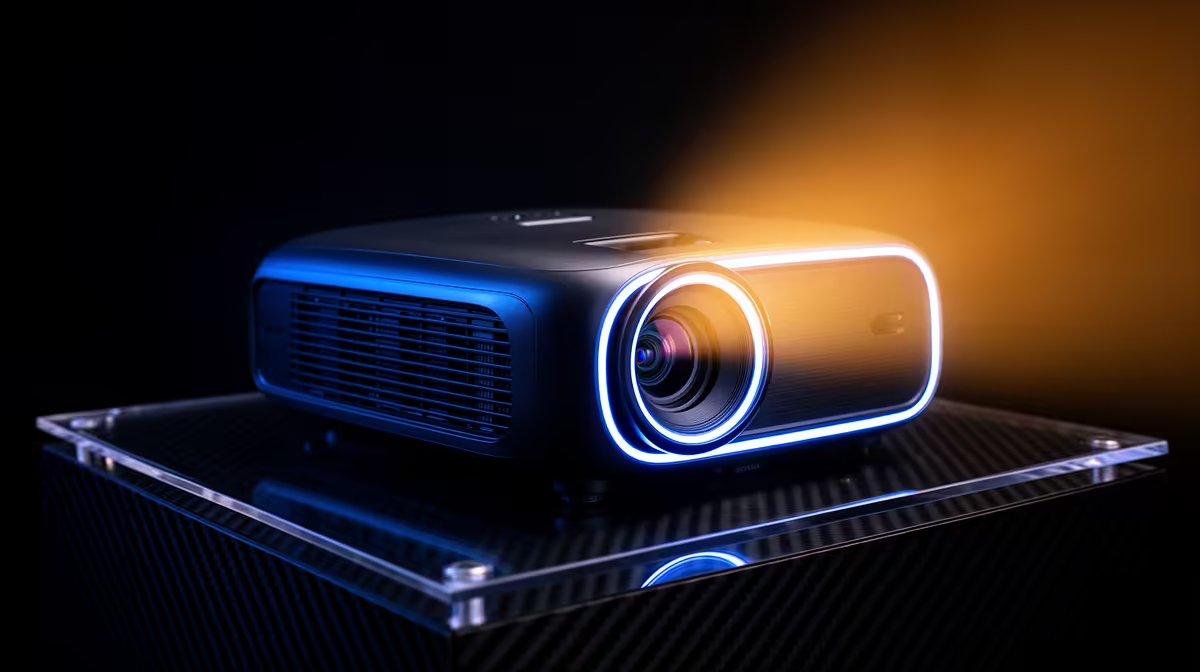
Cheap portable projectors get expensive for VR where sustained frame pacing and cool components prevent dropped frames because the dim lumens, high input lag and short bulb life that make them cheap are exactly wrong for gaming. A R2,500 projector that lags 80ms and shows a washed-out image in any light is no bargain - VR and gaming need brightness, low latency and a steady picture.
The Brightness Trap
Budget portable projectors often claim high "lumens" using inflated numbers. For VR where sustained frame pacing and cool components prevent dropped frames, a genuinely dim projector (under 300 real ANSI lumens) needs a pitch-black room and still looks washed out. You end up buying blackout curtains or a second, brighter projector - the cheap unit cost you more in the end.
The Input Lag Problem
Cheap projectors prioritise picture processing over speed, adding 60-100ms of input lag that ruins anything interactive. For VR where sustained frame pacing and cool components prevent dropped frames, that delay makes fast play feel disconnected. A projector built for low latency costs more up front but is the only one that actually works for gaming, so the budget unit is false economy.
The Longevity Cost
Short-life LED or lamp modules and weak cooling mean cheap projectors fade or fail within a couple of years of heavy VR where sustained frame pacing and cool components prevent dropped frames use. A better unit lasts longer and holds its brightness, making the higher price the cheaper choice across the projector's life.
FAQ
Are cheap projectors good for gaming?
Generally no. They tend to be dim and laggy - the two things gaming most needs to avoid. Input lag of 60-100ms and washed-out images make budget portable projectors a poor fit for interactive use.
How many lumens do I need?
Aim for genuine ANSI lumens, not inflated marketing figures. Under 300 real ANSI lumens needs a fully dark room. For usable images with some ambient light, look considerably higher and treat headline 'lumen' claims sceptically.
What makes a projector good for gaming?
Low input lag (ideally under 30ms in a game mode), genuine brightness, and a stable, well-cooled image. Those cost more than a basic portable projector, but they are what make gaming on a projector actually enjoyable.
projector's input lag figure and whether it has a low-latency game mode before buying for gaming - dim, laggy units are where the cheap projector quietly becomes the expensive mistake.