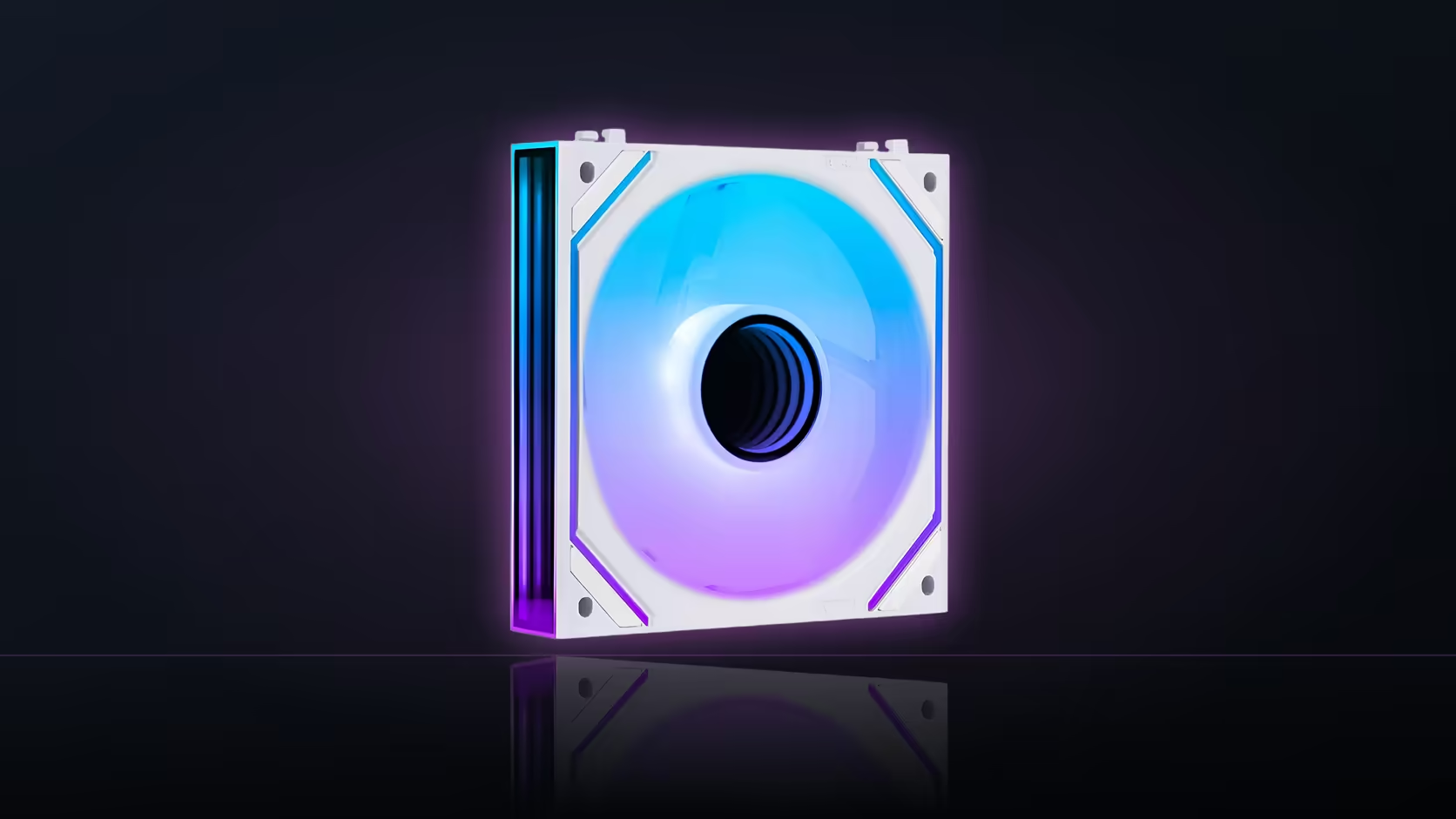
A standard case fan shows its frame and blade edges when you look at it from inside the chassis, which is not always the view you want in an intake position behind glass. AsiaHorse solves that with reverse-bladed versions on part of its fan range - just not all of it, so knowing which families actually offer the option saves a wasted order.
Quick Answer
Reverse-blade versions exist for the Dawn Pro, Nyota Ultra and Amici 5GT families. The Nyota A12, Nyota Pro and Amici Pro are listed with forward blades only, so anyone specifically wanting the reversed look for an intake position is choosing from a narrower set of three than the full fan range suggests.
🔄 What reverse blading actually changes
A reverse-bladed fan mounts and spins exactly like a standard one - airflow direction follows how the fan is physically installed, not which way the blades curve. What changes is which face looks finished when viewed from inside the case. In an intake position seen through a side window, a standard fan often shows its frame and blade underside, while a reverse-bladed version presents the smoother, more finished face toward the viewer instead.
✅ The three families that offer it
Dawn Pro, Nyota Ultra and Amici 5GT each list a reverse-blade variant alongside their standard forward version, at the same price point in every case checked. That makes the choice a genuinely free one within those three families - there is no premium for picking the reversed orientation, only the question of which face you want showing in a given position.
❌ The three that do not
The Nyota A12, the Nyota Pro and the Amici Pro are all listed with standard forward blades only, with no reverse option published anywhere in their range. That is worth knowing before assuming every AsiaHorse fan comes both ways - a build built around, say, the Nyota Pro's dual-zone lighting cannot also get the reverse-blade look from that same family, and would need to look at Dawn Pro, Nyota Ultra or Amici 5GT instead if the reversed face matters more than the specific lighting mode.
🧭 Which positions actually benefit
Reverse blading matters most in intake positions that sit directly behind a window - typically the front or side of a case where fans are pulling air in and facing straight out at the viewer. Exhaust fans mounted at the rear or top are generally seen from an angle, if at all, so the difference between forward and reverse blades is far less noticeable there. It is entirely reasonable, and often the better-looking result, to mix forward-blade exhaust fans with reverse-blade intake fans in the same build, since each position is being chosen for what actually shows from that angle - a cover from the case accessories range can tie the two positions together visually if the mix still looks disjointed.
🔀 Building a mixed layout on purpose
Because forward and reverse cost the same within a matching family, there is no financial reason to standardise on one orientation across an entire build. A sensible approach is to fit reverse-blade fans wherever the position sits directly in view - typically the front intake row - and forward-blade fans everywhere else, all from the same family so the ring style and LED look stay consistent even as the blade orientation changes position by position. Anyone shortlisting fans for a visible build should check the case fan range for both options before settling on a family.
Frequently Asked Questions
Which AsiaHorse fan families offer a reverse-blade version?
Dawn Pro, Nyota Ultra and Amici 5GT, each listed with a reverse variant alongside their standard forward option.
Which families do not offer it?
The Nyota A12, the Nyota Pro and the Amici Pro, all of which are listed with standard forward blades only.
Why does blade direction matter for appearance?
In positions where the rear face of a fan is visible, a reverse design turns the finished side toward the viewer instead of the frame.
Is there a price difference between forward and reverse?
Within these three families they are listed at the same price, so the direction is a free choice rather than an upgrade.
Does reverse blading change how air actually moves?
No. Airflow direction follows how the fan is mounted, not the blade orientation - reverse only changes which face looks finished.
Which positions benefit most from a reverse-blade fan?
Intake positions seen directly behind a window, where a standard fan would otherwise show its frame and blade underside.
Can forward and reverse fans be mixed in one build?
Yes, and it is often the better choice - matching the orientation to what each position actually shows from the outside.
Choosing fans for a visible intake row?
Browse Evetech's case fan range to compare the forward and reverse-blade AsiaHorse options side by side.