There is a real temptation, once the parts have finally all arrived, to fit everything in one long session and switch it on for the first time already fully dressed. Resisting that urge and getting the motherboard tested on plain hardware first is the single cheapest insurance a build ever gets.
Quick Answer
Get the machine posting reliably on its bare factory cables before fitting anything cosmetic, whether that is sleeved extensions, cable covers, or lit accessories from the AsiaHorse range. Testing first means any fault found afterward has the smallest possible number of new causes to check, since every cover and extension adds a junction that a plain build does not have.
🧪 What the first test should actually include
Connect only what the machine genuinely needs to post: the motherboard, processor, memory, one drive and the graphics card, all on their original factory cables straight out of the box. Nothing cosmetic should be anywhere near the build at this stage, no matter how quick it would be to fit while the case is already open.
⏸️ What waits until afterward
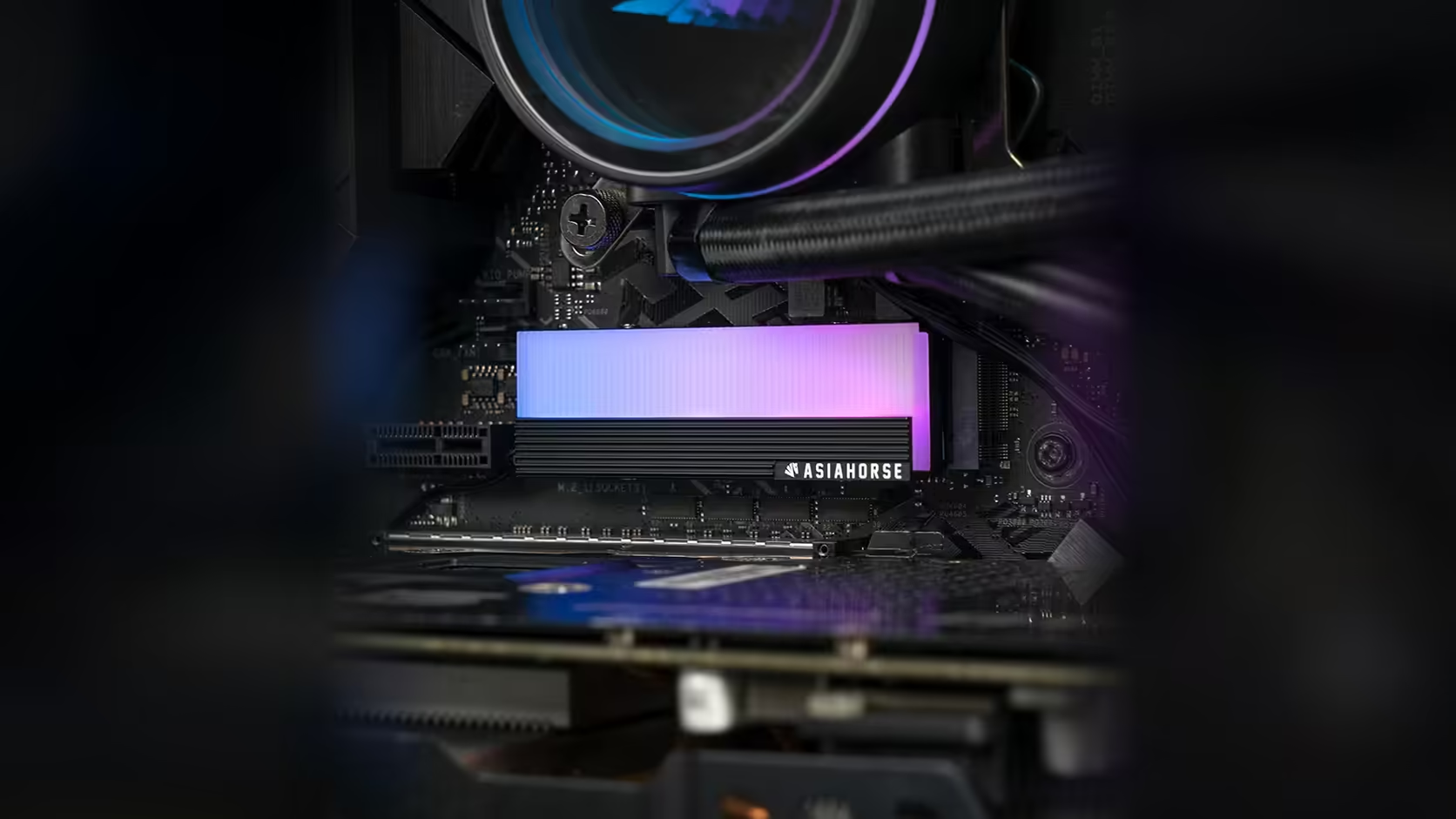
Everything decorative waits: sleeved extensions, lit Hydrus cables, cable covers from the Aurora range, the RAM cover, and the M.2 drive cover. Every one of these adds a connection or hides a part of the build, and none of them should go on until the machine has already proven it works without them.
🔍 Why the order matters
A machine that posts cleanly on plain hardware narrows down any fault that appears later to whatever was added after that point. If the build fails to post with sleeved extensions, a cable cover and lit fans already fitted, the fault could be anywhere among a dozen new connections, and finding it means undoing work rather than simply checking the last thing added.
❄️ The one exception: the contact frame
A contact frame under the CPU cooler does not wait, because fitting it later means removing the cooler and redoing the thermal paste entirely, which is a genuinely bigger job than the small convenience of testing without it first. Anything structurally underneath the cooler belongs in the initial build, separate from the cosmetic accessories this rule is really about.
🌀 Fans and the hub are part of the functional build
Fans and any hub like the ASH-S1 are a slightly different case from covers and lit cables. The machine needs cooling to run at all, and a hub is fundamentally part of the wiring rather than a purely cosmetic addition, so both can reasonably go in during the early stage alongside the functional components rather than being held back with the strictly decorative accessories.
✅ Testing at each stage
A test after the core functional hardware is in, and a second test just before the side panel finally closes, catches the great majority of problems while access to the interior is still easy. This does not need to be elaborate; a simple power-on and a look at whether the machine posts is enough at each checkpoint.
⏱️ The time cost is small
This whole approach adds one extra power-on cycle to the build, against the alternative of dismantling a fully dressed, finished machine to chase down an unseated connector hidden behind a cable cover. The trade is heavily in favour of testing first.
Order your build sequence with this in mind, holding off on Evetech's case fans lighting extras and everything else on the case accessories page for the cosmetic pieces you will fit once the machine has already proven itself.
Frequently Asked Questions
What should be connected for the very first test?
The motherboard, processor, memory, a single drive and the graphics card, all on their plain factory cables with nothing cosmetic fitted yet.
What should wait until after the first successful test?
Sleeved extensions, lit cables, cable covers, the RAM cover and the M.2 drive cover, since all of them add connections or hide parts of the build.
Why does testing before dressing the build actually help?
Because a machine that posts cleanly first narrows any later fault down to whatever was added after that point rather than leaving a dozen possibilities.
Does the CPU contact frame wait like the cosmetic accessories?
No, since it sits under the cooler and fitting it later means removing the cooler entirely and redoing the thermal paste application.
What about fans and a hub like the ASH-S1?
Those can go in early, since the machine needs cooling to run and a hub is part of the functional wiring rather than purely decorative.
Should each build stage get its own test?
A test after the functional hardware and another just before the panel closes catches most problems while access is still straightforward.
How much extra time does this approach actually add?
One additional power-on cycle, against the alternative of dismantling a fully finished build later to find a single unseated connector.
Getting ready to fit accessories to a fresh build?
Test your core hardware first, then browse Evetech's case accessories range for the finishing touches.