


1000W PSU Planning for RTX 5090 Builds in SA
1000W for RTX 5090 needs a full-build check, not a simple yes. Review GPU guidance, CPU draw, transient load, connectors, PSU quality, and upgrade plans before deciding.
Read moreIn a South African Ryzen build, paying extra is worth it for DDR5 headroom and guaranteed PCIe 5.0, not cosmetics. This R3,499 AM5 board delivers both without moving into a noticeably higher price bracket.
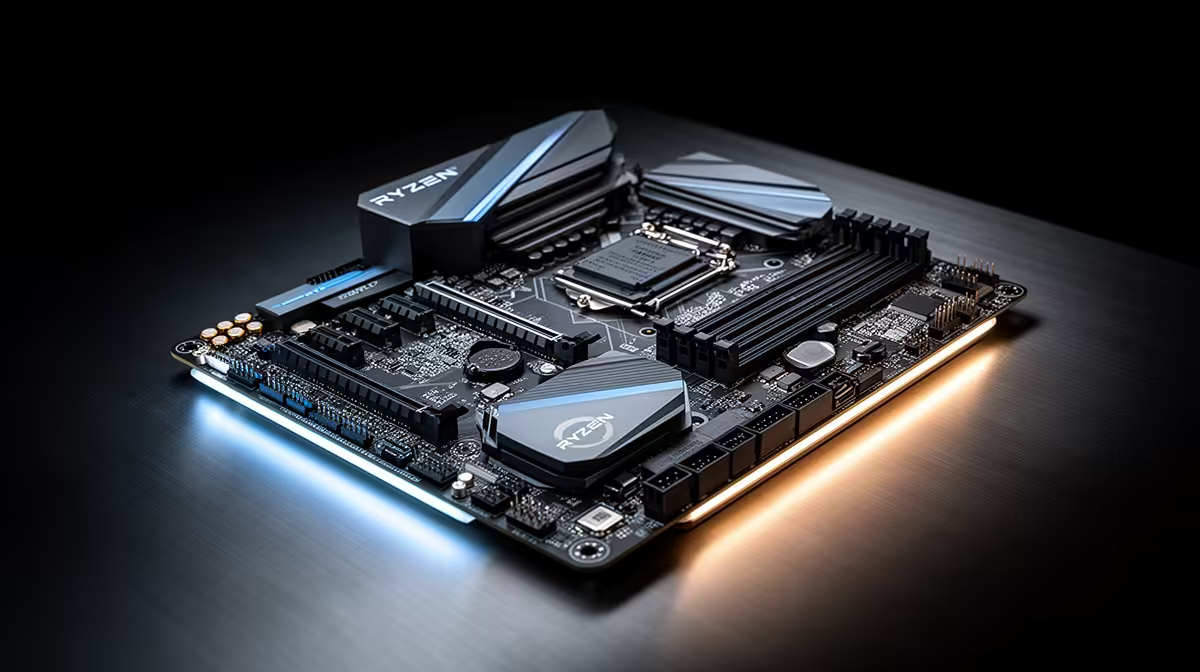
Not every spec bump on an AM5 board shows up anywhere you would notice while gaming. Picking a b650e motherboard means separating genuine upgrades from features that merely look good on a spec sheet, and only a handful of line items justify the extra rand while most do not. ASUS asks R3,499 for its B650E MAX Gaming WiFi ATX, and pulling that specific board apart is a useful way to tell real upgrades from padding.
Guaranteed PCIe 5.0 and generous DDR5 support are worth the extra spend; cosmetic add-ons generally are not. This board proves the point at R3,499, packing a full x16 PCIe 5.0 slot, a trio of PCIe 5.0 M.2 bays, and DDR5 headroom up to 8000MT/s into one AM5 platform without tipping into a noticeably higher bracket.
PCIe 5.0 across both the graphics slot and storage is the clearest case of a feature worth chasing, since it clears a bottleneck that only grows more relevant as GPUs and SSDs improve. DDR5 headroom works the same way: a board capped low forces a compromise on memory kits down the line, while one rated to 8000MT/s (OC) through EXPO leaves that choice open. Resizable BAR belongs in this bucket too, a free frame-rate gain with no added hardware cost.
Extra RGB zones, oversized heatsink shrouds with no cooling upside, and vague "premium power delivery" claims minus any numbers are the usual traps. None of it touches how fast the system actually runs, so question these first on any board priced well above R3,499. Scrolling the full AMD motherboard selection makes those price gaps obvious quickly, since boards with near-identical core specs can sit far apart on cost purely from cosmetics.
A USB4 header and BIOS FlashBack support are smaller inclusions that matter more than they first appear, letting firmware update ahead of new Ryzen chip releases without a compatible CPU already fitted. Wi-Fi 6E is worth checking against your own router rather than dismissing as filler, since a modern router turns it into a genuine upgrade over standard Wi-Fi. Browsing this board's own listing directly shows how these smaller inclusions stack up against the headline specs.
Yes, especially for storage, since it clears a bottleneck that grows more relevant as SSDs get faster over the life of a build.
Generally no. Those extras do not affect performance and are the easiest place to save money without losing anything meaningful.
It still matters for future memory kit choices, since a low ceiling limits what you can upgrade to later.
It depends on your router. A compatible router noticeably cuts congestion, but it adds little on an older one.
The B650 spec list is the fastest way to compare specs across the range before deciding what earns the extra spend.
AM5 is built to support several Ryzen generations, so its platform cost tends to spread across more than one CPU upgrade.
Ready to spend a bit more where it counts? The ASUS B650E MAX Gaming WiFi features under our AMD B650E motherboard lineup, geared to flag which extras are genuinely worth paying more for in SA.
Yes, especially for storage, since it clears a bottleneck that grows more relevant as SSDs get faster over the life of a build.
Generally no. Those extras do not affect performance and are the easiest place to save money without losing anything meaningful.
It still matters for future memory kit choices, since a low ceiling limits what you can upgrade to later.
It depends on your router. A compatible router noticeably cuts congestion, but it adds little on an older one.
[The B650 spec list](https://www.evetech.co.za/amd-b650-motherboards/x/1516) is the fastest way to compare specs across the range before deciding what earns the extra spend.
AM5 is built to support several Ryzen generations, so its platform cost tends to spread across more than one CPU upgrade.
1000W for RTX 5090 needs a full-build check, not a simple yes. Review GPU guidance, CPU draw, transient load, connectors, PSU quality, and upgrade plans before deciding.
Read more
RTX 5080 Super with a 750W PSU is more comfortable than lower wattage if the unit is quality. SA builders should still confirm GPU guidance, CPU draw, connector type, airflow, and upgrade room.
Read more
How to fix FPS drops after a RX 9070 XT starts with driver cleanup, chipset updates, thermals, and power checks. For SA gaming PCs, confirm PCIe seating, monitor refresh, frame caps, and per-game graphics settings before replacing parts.
Read more
How to fix low FPS Windows 11 Wi-Fi 7 issues starts by checking whether the problem is frame rate or network lag. Test ping, drivers, power settings, Ethernet, and game FPS before adjusting visuals.
Read more
AM5 is smart for SA builders because it supports newer Ryzen CPUs, DDR5 memory, and a longer upgrade path. Compare board cost, cooling, gaming needs, and local part availability before choosing your next PC platform.
Read more
AM5 gives Randburg gaming builders a longer upgrade path. For SA buyers, DDR5 support, newer board features, and future CPU options can justify the platform. Weigh board cost, cooler support, BIOS maturity, and upgrade timing before choosing.
Read more
RTX 5090 on a 550W PSU leaves almost no practical room for OC plans. Treat the setup as constrained, with CPU draw, power spikes, cable quality, thermals, and stability checks more important than chasing extra clocks.
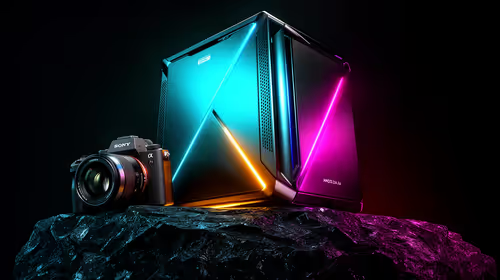
FPS drops on a Ryzen 9 9950X3D build often have a fixable cause. Check settings, drivers, thermals, background tasks, network conditions, and bottlenecks before assuming a part must be replaced.

The difference between PCIe 5.0 and PCIe 4.0 for SA gamers is mostly bandwidth headroom. Compare GPU slot needs, NVMe speed, motherboard support, and upgrade timing before paying extra for a newer platform.

Gaming PC stuck pixel checks in South Africa should confirm the monitor fault first. Use colour tests, screenshot comparison, cable swaps, display menu checks, and clear photos before deciding on support.

AMD's current driver now lists a Radeon RX 9050 4GB, while product coverage details a narrowed memory system. SA buyers should weigh the low VRAM ceiling against current local Radeon options.

Samsung Display has demonstrated a 16-inch 2.5K OLED laptop panel running at 300Hz. SA buyers should wait for a named notebook, full panel specifications and a local price before planning an upgrade.

Microsoft says some Windows 11 game crashes after recent updates are linked to RGB-related drivers. Affected SA gamers should confirm the update and driver before using the published registry workaround.
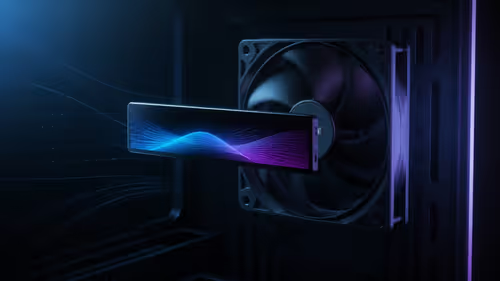
Thermalright's Fan Frame Vision-1 adds a 640x172 status screen to a standard 120mm fan. SA builders should check clearance, USB routing and local support before treating it as an easy upgrade.
1000W for RTX 5090 needs a full-build check, not a simple yes. Review GPU guidance, CPU draw, transient load, connectors, PSU quality, and upgrade plans before deciding.

Wi-Fi 6E vs Wi-Fi 6 matters for 4K video editing when files move across a network. The real-world difference between Wi-Fi 6E and Wi-Fi 6 for video editing in 4K depends on NAS access, cloud uploads, router range, and SA creator workflows.
RTX 5080 Super with a 750W PSU is more comfortable than lower wattage if the unit is quality. SA builders should still confirm GPU guidance, CPU draw, connector type, airflow, and upgrade room.
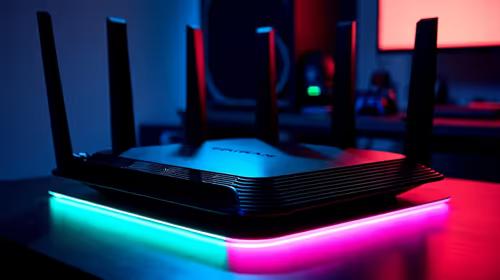
Wi-Fi 6E vs Wi-Fi 6 for Video Editing in 4K comes down to router support, latency, client devices, band support, and home network layout. SA buyers should match the choice to their setup instead of assuming one option always wins.