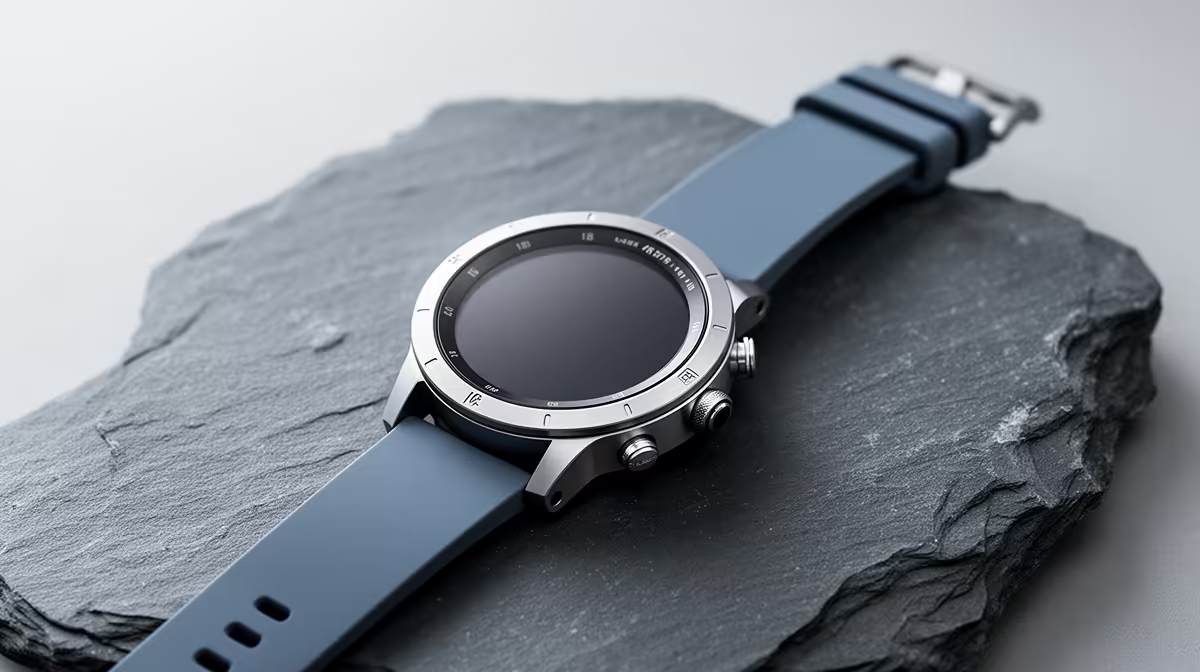
Res rooms are small, shared and often noisy, which changes which smart watch specs actually earn their keep. A lot of the numbers brands advertise are tuned for athletes, not students living three to a room with thin walls and a tight budget.
Quick Answer
For campus residence life, multi-band GPS, deep dive ratings and dozens of sport modes are overrated. Prioritise a silent vibration alarm strong enough to wake only you, 5-day battery, and a quiet do-not-disturb mode. A R1,400 to R2,200 watch covers this without flagship extras.
Overrated Specs For Shared Rooms
Multi-band GPS and 100m water resistance suit trail runners and divers, not someone walking to lectures. Loud speaker alarms are a roommate problem; a strong vibration motor matters far more. Huge sport-mode counts pad the box but go unused in res.
What Actually Helps In Res
A discreet vibration alarm lets you wake at 6am without disturbing the room. Do-not-disturb scheduling keeps late-night group-chat buzzes silent during shared study and sleep hours. Long battery means fewer chargers competing for the one free plug point near your bed, and a sweat-resistant strap copes with a warm, crowded room. These small things decide whether the watch fits res life or annoys everyone in it.
FAQ
Is a vibration alarm reliable enough to wake me?
A good linear vibration motor wakes most people without sound, which is ideal in a shared room. Test it for a few mornings and keep a phone backup until you trust it.
Do I need water resistance in a res setting?
Basic IP67 splash and rain resistance is plenty for campus life. Diving-grade ratings cost more and serve a use case you almost never hit as a student.
How important is battery life in res?
Very, because plug points are scarce and shared. A 5-day watch frees up the socket and means one less thing to charge nightly.
Test the vibration alarm for a week before relying on it, then mute speaker alerts to keep the room peaceful.