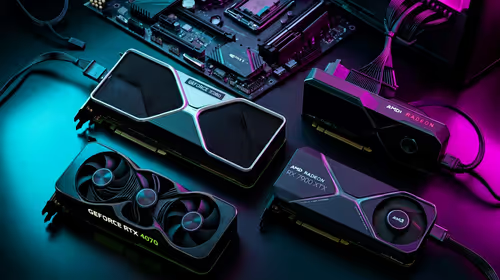
Adding a fourth screen to a desk is easy. Making all four run at a refresh rate worth having is where the bandwidth math actually starts to matter. A four-display setup leans on link bandwidth harder than most people expect once more than one panel asks for high refresh at once.
Quick Answer
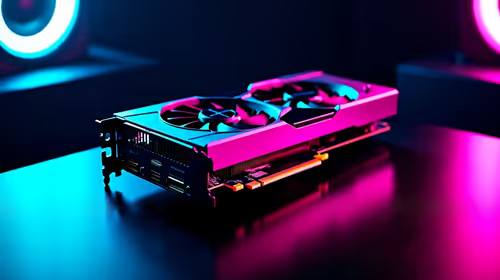
High refresh rates on more than one screen at a time demand meaningfully more bandwidth than a single 4K panel at 60Hz, which is why current-generation HDMI and DisplayPort at the 2.1b revision matter for a four-monitor setup even if any single screen on its own would have been fine on an older standard. The card carrying these outputs, the Astral Edition 20, is R119,999.
🧮 Why bandwidth is shared, not per-port
Each display connection carries its own signal, but the card's overall capacity to drive multiple high-resolution, high-refresh panels at once is a real constraint, not an assumption. Adding displays multiplies the total bandwidth the card and its outputs need to sustain simultaneously, and running every panel at a demanding resolution and refresh rate at the same time is a heavier ask than running the same panels individually.
This is why a card that handles one 4K 144Hz monitor without issue can still show compression artefacts or a capped refresh rate once three more panels join it at similarly demanding settings, even though each connection is technically independent.
🔗 What the 2.1b generation actually buys here
HDMI and DisplayPort both stepped up their bandwidth ceiling at the 2.1b revision, and that extra headroom is exactly what makes running several demanding panels at once easier than it was a generation back. A four-display setup with mixed high-refresh panels is what actually draws on that headroom, rather than any single connection needing it in isolation.
The precise number of outputs and the exact mix of HDMI against DisplayPort on any specific card is set by that card's design, and that detail sits in its own specification table rather than being safely assumed from the generation name alone.
🖥️ Setting up four screens without a bandwidth surprise
Start with your most demanding panel, typically your primary gaming or editing screen, and get it running at its full resolution and refresh rate on its own before adding the rest. Add screens one at a time rather than all at once, checking that each addition does not force the others to drop refresh rate, which some display drivers do silently to keep every screen running rather than surfacing an error.
Browse the gaming monitor range for panels that state their bandwidth requirements clearly, and match cables from the cable range to the generation your card and monitors both support, since an older cable is the most common reason a correctly specified setup falls short of its potential. Confirm the specific card's own output count from the graphics card lineup before planning four connections around it.
Frequently Asked Questions
Does adding more monitors slow down the ones I already have?
It can, if the combined bandwidth demand exceeds what the card and its ports handle comfortably in one go, which is more likely when several panels run demanding resolutions and refresh rates simultaneously.
Do I need the newest cable standard for every monitor in a four-screen setup?
Only for the panels actually running demanding settings. A secondary screen at a lower resolution and standard refresh rate places far less demand on the connection than your primary display.
How do I know if my four-monitor setup is bandwidth-limited?
If refresh rate silently drops on existing screens as you add new ones, or a panel will not reach its rated refresh rate despite a correct cable, bandwidth is the likely culprit rather than a faulty monitor.
Does the exact number of outputs vary between cards in the same generation?
Yes. Check the specific card's own product page for its output count and mix rather than assuming a fixed layout applies across an entire generation.
Ready to add a fourth screen without your other three losing refresh rate?
Add panels one at a time and confirm each addition does not quietly cap the others.