


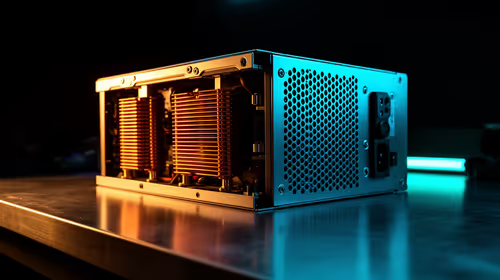
1000W PSU Planning for RTX 5090 Builds in SA
1000W for RTX 5090 needs a full-build check, not a simple yes. Review GPU guidance, CPU draw, transient load, connectors, PSU quality, and upgrade plans before deciding.
Read moreUSB-C charging is becoming standard for SA peripherals because it cuts down cable confusion across mice, keyboards, headsets, and controllers. The key is checking power needs, connector quality, and whether the device supports fast top-ups.

USB-C charging is becoming standard for SA peripherals because one cable can cover mice, keyboards, headsets, controllers, and laptops for SA buyers. Use a realistic budget around R300-R2,000, then judge the buy by real fps, latency, compatibility, and local support rather than the biggest number on the spec sheet.
A 65W or 100W USB-C charger, braided cable, and devices with proper battery indicators can simplify a gaming desk and reduce cable clutter. The practical win is not only the headline feature; it is how that feature behaves in a normal South African setup with local stock, courier delivery, hot rooms, fibre quality, and mixed work-and-gaming use. A good choice should improve daily use without forcing a weak power supply, poor cooling, or an awkward desk layout.
Start with the measurable limit in the current setup. For gaming, that usually means 60 fps as the comfort floor, 144 fps for high-refresh play, and 200-240 fps for serious esports screens. For platform parts, check motherboard support, 32GB RAM, a 1TB NVMe SSD, cooling clearance, and the ports your monitor or peripherals need. Named reference parts help anchor the choice, but current Evetech stock and warranty terms should decide the final shortlist.
Match the part to the games, software, and desk you already use. A GeForce RTX 4060-class card, Ryzen 5 7600-class CPU, DDR5-6000 memory kit, or 1440p 165Hz monitor can be excellent value when it fixes the actual bottleneck. For SA shoppers, courier timing, desk size, fibre quality, and warranty support matter as much as the headline spec. If the upgrade does not change daily comfort, frame consistency, storage space, or connection stability, keep the spend for the part that does.
Yes, when it solves a real bottleneck in the setup. If the current PC, router, or monitor cannot expose the feature, spend the budget on the weaker part first.
Use the target workload as the guide. For esports, smooth 144-240 fps matters; for office work, reliability and ports matter; for storage, capacity and sustained speed matter.
Compare the total build cost, not one part in isolation. A slightly cheaper component is not good value if it forces weak cooling, limited warranty cover, or a short upgrade path.
1000W for RTX 5090 needs a full-build check, not a simple yes. Review GPU guidance, CPU draw, transient load, connectors, PSU quality, and upgrade plans before deciding.
Read more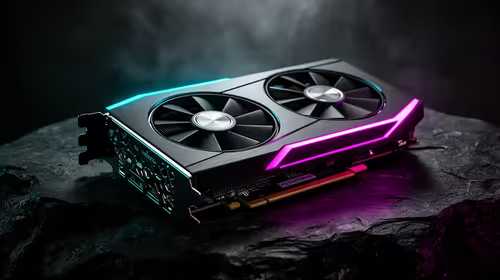
RTX 5080 Super with a 750W PSU is more comfortable than lower wattage if the unit is quality. SA builders should still confirm GPU guidance, CPU draw, connector type, airflow, and upgrade room.
Read more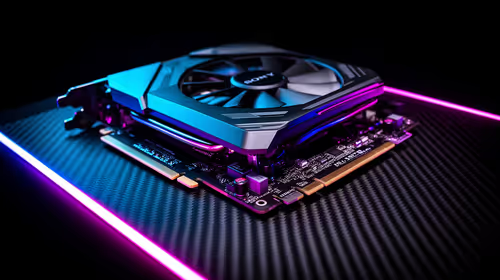
How to fix FPS drops after a RX 9070 XT starts with driver cleanup, chipset updates, thermals, and power checks. For SA gaming PCs, confirm PCIe seating, monitor refresh, frame caps, and per-game graphics settings before replacing parts.
Read more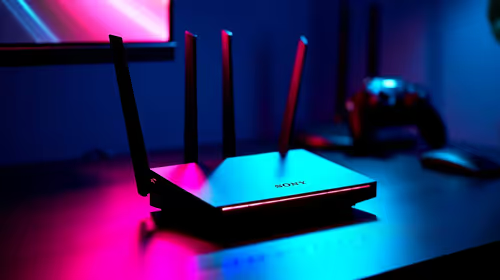
How to fix low FPS Windows 11 Wi-Fi 7 issues starts by checking whether the problem is frame rate or network lag. Test ping, drivers, power settings, Ethernet, and game FPS before adjusting visuals.
Read more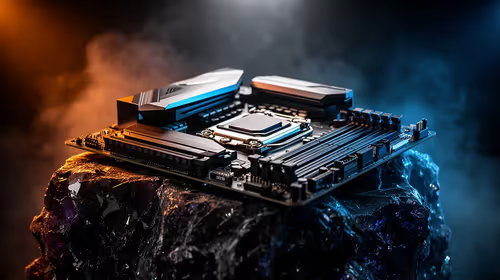
AM5 is smart for SA builders because it supports newer Ryzen CPUs, DDR5 memory, and a longer upgrade path. Compare board cost, cooling, gaming needs, and local part availability before choosing your next PC platform.
Read more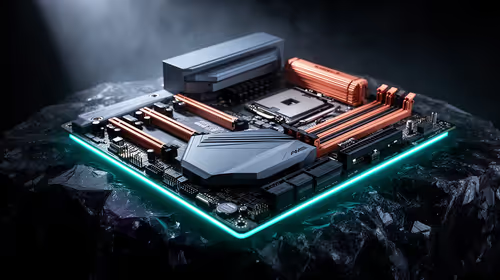
AM5 gives Randburg gaming builders a longer upgrade path. For SA buyers, DDR5 support, newer board features, and future CPU options can justify the platform. Weigh board cost, cooler support, BIOS maturity, and upgrade timing before choosing.
Read more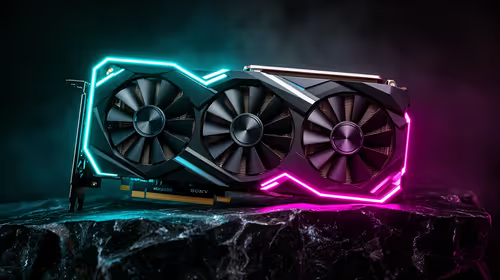
RTX 5090 on a 550W PSU leaves almost no practical room for OC plans. Treat the setup as constrained, with CPU draw, power spikes, cable quality, thermals, and stability checks more important than chasing extra clocks.
FPS drops on a Ryzen 9 9950X3D build often have a fixable cause. Check settings, drivers, thermals, background tasks, network conditions, and bottlenecks before assuming a part must be replaced.

The difference between PCIe 5.0 and PCIe 4.0 for SA gamers is mostly bandwidth headroom. Compare GPU slot needs, NVMe speed, motherboard support, and upgrade timing before paying extra for a newer platform.

Gaming PC stuck pixel checks in South Africa should confirm the monitor fault first. Use colour tests, screenshot comparison, cable swaps, display menu checks, and clear photos before deciding on support.

AMD's current driver now lists a Radeon RX 9050 4GB, while product coverage details a narrowed memory system. SA buyers should weigh the low VRAM ceiling against current local Radeon options.

Samsung Display has demonstrated a 16-inch 2.5K OLED laptop panel running at 300Hz. SA buyers should wait for a named notebook, full panel specifications and a local price before planning an upgrade.

Microsoft says some Windows 11 game crashes after recent updates are linked to RGB-related drivers. Affected SA gamers should confirm the update and driver before using the published registry workaround.
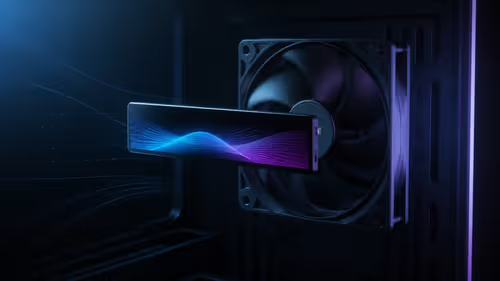
Thermalright's Fan Frame Vision-1 adds a 640x172 status screen to a standard 120mm fan. SA builders should check clearance, USB routing and local support before treating it as an easy upgrade.
AMD's current driver now lists a Radeon RX 9050 4GB, while product coverage details a narrowed memory system. SA buyers should weigh the low VRAM ceiling against current local Radeon options.
Microsoft says some Windows 11 game crashes after recent updates are linked to RGB-related drivers. Affected SA gamers should confirm the update and driver before using the published registry workaround.
Samsung Display has demonstrated a 16-inch 2.5K OLED laptop panel running at 300Hz. SA buyers should wait for a named notebook, full panel specifications and a local price before planning an upgrade.
Thermalright's Fan Frame Vision-1 adds a 640x172 status screen to a standard 120mm fan. SA builders should check clearance, USB routing and local support before treating it as an easy upgrade.