


1000W PSU Planning for RTX 5090 Builds in SA
1000W for RTX 5090 needs a full-build check, not a simple yes. Review GPU guidance, CPU draw, transient load, connectors, PSU quality, and upgrade plans before deciding.
Read moreAn 8GB GDDR6 capacity matters when a creative project's graphics memory demand approaches that limit. On the R12,099 A1000, a 128-bit interface handles the memory while 2304 CUDA cores sit within Ampere architecture; software and file complexity shape practical use.

Graphics memory matters most at the moment a project needs it. Before that point, extra capacity may sit unused; beyond it, the workflow may require asset changes or a different card. The 8GB GDDR6 VRAM on the RTX A1000 is therefore a capacity boundary to test with 3D, editing and creative files, not a quality rating.
The A1000's 8GB GDDR6 holds active 3D, editing and design data while its 192GB/sec bandwidth feeds the GPU's CUDA, RT and Tensor processing paths.
Eight gigabytes matters when active graphics data for a real creative project approaches that practical boundary. On the R12,099 A1000, the memory is GDDR6 and the interface width is 128-bit. Compute comes from 2304 CUDA cores housed by Ampere. File complexity and application behaviour determine whether the balance fits.
A 3D project may load geometry, textures and render assets. An editor can use GPU memory for frames, effects and accelerated operations. Other creative tools hold their own data structures, so a job category cannot reveal the requirement by itself.
Use the software's diagnostics during the difficult stage. Note warnings, failed operations or responsiveness changes beside the observed allocation. Those symptoms give the number context and help distinguish a real limit from normal caching.
A tiny sample proves little, while an unrealistic stress file can encourage unnecessary spending. Select one common project and one demanding project that the team genuinely expects to deliver. Keep application version and settings fixed.
If both files complete reliably with useful headroom, 8GB may align with that workflow. If the normal heavy file consistently presses against capacity, compare larger-memory options in Evetech's workstation graphics range.
The 128-bit figure describes the A1000's memory interface. It cannot increase the 8GB capacity. Using interface width alone cannot forecast application behaviour. GDDR6 identifies the memory type.
Compute is another axis. The card's 2304 CUDA cores may support accelerated work when the application uses them. A scene can be memory-bound, compute-bound or constrained elsewhere, which is why the A1000 at R12,099 needs a complete project test.
AI-assisted effects and local models can introduce new capacity needs, but each feature is different. Check the tool's GPU support, model size and execution path. Evetech's AI PC category helps when new creative work changes several platform requirements at once.
Keep a short memory test record with the project, settings and observed behaviour. When file complexity grows, repeat it. This provides a reliable trigger for a future capacity upgrade without relying on a generic gigabyte recommendation.
A team may use lower-resolution preview assets or proxy media to keep interaction practical, then return to full-quality data for delivery. Document which reductions are temporary and confirm that the final output still completes within the 8GB plan.
Do not count a workflow as successful if required quality is permanently lowered to fit memory. Conversely, efficient previews are not evidence that the card is weak; they may be sensible production practice.
Test the transition from preview to final output. That hand-off often reveals whether capacity, compute or another system stage controls the actual deadline.
Add a project-growth note beside the memory result. Record whether future work is likely to add larger textures, more geometry, higher-resolution frames or simultaneous applications. Tie each expectation to a planned deliverable rather than a vague wish for extra capacity.
Review the note with the person who prepares assets. They may know that file growth can be controlled through better organisation, or that a new client format will genuinely raise demand. That conversation prevents both premature upgrades and an 8GB target that ignores visible change.
That subsystem is especially meaningful in a compact professional card: the entire low-profile single-slot board draws no more than 50W. The GPU alongside it contains 2,304 CUDA, 18 RT and 72 Tensor cores. Capacity matters when the project must stay resident; bandwidth matters as data moves; compute matters when the application performs the accelerated operation. The three roles should be evaluated together.
It defines how much graphics working data the card can hold. Projects that approach the practical limit may need different asset choices or hardware.
No. Geometry, texture resolution, render assets, application implementation and concurrent work can change memory demand substantially.
Test normal media, effects and output settings while observing graphics-memory behaviour during preview and export separately.
No. Compute resources, interface design, software support and the rest of the workstation still shape the result.
Ready to test whether 8GB matches your creative working set? Compare Evetech professional cards using one typical project and one credible high-demand file from your own production work.
It defines how much graphics working data the card can hold. Projects that approach the practical limit may need different asset choices or hardware.
No. Geometry, texture resolution, render assets, application implementation and concurrent work can change memory demand substantially.
Test normal media, effects and output settings while observing graphics-memory behaviour during preview and export separately.
No. Compute resources, interface design, software support and the rest of the workstation still shape the result.
1000W for RTX 5090 needs a full-build check, not a simple yes. Review GPU guidance, CPU draw, transient load, connectors, PSU quality, and upgrade plans before deciding.
Read more
RTX 5080 Super with a 750W PSU is more comfortable than lower wattage if the unit is quality. SA builders should still confirm GPU guidance, CPU draw, connector type, airflow, and upgrade room.
Read more
How to fix FPS drops after a RX 9070 XT starts with driver cleanup, chipset updates, thermals, and power checks. For SA gaming PCs, confirm PCIe seating, monitor refresh, frame caps, and per-game graphics settings before replacing parts.
Read more
How to fix low FPS Windows 11 Wi-Fi 7 issues starts by checking whether the problem is frame rate or network lag. Test ping, drivers, power settings, Ethernet, and game FPS before adjusting visuals.
Read more
AM5 is smart for SA builders because it supports newer Ryzen CPUs, DDR5 memory, and a longer upgrade path. Compare board cost, cooling, gaming needs, and local part availability before choosing your next PC platform.
Read more
AM5 gives Randburg gaming builders a longer upgrade path. For SA buyers, DDR5 support, newer board features, and future CPU options can justify the platform. Weigh board cost, cooler support, BIOS maturity, and upgrade timing before choosing.
Read more
A fake 113GB GTA VI ISO reportedly used empty padding around a small malware payload. SA gamers should delete unofficial builds, keep Windows security active and wait for official channels.

Wi-Fi 6E vs Wi-Fi 6 matters for 4K video editing when files move across a network. The real-world difference between Wi-Fi 6E and Wi-Fi 6 for video editing in 4K depends on NAS access, cloud uploads, router range, and SA creator workflows.

The difference between PCIe 5.0 and PCIe 4.0 for SA gamers is mostly bandwidth headroom. Compare GPU slot needs, NVMe speed, motherboard support, and upgrade timing before paying extra for a newer platform.

Gaming PC stuck pixel checks in South Africa should confirm the monitor fault first. Use colour tests, screenshot comparison, cable swaps, display menu checks, and clear photos before deciding on support.

Shokz OpenFit Air 2 earbuds weigh 7.2g each and use a redesigned dual-driver open-ear layout. SA buyers should choose them for comfort and awareness, not maximum isolation.

AMD's current driver now lists a Radeon RX 9050 4GB, while product coverage details a narrowed memory system. SA buyers should weigh the low VRAM ceiling against current local Radeon options.

Samsung Display has demonstrated a 16-inch 2.5K OLED laptop panel running at 300Hz. SA buyers should wait for a named notebook, full panel specifications and a local price before planning an upgrade.

Microsoft says some Windows 11 game crashes after recent updates are linked to RGB-related drivers. Affected SA gamers should confirm the update and driver before using the published registry workaround.
Shokz OpenFit Air 2 earbuds weigh 7.2g each and use a redesigned dual-driver open-ear layout. SA buyers should choose them for comfort and awareness, not maximum isolation.
A fake 113GB GTA VI ISO reportedly used empty padding around a small malware payload. SA gamers should delete unofficial builds, keep Windows security active and wait for official channels.
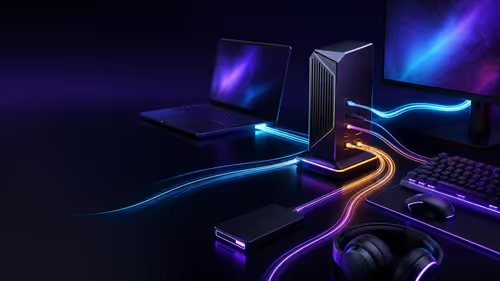
The ROG Flux Charger Dock combines 260W total output, 140W laptop charging and HDMI 2.1. SA buyers should check laptop USB-C limits, display needs and local warranty first.

ASRock's Rock 360 Digital AIO adds a 1.05-inch CPU temperature display, 360mm radiator and simplified wiring. SA builders should check case fit, socket support and local warranty.