


How to Fix FPS Drops on an RTX 5090 Build
FPS drops on an RTX 5090 build often have a fixable cause. Check settings, drivers, thermals, background tasks, network conditions, and bottlenecks before assuming a part must be replaced.
Read moreFibre internet is a must because online gaming in SA depends on stable latency, not just headline speed. It helps keep inputs, voice chat, and downloads steadier when the home network and router are also configured well.

When SA gamers ask about fibre for online gaming, the useful answer is grounded in local pricing and real use, not hype.
Fibre is close to essential for SA online gaming because it delivers low, stable latency, typically 5 to 20ms to local servers, far better than ADSL or congested LTE. Entry fibre lines from 50Mbps handle gaming comfortably. The key metric is ping stability, not just raw speed.
Online play depends on consistent low latency, and fibre provides it where copper and mobile struggle. Even a modest 50Mbps fibre line gives steadier ping than a faster but congested wireless link. Lower jitter means fewer rubber-banding moments.
For gaming, 50 to 100Mbps is plenty; pay more for upload only if you stream or host. Pair the line with a capable router and, ideally, a wired PC connection for the lowest ping. Higher speeds mainly cut download times.
Use Ethernet to the gaming PC, keep the router central, and choose servers in or near South Africa where possible. These steps matter more for feel than upgrading to a gigabit line. When in doubt, put the spare budget toward the part that limits you most. South African pricing rewards buyers who match parts to actual use. Plan a touch of headroom so the build still feels good a couple of years on. In practice, a balanced choice beats chasing the highest number on the box.
Online play needs little bandwidth; 50 to 100Mbps is ample. Stable low latency matters far more than headline speed.
Generally yes. Fibre offers lower, steadier latency, while LTE can spike under congestion, causing lag in fast games.
A cable, for competitive play. Ethernet to the PC gives the lowest, most consistent ping; Wi-Fi is fine for casual sessions.
Compare current Evetech options against your resolution target and budget before you order.
FPS drops on an RTX 5090 build often have a fixable cause. Check settings, drivers, thermals, background tasks, network conditions, and bottlenecks before assuming a part must be replaced.
Read more
How to fix low FPS on 240Hz monitor starts with refresh rate, GPU load, and game caps. In South Africa, also check power mode, thermals, and display cable quality before assuming your PC cannot keep up.
Read more
31.5-inch 4K OLED gives SA gamers sharp work space and rich contrast for play. It suits buyers who want one high-end display for study, streaming, or editing by day, then immersive gaming after hours. Check desk depth and panel care first.
Read more
All-in-One PCs are niche in SA because they package the display and desktop into one tidy unit. That helps with space and setup, but SA buyers should weigh repair access, upgrade limits, monitor choice, and gaming expectations.
Read more
All-in-One PCs are niche in SA because the neat design comes with upgrade, repair, and performance trade-offs. They appeal to tidy desks and shared spaces, but buyers often compare them against laptops, towers, and separate monitors.
Read more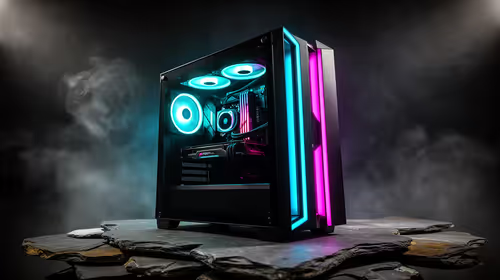
ARGB Cases In Mid-Tier SA Builds can change budget, compatibility or upgrade plans. SA PC builders should compare fit, warranty, platform needs and real workload value before committing.
Read more
Pre-Black Friday AIO cooler needs practical checks before buyers act. Build the shortlist around specs, warranty, fit, and real discount checks before campaign prices or ranges change. Keep it guide-safe for South African readers.
Used parts can lower the build cost, while buying new gives the SA warranty angle named in the title.
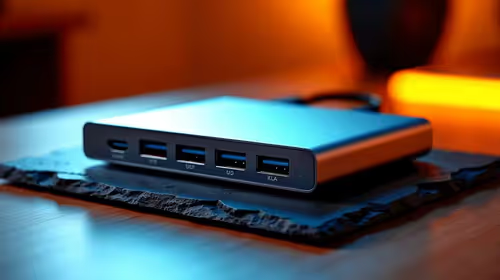
Choosing the right USB-C hub is essential for a clean, efficient desk setup. 🖥️ Discover exactly how many ports you need to replace your bulky desktop docking station without sacrificing performance or connectivity. ⚡
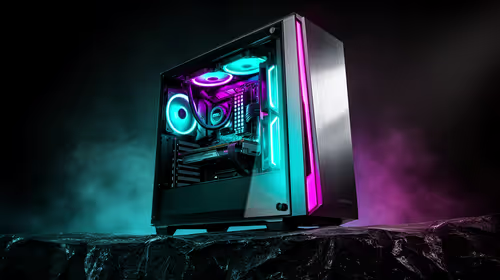
Black Friday Gaming PC Wait can help if your PC need is flexible. On a R5,000 SA budget, compare deal risk, component balance, warranty, and timing before waiting.
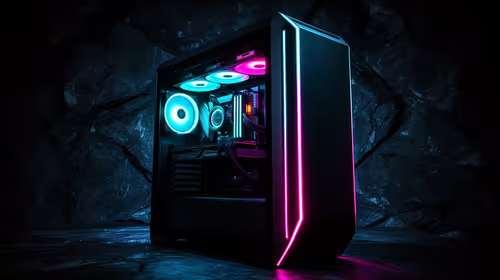
A gaming pc with a current mid-range GPU roughly matches the PS5 Pro's ray tracing and upscaled 4K performance, paired with a modern six or eight core CPU. The PC route also adds mouse and keyboard support and a far wider game library.
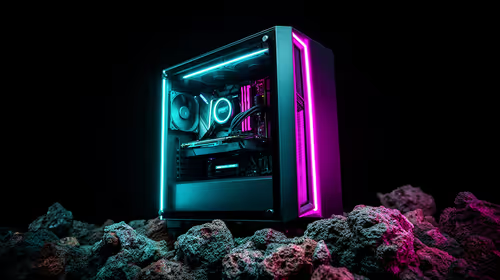
An overseas gaming pc quote is priced in foreign currency, so the Rand you pay shifts with the exchange rate on invoice day, not order day. Evetech prices locally in Rand, removing that daily currency risk from the final bill.
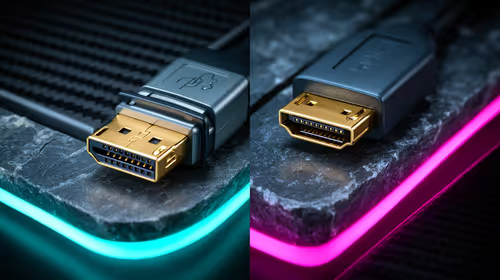
DisplayPort 2.1 carries more raw bandwidth than HDMI 2.1, so it generally wins for the highest refresh rates at full resolution, though cable choice can still cap either port. Evetech's high-refresh monitors list both port options to match your PC's output.
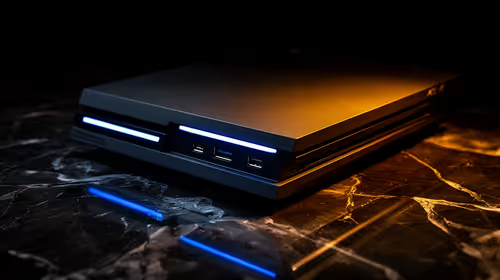
New console games routinely land near R1,400 in South Africa once import duties and Rand conversion are baked into the shelf price. Regional sales, bundle deals and a PC controller from Evetech all trim that bill legitimately, no piracy or grey imports needed.
FPS drops on an RTX 5090 build often have a fixable cause. Check settings, drivers, thermals, background tasks, network conditions, and bottlenecks before assuming a part must be replaced.
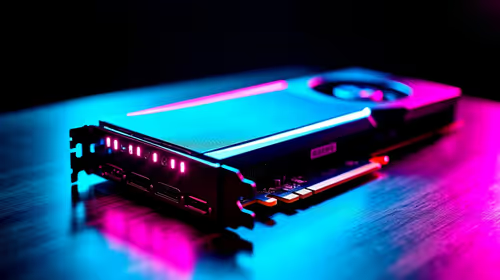
The real world difference between PCIe 5.0 and PCIe 4.0 in competitive esports is rarely raw FPS. SA esports players should compare GPU lane needs, CPU limits, latency goals, and NVMe loading before upgrading.
How to fix low FPS on 240Hz monitor starts with refresh rate, GPU load, and game caps. In South Africa, also check power mode, thermals, and display cable quality before assuming your PC cannot keep up.
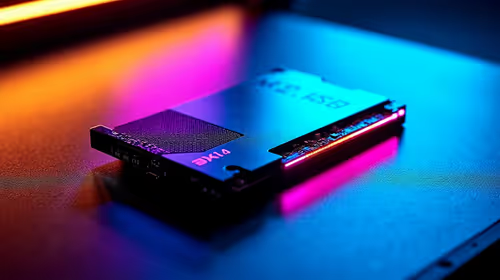
PCIe 5.0 vs PCIe 4.0 for aAA single-player gaming buyers - what changes is mostly about compatibility, budget, upgrade path, and setup fit. SA buyers should check device support and real needs before expecting a clear win from either option.