Quick Answer
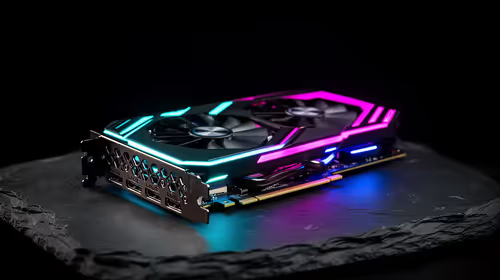
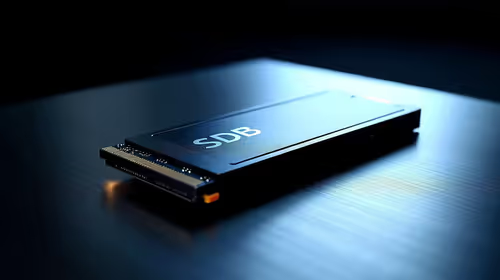
A Gen 5 NVMe SSD can contribute to FPS drops when it runs too hot, shares a cramped M.2 slot, or exposes a driver problem, but it is not always the first part to replace. Check the M.2 temperature, chipset drivers, GPU output, and the exact symptom path before buying another drive. A Crucial T705, Corsair MP700, or Samsung 990 PRO class drive can be excellent, but a R2,500-R6,000 SSD upgrade will not fix a display or network fault by itself.
Separate Storage From The Visible Symptom
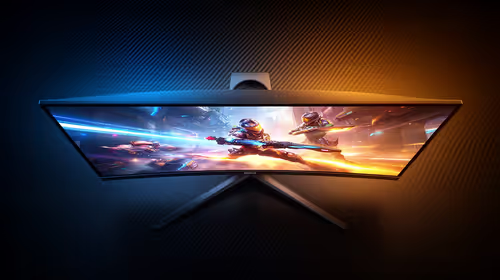
Use the symptom as the map. Wi-Fi drops point first to the network adapter, router, driver, and 2.4GHz or 5GHz conditions; ghosting points to the monitor, overdrive setting, refresh rate, and cable. FPS loss can involve storage only when the game streams large assets and the system is also hitting CPU, GPU, or RAM limits. For South Africa fibre users on Vumatel or Openserve, a router or driver reset may be more relevant than the SSD.
Check Heat And Slot Placement
Gen 5 drives can run hot under sustained writes, especially in small cases or under a GPU backplate. Keep the controller below roughly 70C during heavy copying, use the motherboard M.2 heatsink, and confirm airflow over the slot. If the drive throttles, you may see transfer speed drops from several GB/s down to a much lower sustained rate, not monitor trails by themselves.
Driver And Windows Checks
Confirm chipset drivers, storage firmware, BIOS settings, and Windows power behaviour after updates. If a new issue appeared after a restart, compare Device Manager changes and test with the game on another drive if available. A 1TB Gen 4 NVMe remains enough for many gaming PCs, while 2TB Gen 5 makes more sense for heavy game libraries and content work.
FAQ
Can an NVMe SSD make a game lose FPS?
Sometimes, but only in storage-heavy scenes or when the system is already constrained. If average FPS drops in every match, check GPU usage, CPU clocks, RAM, and drivers first.
Is a Gen 5 SSD worth it for gaming?
It is useful for fast transfers and premium builds, but many games feel similar on a good Gen 4 drive. Spend on Gen 5 when your motherboard, heatsink, and budget match the use case.
What should SA buyers check before replacing the SSD?
Check M.2 temperatures, slot heatsink contact, motherboard support, and whether a cheaper R1,200-R2,500 Gen 4 drive would solve the storage need. Do not buy a new SSD to fix Wi-Fi or panel ghosting without proof.
Storage Check
Log SSD temperature, GPU usage, and network status during the same test run; replace the drive only when the storage reading, not just the symptom timing, proves it is involved.