


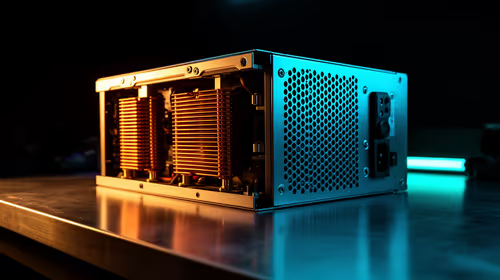
1000W PSU Planning for RTX 5090 Builds in SA
1000W for RTX 5090 needs a full-build check, not a simple yes. Review GPU guidance, CPU draw, transient load, connectors, PSU quality, and upgrade plans before deciding.
Read moreAn AM5 PC may fail to boot after a memory upgrade because seating, configuration or platform support needs correction. Return to the approved baseline, follow the exact board guidance and test one change at a time.
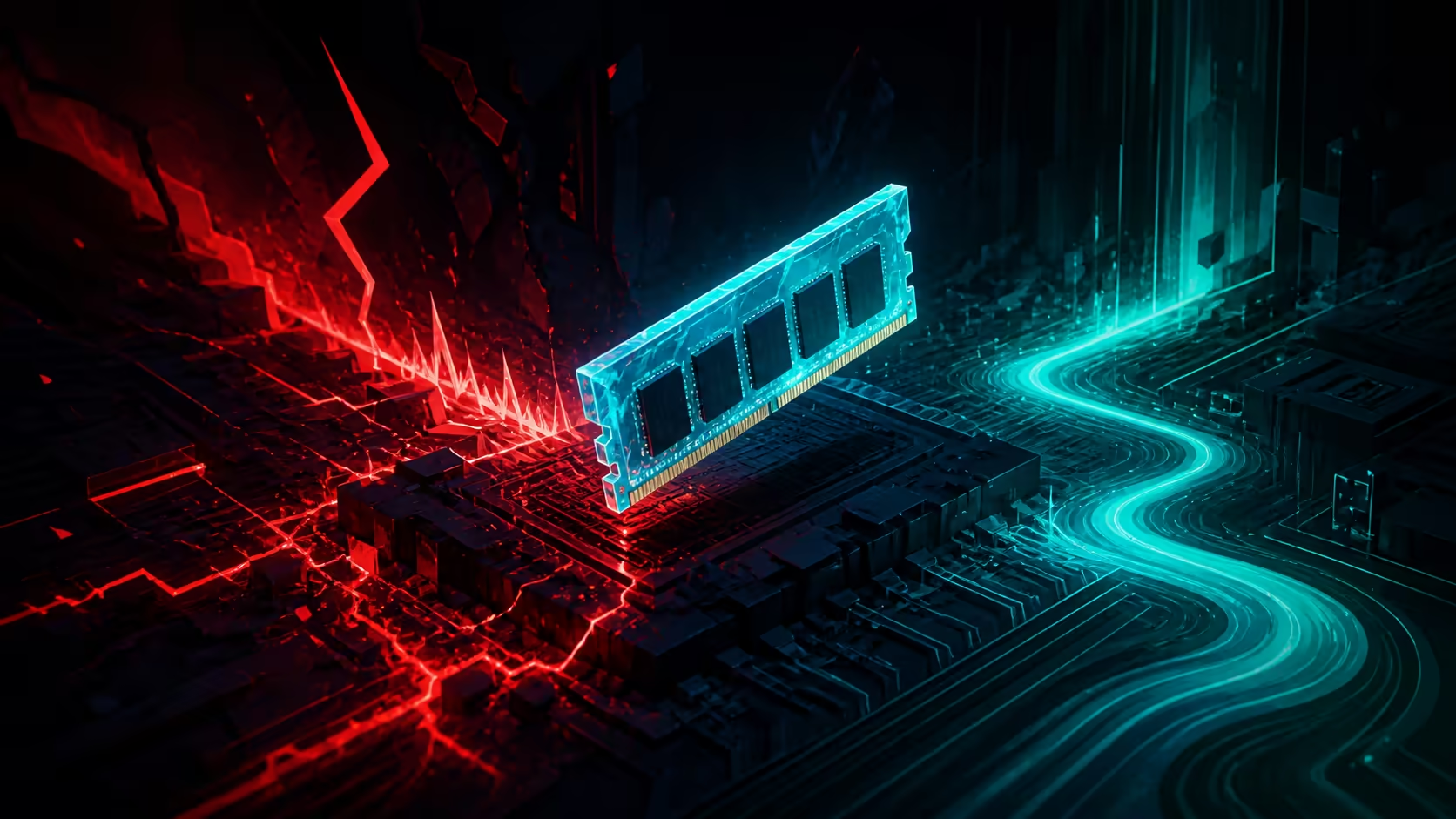
A failed startup after adding DDR5 is not proof that the new memory is defective. A controlled AM5 PC not booting after memory upgrade diagnosis returns to a baseline, checks the physical installation and follows the exact board process one variable at a time.
Power down safely, verify seating and required positions, then return the board to a supported memory baseline. In this R65,999 kit, 96GB of Corsair Vengeance RGB DDR5 carries a 5600MHz rating. Do not assume timings, training duration or firmware readiness.
Note whether the system shows no power, fails to reach a startup screen, restarts repeatedly or reaches the board interface without loading the operating system. These observations point to different diagnostic layers. Keep any board indicators or messages exactly as shown.
Identify the last change. If processor, board, cooler and memory all changed together, create a basic platform check rather than blaming DDR5 immediately. The target system's power and firmware state still need confirmation.
Compare platform bundles through Evetech's AMD barebone-kit category after documenting the failing state.
Disconnect power through the appropriate process and use the motherboard guide for module positions and reseating. Keep the 5600MHz rating separate from the first startup state. Optional frequency settings should not be the starting point for a recovery test.
If the board guidance permits isolation, change only one module or position at a time and write down each result. Do not impose a universal memory-training wait or use timings copied from another kit. The exact Corsair modules and board instructions govern the next step.
The bundle's CPU is Ryzen 9 9950X3D2. Confirm that the Crosshair board is prepared for that exact processor and any required firmware procedure was completed correctly; a memory symptom can mask another readiness issue.
Avoid changing processor settings, memory frequency and board firmware simultaneously. Restore the last understood state before moving to the next layer. When a procedure is unclear, use the exact model guidance rather than continuing random retries.
Evetech's Ryzen 9 upgrade-kit selection supplies context for the full component group, not a shortcut around diagnosis.
A recovery should produce repeatable startup and recognition of the intended memory capacity. Restart more than once under the same baseline and observe whether the symptom returns. Then test a representative workload before adding optional tuning.
Save the passing module arrangement, firmware state and memory configuration. If instability reappears after a single change, reverse that change and reproduce the result. This evidence is more useful than a one-time successful boot.
Before opening the case again, write the symptom as an exact event: no display after power, repeated restart, memory not fully detected or failure only during a particular task. These observations point to different branches. Record indicator behaviour and the last successful configuration, then consult the precise board guidance for the relevant diagnostic step. If the system changes state, document what single action preceded it. This evidence is especially useful with a four-part platform transition, where uncontrolled reseating and settings changes can otherwise make a simple issue appear random. Keep the diagnostic notes beside the machine until repeated starts succeed.
Keep dated notes until repeated cold and warm starts succeed without the original boot symptom.
Mark the first repeatable successful boot as the diagnostic return point before reconnecting optional hardware.
Describe exactly how far startup proceeds and capture any board indicator or message before changing hardware again.
It removes optional frequency and tuning variables, giving physical installation and platform readiness a clearer test.
No. Follow the exact motherboard guidance and avoid assigning a fixed wait to every AM5 configuration.
The package's Corsair Vengeance RGB modules provide 96GB and carry a 5600MHz frequency rating.
Review it when preparing the exact CPU and board, or when baseline hardware checks cannot explain the startup failure.
The full Ryzen 9 9950X3D2 upgrade kit costs R65,999.
Ready to diagnose an AM5 startup failure methodically? Explore Evetech's Ryzen 9 and barebone kits after capturing the exact symptom and restoring a supported memory baseline.
Describe exactly how far startup proceeds and capture any board indicator or message before changing hardware again.
It removes optional frequency and tuning variables, giving physical installation and platform readiness a clearer test.
No. Follow the exact motherboard guidance and avoid assigning a fixed wait to every AM5 configuration.
The package's Corsair Vengeance RGB modules provide 96GB and carry a 5600MHz frequency rating.
Review it when preparing the exact CPU and board, or when baseline hardware checks cannot explain the startup failure.
The full Ryzen 9 9950X3D2 upgrade kit costs R65,999.
1000W for RTX 5090 needs a full-build check, not a simple yes. Review GPU guidance, CPU draw, transient load, connectors, PSU quality, and upgrade plans before deciding.
Read more
RTX 5080 Super with a 750W PSU is more comfortable than lower wattage if the unit is quality. SA builders should still confirm GPU guidance, CPU draw, connector type, airflow, and upgrade room.
Read more
How to fix FPS drops after a RX 9070 XT starts with driver cleanup, chipset updates, thermals, and power checks. For SA gaming PCs, confirm PCIe seating, monitor refresh, frame caps, and per-game graphics settings before replacing parts.
Read more
How to fix low FPS Windows 11 Wi-Fi 7 issues starts by checking whether the problem is frame rate or network lag. Test ping, drivers, power settings, Ethernet, and game FPS before adjusting visuals.
Read more
AM5 is smart for SA builders because it supports newer Ryzen CPUs, DDR5 memory, and a longer upgrade path. Compare board cost, cooling, gaming needs, and local part availability before choosing your next PC platform.
Read more
AM5 gives Randburg gaming builders a longer upgrade path. For SA buyers, DDR5 support, newer board features, and future CPU options can justify the platform. Weigh board cost, cooler support, BIOS maturity, and upgrade timing before choosing.
Read more
RTX 5090 on a 550W PSU leaves almost no practical room for OC plans. Treat the setup as constrained, with CPU draw, power spikes, cable quality, thermals, and stability checks more important than chasing extra clocks.
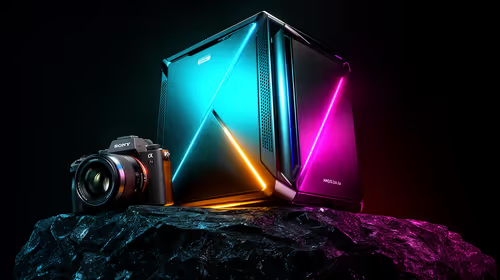
FPS drops on a Ryzen 9 9950X3D build often have a fixable cause. Check settings, drivers, thermals, background tasks, network conditions, and bottlenecks before assuming a part must be replaced.

The difference between PCIe 5.0 and PCIe 4.0 for SA gamers is mostly bandwidth headroom. Compare GPU slot needs, NVMe speed, motherboard support, and upgrade timing before paying extra for a newer platform.

Gaming PC stuck pixel checks in South Africa should confirm the monitor fault first. Use colour tests, screenshot comparison, cable swaps, display menu checks, and clear photos before deciding on support.

AMD's current driver now lists a Radeon RX 9050 4GB, while product coverage details a narrowed memory system. SA buyers should weigh the low VRAM ceiling against current local Radeon options.

Samsung Display has demonstrated a 16-inch 2.5K OLED laptop panel running at 300Hz. SA buyers should wait for a named notebook, full panel specifications and a local price before planning an upgrade.

Microsoft says some Windows 11 game crashes after recent updates are linked to RGB-related drivers. Affected SA gamers should confirm the update and driver before using the published registry workaround.
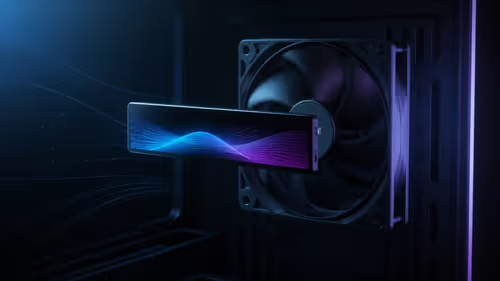
Thermalright's Fan Frame Vision-1 adds a 640x172 status screen to a standard 120mm fan. SA builders should check clearance, USB routing and local support before treating it as an easy upgrade.
1000W for RTX 5090 needs a full-build check, not a simple yes. Review GPU guidance, CPU draw, transient load, connectors, PSU quality, and upgrade plans before deciding.

Wi-Fi 6E vs Wi-Fi 6 matters for 4K video editing when files move across a network. The real-world difference between Wi-Fi 6E and Wi-Fi 6 for video editing in 4K depends on NAS access, cloud uploads, router range, and SA creator workflows.
RTX 5080 Super with a 750W PSU is more comfortable than lower wattage if the unit is quality. SA builders should still confirm GPU guidance, CPU draw, connector type, airflow, and upgrade room.
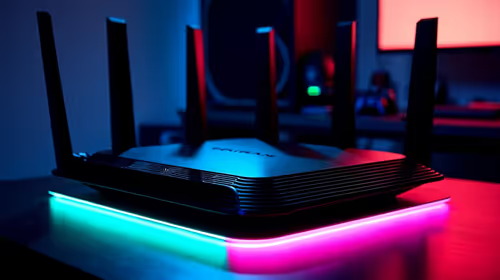
Wi-Fi 6E vs Wi-Fi 6 for Video Editing in 4K comes down to router support, latency, client devices, band support, and home network layout. SA buyers should match the choice to their setup instead of assuming one option always wins.