Most vertical GPU mounts questions come down to a handful of practical trade-offs, so here is the honest breakdown.
Quick Answer
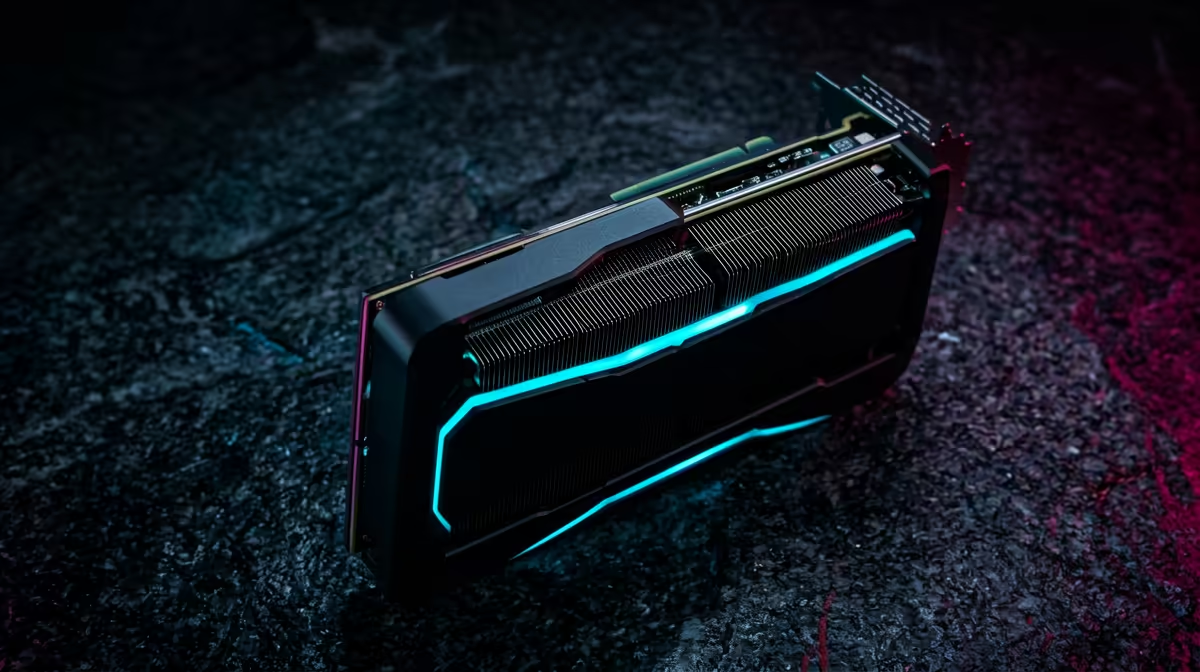
Vertical GPU mounts are catching on in SA enthusiast builds because they show off the card behind a glass panel; just confirm PCIe riser quality and case clearance so airflow isn't choked, and budget around R1,200 for a quality PCIe riser kit.
What to check before you buy
Confirm compatibility with your existing parts, read recent SA pricing, and plan headroom for an upgrade. With vertical GPU mounts, a small amount of research saves a costly mismatch. Balance today's need against the next two years.
Common mistakes to avoid
The frequent error is overspending on vertical GPU mounts while starving the part that actually limits performance. Size each component to your resolution and budget. A balanced build always beats one flashy component and weak supporting parts.
How this affects an SA build
Local pricing, the rand and import costs shape what vertical GPU mounts costs here, so the smart move is to match the part to real use. A mid-range pick that hits your frame-rate or workflow target beats an overspend you won't feel.
A little planning here saves money and a return trip later on.
South African pricing rewards buyers who match parts to actual use.
Plan a touch of headroom so the build still feels good a couple of years on.
FAQ
What pairs best with vertical GPU mounts?
A current-gen CPU, 16 to 32GB of fast RAM and a quick NVMe. Keeping the supporting parts balanced lets you feel the full benefit.
How much should I budget for vertical GPU mounts?
Set your resolution target first, then buy the tier that clears it. Mid-range parts handle 1080p and 1440p well; reserve top-end gear for 4K or creative work.
Should I buy now or wait?
If the price suits your budget and you need it, buy. Prices move both ways, and a balanced build today serves you better than waiting indefinitely.
Compare current Evetech options against your resolution target and budget before you order.