Vertical GPU mounting is one of the most visually striking things you can do to a build, and it is also one of the more overlooked ways to accidentally undo other work you have already paid for. A card standing upright across the case can quietly hide exactly the cable work you set out to show off, and it is worth thinking that through before ordering either the riser or the cable accessories.
Quick Answer
A vertically mounted graphics card sits across the middle of the case and can obscure the board area behind it, including the 24-pin run and often the processor run, which is precisely where a lot of dressed cable work usually lives. Decide which effect matters more - the card's face or the board's cabling - before buying both the riser and any cable covers for that same area.
🖼️ What a vertical card covers, and what it shows instead
Once mounted vertically, a graphics card occupies a wide band across the middle of the case, and depending on its size and the bracket position, that band frequently sits directly over the board area where the 24-pin ATX run and sometimes the CPU power run are dressed. If real effort went into a lit or sleeved cable there, a vertical card can put most of it out of sight behind its own shroud. In exchange, the card's own face - shroud, fans, branding - becomes the thing on display, rather than the usual edge-on view a horizontal slot gives you. It is a genuine trade: the card's appearance replaces the board's as the feature, and a build cannot fully show both from the same angle.
🔌 Which cable work actually survives
Not everything disappears. The graphics power run itself - whether that is the older 8-pin PCIe leads or a Hydrus 16-pin cable - travels to the card and typically remains visible, since it has to reach the card's connector regardless of orientation. Anything routed along the lower portion of the case, below where the card sits, also tends to stay in view. It is specifically the board-area cabling directly behind the card's new position that takes the hit, along with any lit fans from the case fan range mounted in that same shadowed strip.
🎚️ Can both effects be partially preserved?
To some extent, yes. A card mounted lower in the case, or a bracket that keeps the card positioned toward the bottom of the window rather than dead centre, can leave the upper board area - and whatever is dressed there - still visible above it. That is worth discussing with whatever bracket or riser setup is being planned, since not every vertical mount configuration hides the same amount of the board.
💰 What the riser itself actually costs
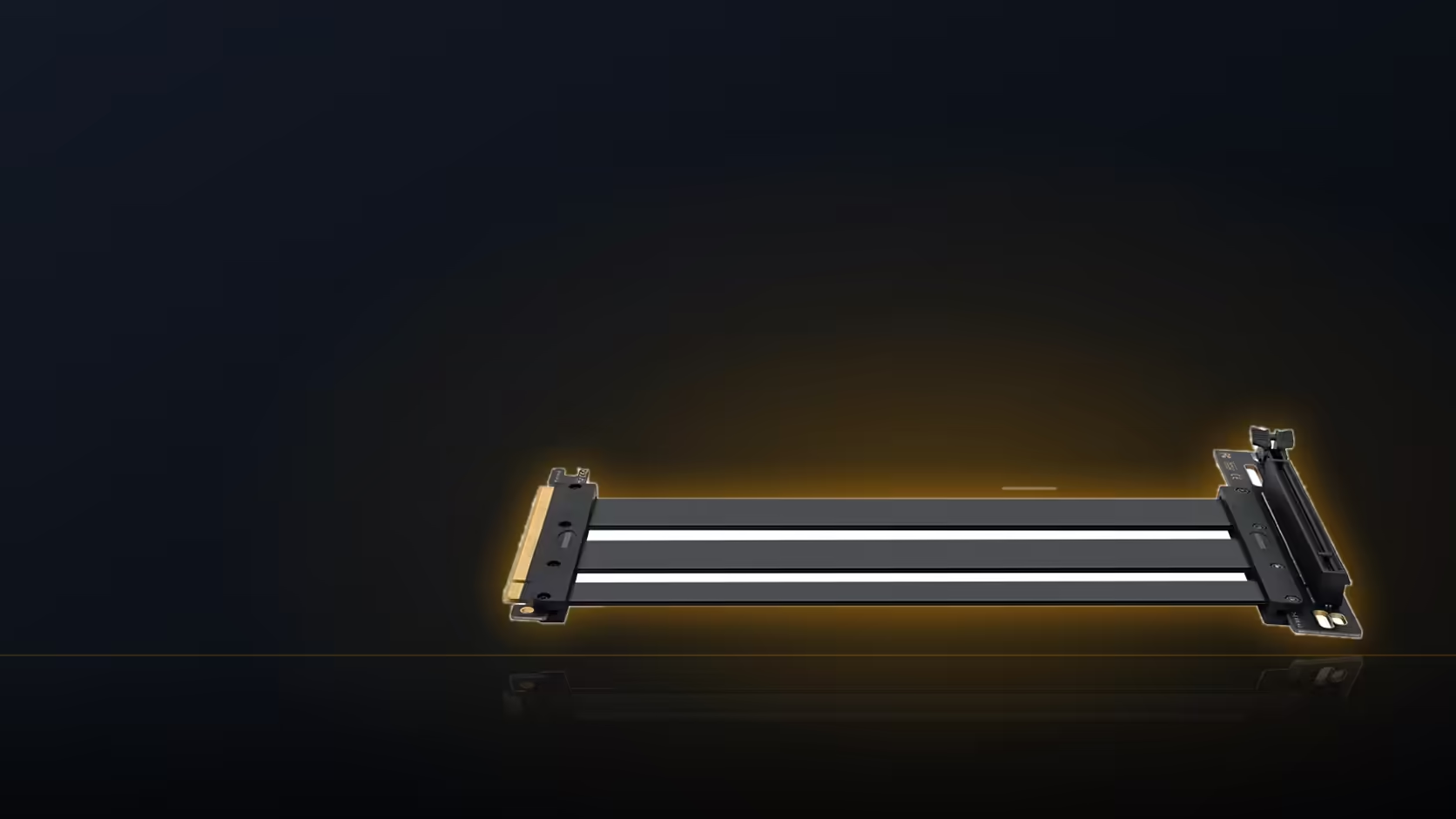
The AsiaHorse PCIe 5.0 riser cable is R1,299 for the 200mm cable alone, plus a compatible mounting bracket on top - a genuinely significant addition to a build's budget, worth weighing against however much was already spent dressing the cable run the vertical mount is likely to cover up.
🧭 Decide the priority before buying either
Settle this question before ordering, not after. Spending on cable covers for a run a planned vertical card is going to hide is money spent on an effect nobody will see once the build is finished, and the reverse holds too - dressing a board run beautifully and then adding a vertical card without checking clearance undoes work already done.
🔀 A middle path worth considering
One reasonable compromise is to put the deliberate cable work on the graphics run instead of the board run, since that is the length of cable a vertical mount actually keeps in view. Dressing the card's own power lead with a Hydrus cable, rather than the 24-pin board run, means the visible cable work and the vertical card's own presence both stay on display at the same time, from the case accessories range rather than fighting each other for the same space.
Frequently Asked Questions
What does a vertical graphics card actually cover up?
The board area behind it, which is typically where the 24-pin run and often the processor power run are dressed and displayed.
Does the vertical mount show anything new in exchange?
Its own face, which is the entire point of the arrangement - the trade is the card's appearance against the board's cabling.
Which cable work usually survives a vertical mount?
The graphics power run itself, since it has to reach the card's connector regardless of orientation, along with anything routed low in the case.
Can both the card and the board cabling be shown at once?
Partly - a card mounted lower, or a bracket keeping it toward the bottom of the window, can leave the upper board area still visible.
What does the riser cable itself cost?
R1,299 for the 200mm cable alone, plus a separate compatible mounting bracket, making it a significant addition to any build's budget.
Should the decision come before or after buying cable accessories?
Before - spending on covers for a run a planned vertical card will hide is money spent on an effect nobody will ever actually see.
Is there a compromise that keeps both effects visible?
Dressing the graphics power run instead of the board run puts the visible cable work exactly where a vertical card keeps it in view.
Weighing a vertical GPU mount against your cable work?
Check Evetech's case accessories to see which run stays visible before committing to the riser.