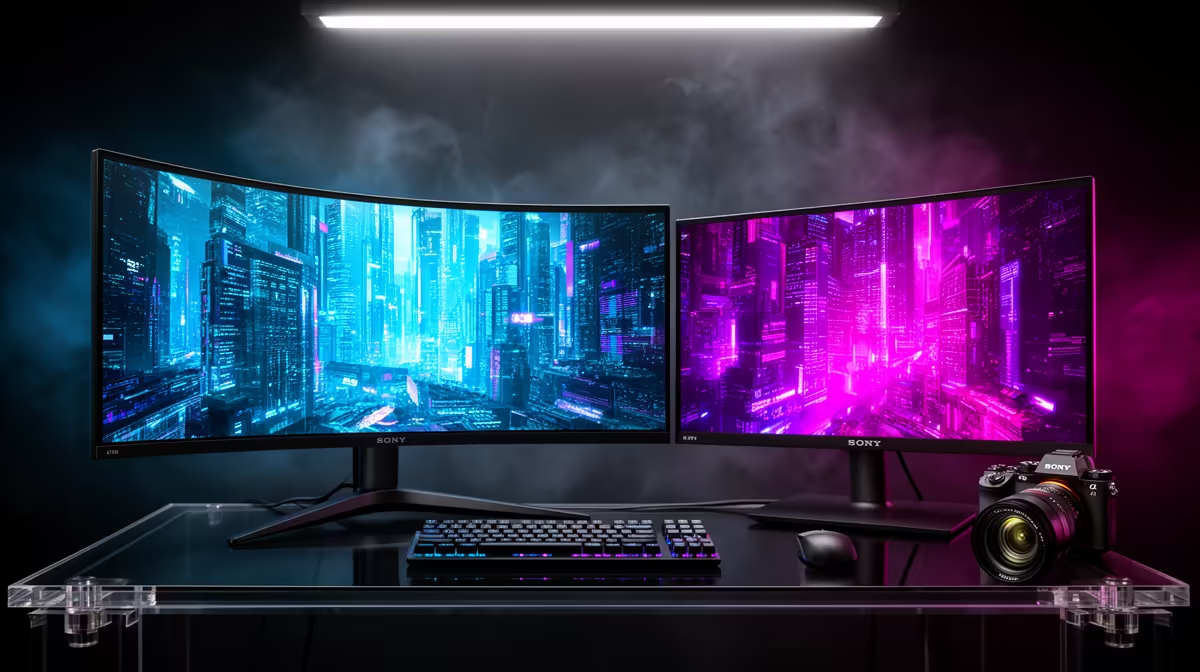
Choosing a 32:9 super-ultrawide over a dual-monitor setup is really a choice between one immersive canvas and two flexible panels. Your answer depends on whether immersion or multitasking matters more day to day.
Quick Answer
A 32:9 super-ultrawide is the pick for immersive single-screen gaming and wide creative work, while dual monitors suit multitaskers who want separate, swappable panels. Expect a quality 49-inch 32:9 to cost above R15,000, often more than two good 27-inch screens. Let your dominant use decide.
The case for one wide panel
A 49-inch 32:9 delivers a single, bezel-free view that pulls you into racing, flight, and open-world games, and gives creators an uninterrupted wide timeline. One cable, one stand, one seamless image. The downsides are the price, typically north of R15,000 for a good unit, and the desk depth needed to view such a wide panel comfortably without turning your head constantly.
The case for two screens
Dual monitors let you keep a game full-screen on one and reference material on the other, and you can replace or upgrade one panel independently. Two quality 27-inch screens often cost less than one super-ultrawide, and you can angle them to your liking. For work-heavy days with occasional gaming, the flexibility of two panels usually wins.
FAQ
Is one 32:9 better than two monitors for gaming?
For immersion in supported titles, yes, thanks to the seamless view. For competitive or multitasking-heavy use, dual monitors offer more flexibility. Choose by your main gaming style.
Can I run two screens off one GPU easily?
Yes. Any modern GPU drives dual monitors comfortably. Just ensure it has the output ports your chosen monitors need.
Which is the better value?
Dual 27-inch monitors usually cost less than a quality 32:9 and let you upgrade one at a time, making them the more flexible value choice for most buyers.
Pro Tip
the 32:9 for one immersive canvas or dual monitors for flexible, swappable screens; match the choice to whether you game or multitask more.