Whether anti-slip rubber keeps a portable monitor secure on a desk depends on the entire arrangement. Rubber can add grip at contact points, while screen fit, surface condition, arm position and cable forces still need to be checked directly.
Quick Answer
All-around rubber helps secure the mounted screen, while the UStand's anti-wobble frame and anti-tip base address movement beyond simple surface grip.
For R399, the aluminium UPERFECT UStand places rubber around its contact zones. Clean the desk, centre a 7-15.6-inch display and inspect seating after changing the arm, orientation or charging cable.
🧽 Prepare the Desk
Remove paper, dust, moisture and loose objects from the setup area. Place the stand without a display and observe whether its intended base contacts meet the worktop evenly. A rubber feature cannot make an unsuitable surface appropriate.
Avoid setting the stand partly on a mat and partly on the bare desk. Mixed heights and textures can produce uneven contact. If the unloaded base rocks or shifts, choose another position before mounting anything.
The UStand's aluminium construction describes its material. Neither aluminium nor rubber establishes a specific load limit, clamp method or universal security outcome.
📱 Fit the Exact Device
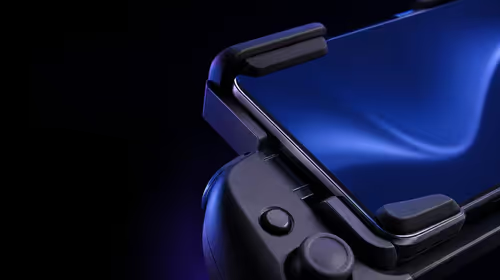
Confirm the portable screen is inside the 7-15.6-inch diagonal range. Then inspect edge profile, controls and connector placement. Size compatibility is not the same as exact seating.
Lower the display against the rubber zones without dragging it. Look along both sides and check that the body remains centred. If a button or plug meets the support, stop and reconsider the arrangement.
Compare candidate screens through Evetech's portable monitor range with physical fit included in the decision.
🎛️ Recheck Every Change
The folding arm moves across 135 degrees and the screen section turns through 360 degrees. Support the display during adjustment, use small steps and inspect rubber contact after each one.
Complete mechanical travel may exceed the useful room on a particular desk. Stop before the screen meets a wall, monitor or other object. The chosen position should preserve seating rather than merely reach an impressive angle.
If grip changes after movement, return to the previous sound position and identify the cause instead of adding makeshift pressure.
🔌 Control Cable Pull
A compatible device may charge in place. Route the lead after setting the view, keep it outside the arm joint and provide enough slack to avoid sideways pull.
Browse monitor accessories at Evetech for related components, confirming connector support for the exact screen.
After plugging in, repeat the base and device-contact checks. A correctly placed cable should supply the monitor without becoming part of its support.
Observe the setup again after normal desk activity. Reaching for notes or moving a keyboard can reveal an obstacle that was invisible during the initial placement. If any contact changes, unload and rebuild the arrangement instead of wedging another object against the stand. Added pressure is not a substitute for correct fit.
Keep drinks and cleaning moisture outside the support area. Surface condition is part of contact and should remain carefully controlled throughout the session.
The rubber needs a clean dry desk and device contact to work properly. Centre the screen within the 5.9-to-9.56-inch holder range and avoid a tight cable pulling sideways. When the 135-degree arm extends forward, verify the base still lies flat. These combined controls make security a structural feature, although deliberate bumps can still disturb any portable stand.
Grip should be tested with ordinary typing and touch input, because static placement alone does not reproduce the small forces of real desk use.
Stability comes from grip, geometry and a centred device working together.
Retest desk grip after every major repositioning.
Frequently Asked Questions
Where is anti-slip rubber used on the UStand?
Rubber meets the intended device and worktop areas, contributing grip alongside correct placement.
Can rubber compensate for poor device fit?
No. A screen must still seat squarely without blocked controls, trapped connectors or unsupported edges.
Why does the desk surface still matter?
Dust, soft layers, moisture or uneven levels can interrupt contact regardless of the rubber fitted to the stand.
Should grip be rechecked after adjustment?
Yes. Arm movement, screen rotation and relocation can all change how the contact zones meet their surfaces.
Does the material establish a load limit?
It does not. A supported weight requires an explicit product figure, not an inference from aluminium or rubber.
How much is the aluminium anti-slip stand?
The UStand costs R399, including its contact treatment, two adjustments and flat-folding structure.
Can charging disturb the support points?
A tight or trapped lead can introduce force, so mounted charging should use a clear route with adequate slack.
Want to build a better-contact desk arrangement?
Explore monitor stands at Evetech after checking your surface, exact screen seating and the pull from every cable.