Quick Answer
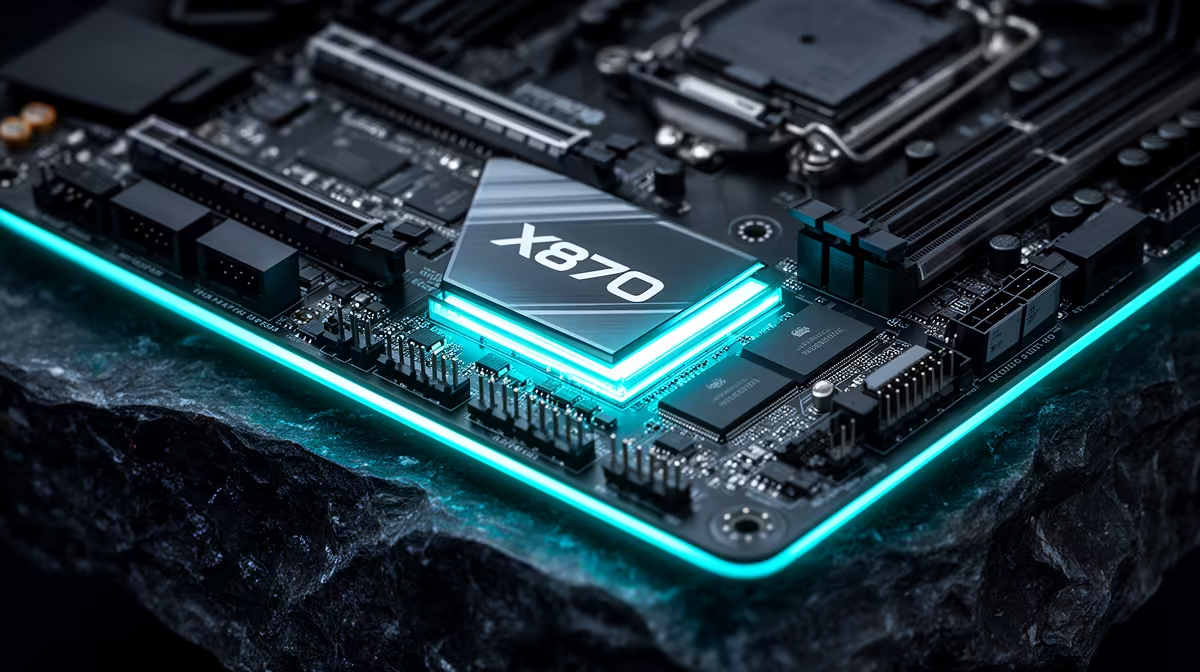
X870 M.2 slot speed is about PCIe lane generation and lane sharing: the top CPU-connected slot is usually the fastest, while lower slots may share bandwidth with chipset devices or expansion cards. For most SA gaming PCs, a PCIe 4.0 NVMe drive such as Samsung 990 Pro is already fast enough; PCIe 5.0 matters most for large file work and benchmarks.
Slot Speed In Plain Terms
A PCIe 5.0 x4 M.2 slot has a much higher ceiling than PCIe 4.0 x4, but games rarely use that full bandwidth. The visible difference is mostly huge file copies, video projects, and sustained drive tests. A 2TB PCIe 4.0 SSD can be a better R20,000-R30,000 gaming build choice than a smaller PCIe 5.0 drive.
Lane Sharing Checks
Read the storage table before filling every slot. Some X870 boards reduce a PCIe slot speed or disable a lower M.2 slot when all storage positions are used. Builders with an RTX 5070 or RTX 5080 should keep the GPU slot at its intended speed and install the main SSD in the CPU-connected M.2 slot first.
Practical SA Build Advice
Choose capacity before chasing headline speed. Modern AAA games can exceed 100GB, so 2TB is often more useful than a smaller premium drive. Pair an MSI MAG X870 Tomahawk or ASUS TUF Gaming X870-Plus with 32GB DDR5 and a case with airflow over the motherboard heatsinks.
FAQ
Is PCIe 5.0 M.2 required for gaming?
No. PCIe 4.0 NVMe storage is already quick for game loading and Windows use. PCIe 5.0 is useful when you move very large project files or want maximum storage benchmarks.
Which M.2 slot should I use first?
Use the top CPU-connected M.2 slot for Windows and the main games drive. It normally has the best lane path and the strongest heatsink.
Can filling every M.2 slot slow my GPU?
It can on some boards. Check the manual lane table before installing three or four drives, especially with a large RTX graphics card.
Pro Tip
Install the main 2TB NVMe drive in the top CPU-connected slot, then check the lane table before adding secondary drives.