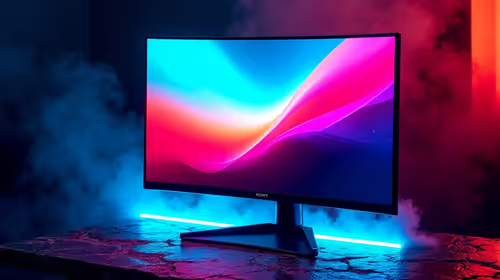
Another Stage 4 notification? Great. For South African gamers, loadshedding isn't just an inconvenience... it's the final boss. While your UPS keeps your PC alive, that power-hungry monitor is draining your battery faster than you can say 'GG'. But what if your screen could sip power instead of guzzling it? Choosing one of the best low-power monitors for loadshedding is your secret weapon for longer, uninterrupted gaming sessions. Let's find you a screen that can outlast the outage.
Why Your Monitor's Wattage is a Loadshedding Game-Changer
When the power clicks off and your inverter kicks in, every single watt counts. Your PC, router, and lights all draw from a limited battery supply. Often, the most overlooked power drain is your monitor. A big, bright gaming display can easily pull 50-80 watts, while an energy-efficient model might use as little as 15-25 watts.
Think of it this way: cutting your monitor's power usage in half could give you an extra 30-60 minutes of uptime. That's enough time to finish your match, save your work, or just relax with a movie. Finding a good low-power monitor for your inverter isn't about compromising... it's about strategizing. It’s a crucial upgrade for any loadshedding-proof setup, and we have a massive selection of PC monitors to get you started. 🖥️
Key Features in the Best Low-Power Monitors
Finding the perfect energy-saving screen doesn't mean you have to settle for a dim, slow display. Modern tech allows for incredible performance with minimal power draw. Here’s what to look for when choosing a low-power monitor in South Africa.
Panel Technology & Backlighting
Almost every modern monitor uses LED backlighting, which is fantastic for energy efficiency. Compared to older CCFL technology, LEDs use significantly less power and produce less heat. While OLEDs offer stunning contrast, they can sometimes use more power when displaying bright, white screens (like a document or web page). For most users, a high-quality LED monitor is the sweet spot for performance and low consumption.
Check The Specs! ⚡
Before you buy, always check the monitor's official spec sheet on the Evetech product page. Look for "Power Consumption (Typical)" or "On-mode Power Consumption". This value, measured in watts (W), is the most reliable indicator of how much power the monitor will draw during normal use. A figure under 25W is excellent for a 24-inch screen.
Does Gaming Performance Suffer?
Absolutely not! Many of the most efficient monitors still pack a punch for gamers. You don't have to sacrifice refresh rates or smooth gameplay. Manufacturers have optimised their hardware to deliver a great experience without draining your inverter. Look for displays that support Adaptive Sync technology to eliminate screen tearing. Whether you're on Team Green or Team Red, you can find models with NVIDIA G-Sync compatibility or features like AMD FreeSync that don't add a significant power penalty.
Top Brands for Energy-Efficient Displays
While most manufacturers offer energy-conscious models, a few consistently produce some of the best low-power monitors for loadshedding.
- HP: Known for their brilliant office and productivity monitors, HP often prioritises low power consumption and ergonomic designs, making them a fantastic choice for work-from-home setups that need to survive power cuts. 👍
- AOC: A true gaming favourite, AOC has perfected the art of balancing high refresh rates with reasonable power draw. Their 24-inch gaming models are particularly popular for loadshedding setups.
- Dahua: While well-known in the security space, Dahua produces incredibly reliable and efficient monitors that are perfect for general use, offering great value and low wattage.
Quick Tips to Maximise Your Uptime 🔋
Once you have your new energy-efficient monitor, you can stretch your battery life even further with a few simple tweaks:
- Lower the Brightness: This is the single most effective way to reduce power consumption. Dropping brightness from 100% to 70% is barely noticeable but can save several watts.
- Use Dark Mode: On both Windows and macOS, enabling system-wide dark mode can slightly reduce power usage, especially on certain panel types.
- Set a Shorter Screen Sleep Timer: Make sure your monitor turns off automatically after a few minutes of inactivity. It's a simple habit that saves power over time.
Choosing the right hardware is the best way to fight back against loadshedding. A smart monitor choice keeps you productive and entertained when Eskom lets you down.
Ready to Outlast the Outage? Don't let loadshedding dictate your screen time. An energy-efficient monitor is a smart investment for any South African with an inverter or UPS. Explore our full range of PC monitors and find the perfect low-power display to keep you in the game.