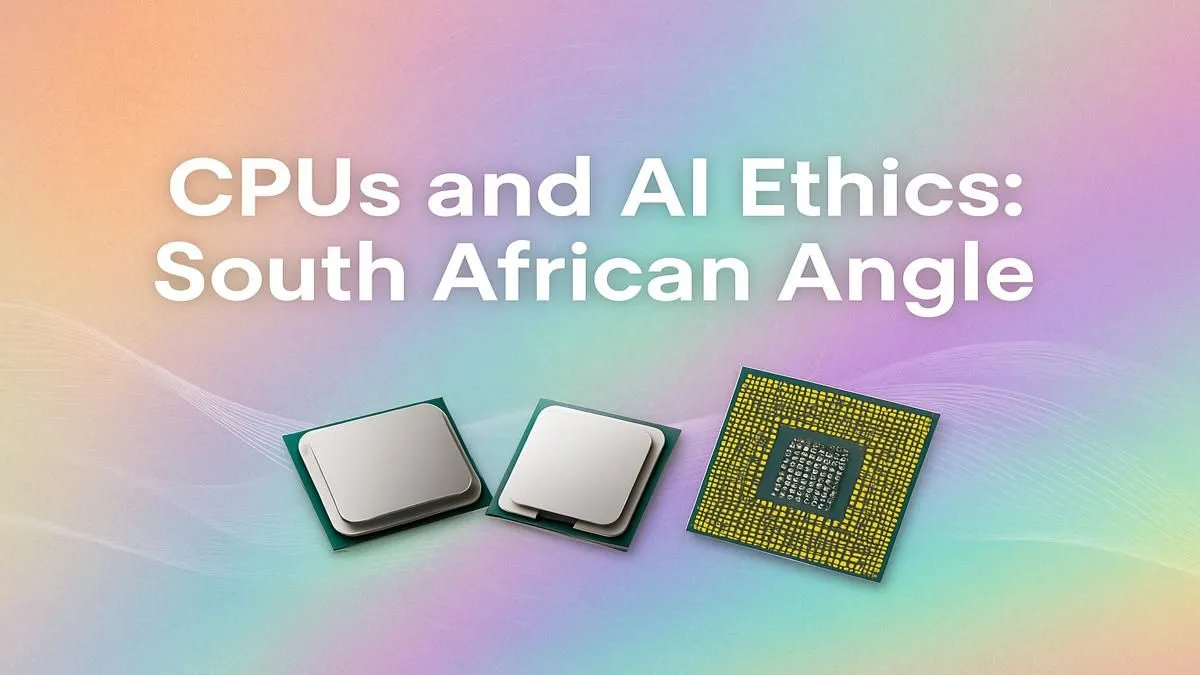
From Midjourney art to ChatGPT essays, AI is everywhere. But as these tools get smarter, tough questions are popping up right here at home. The conversation around AI ethics in South Africa isn't just about code; it starts with the silicon heart of your PC—the CPU. The processor you choose today is already shaping the digital world we'll all live in tomorrow. Ready to see how? 🇿🇦
The Core of the Matter: How CPUs Drive AI Decisions
It’s easy to think of Artificial Intelligence as a cloud-based mystery, but every single AI calculation happens on physical hardware. The speed, efficiency, and power of a Central Processing Unit (CPU) directly limit what an AI model can do... and how quickly it can learn. A more powerful processor can handle more complex algorithms, analyse bigger datasets, and ultimately deliver more nuanced results.
This direct link between hardware and capability is central to the discussion on AI ethics South Africa. For developers and researchers working locally, having access to cutting-edge hardware is crucial. Processors with high core counts, like many of the latest AMD CPUs, are brilliant at parallel processing—the exact kind of heavy lifting required to train a neural network. Without this power, local innovation could lag behind.
Navigating AI Ethics in a South African Context
So, what are the specific ethical hurdles we face in SA? They're complex and deeply rooted in our unique social landscape. Think about:
- Algorithmic Bias: If an AI is trained on biased historical data, it can perpetuate inequality in areas like job recruitment or loan applications. A key challenge for AI ethics in South Africa is ensuring that models are trained on diverse, representative local data.
- Data Privacy: With the Protection of Personal Information Act (POPIA), how we handle data is under scrutiny. Powerful local processing allows more data to be handled on-site or within national borders, offering greater control.
- The Digital Divide: Access to technology is not equal. Ensuring that the benefits of AI don't just deepen existing inequalities is a massive ethical consideration.
Making the right hardware choices is a foundational step. Whether you're an enthusiast building a powerful rig or a business upgrading its infrastructure, selecting the right CPU processors can empower you to run more secure, localised, and potentially less biased AI applications.
Check Your AI Workload ⚡
Curious how much your CPU is sweating during an AI task? Open the Windows Task Manager (Ctrl+Shift+Esc), go to the 'Performance' tab, and select 'CPU'. If you see specific cores maxing out, it might be time for an upgrade with more cores to handle those complex parallel processing jobs that AI loves.
Your PC Build: A Vote for Our Digital Future
Every tech purchase you make sends a signal to the market. By investing in a powerful CPU, you're not just buying a better gaming experience; you're equipping yourself for the future. Modern processors, especially high-performance chips like the newest Intel Core processors, often include dedicated AI acceleration features right on the silicon. 🧠
These on-chip Neural Processing Units (NPUs) make AI tasks like real-time video effects, smart noise cancellation, and even AI-assisted gaming features run incredibly efficiently without bogging down your whole system.
Choosing a CPU with these capabilities means you're ready for the next wave of software. It means you’re supporting the development of more sophisticated and accessible AI tools. In a small way, your choice contributes to a more technologically empowered South Africa, shaping the future of local innovation from your very own desktop.
Ready to Power Your AI Future? The debate on AI ethics South Africa is just beginning, but one thing is clear: it all runs on powerful hardware. Whether you're training a model or just want the best performance for gaming and creating, the right CPU is crucial. Explore our massive range of CPUs and find the perfect processor to build your world.