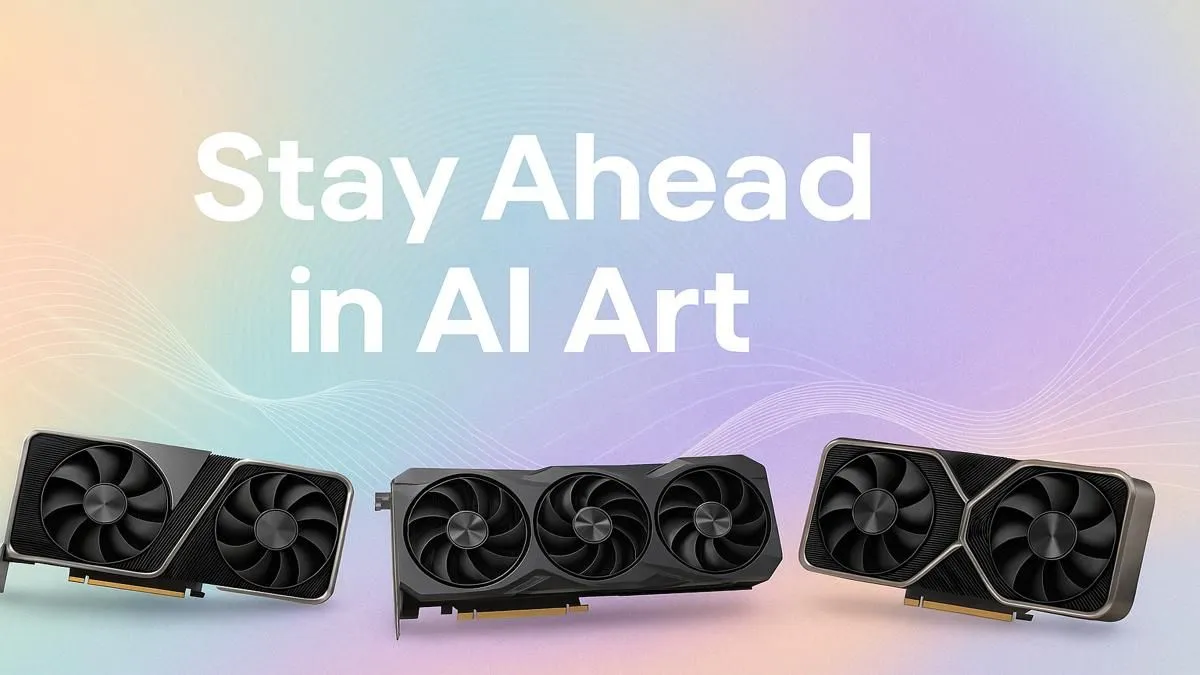
Keen to jump into the AI art craze with Midjourney or Stable Diffusion? From Joburg to Cape Town, creatives are discovering this new digital frontier. But your old gaming GPU might feel like it's finger-painting... painfully slow. The secret to generating stunning images in seconds, not hours, is having the right hardware. Finding the best GPU for AI art isn't just an upgrade; it’s like trading your crayons for a master’s toolkit. Let's get you creating. 🎨
Why Your Graphics Card is the Engine for AI Art
Think of AI art generation like this: the AI model is your blueprint, the prompt is your instruction, and your Graphics Processing Unit (GPU) is the high-tech factory that builds the final image. Every image you create requires billions of calculations. A powerful GPU performs these calculations in parallel at incredible speeds, while a weaker one... well, it takes its sweet time.
The key difference comes down to specialised hardware. Modern GPUs have thousands of cores designed for exactly this kind of heavy lifting. This is why even a top-end CPU can't compete. Upgrading is the single most effective way to reduce your render times from frustrating minutes to mere seconds. Having the right tool from all the latest graphics cards is the first step.
Key Factors in Choosing the Best GPU for AI Art
Not all GPUs are created equal for AI tasks. While gaming performance is a decent indicator, a few specific features are far more important for generating images with models like Stable Diffusion.
VRAM: Your Digital Canvas Size
Video Random Access Memory (VRAM) is the most critical specification. It's the dedicated memory on your graphics card where the AI model, your input image, and the final output are all held. If you run out of VRAM, the process will fail or slow to a crawl.
- 8GB VRAM: The absolute minimum for getting started. You'll be limited to smaller resolutions and simpler models.
- 12GB-16GB VRAM: The sweet spot for most enthusiasts. This allows for high-resolution images, training custom models, and faster performance.
- 24GB+ VRAM: Pro-tier. This is for artists who need to run multiple large models simultaneously or work with extremely high-resolution outputs without compromise.
NVIDIA's CUDA vs. AMD's ROCm
Right now, the AI world is heavily optimised for NVIDIA's CUDA platform. Most popular tools and guides are built with NVIDIA in mind, making it the plug-and-play choice. This gives NVIDIA's GeForce lineup a significant advantage in software support and community knowledge.
While AMD's Radeon cards offer amazing value for gaming, getting them to work for AI art generation can require extra setup and troubleshooting. For a smooth, out-of-the-box experience, NVIDIA is currently the safer bet.
Pro Tip for Stable Diffusion Users ⚡
To get the most out of your VRAM, always launch with the --xformers command-line argument. This can significantly speed up image generation and reduce memory usage, allowing you to create larger images than your GPU could normally handle. It's a must-have optimisation!
Gaming vs. Workstation Cards
For 99% of AI artists, a high-end gaming card like an NVIDIA GeForce RTX 40-series is the best choice. It offers the best performance for your Rand. However, for professionals running AI workloads 24/7 or requiring immense VRAM pools (48GB+), professional workstation graphics cards are built for that level of stability and endurance, albeit at a much higher price point.
Our Top GPU Picks for AI Artists in South Africa
Finding the best graphics card for AI art depends on your budget and ambition. Here are a few top contenders to consider. ✨
The Enthusiast's Entry Point: NVIDIA GeForce RTX 4060 8GB
A solid starting card. Its 8GB of VRAM is enough to get your feet wet with standard 512x512 or 1024x1024 image generation, and its modern architecture provides a great performance boost over older cards.
The Creator's Sweet Spot: NVIDIA GeForce RTX 4070 SUPER 12GB
This is arguably the perfect balance of price, performance, and VRAM for most users. The 12GB of VRAM opens the door to higher resolutions and more complex AI models, slashing render times and letting you experiment freely without hitting constant memory limits.
The Uncompromising Powerhouse: NVIDIA GeForce RTX 4090 24GB
If your budget allows, this is the undisputed king. 🚀 With a massive 24GB of VRAM and unmatched processing power, the RTX 4090 handles anything you can throw at it. It generates complex, high-resolution images in seconds and is the ultimate tool for serious AI artists and professionals.
Ready to Create at the Speed of Thought? Choosing the best GPU for AI art unlocks a new world of creativity. Stop waiting on slow renders and start bringing your vision to life. Explore our massive range of PC Components and find the perfect engine for your digital canvas today.