Quick Answer
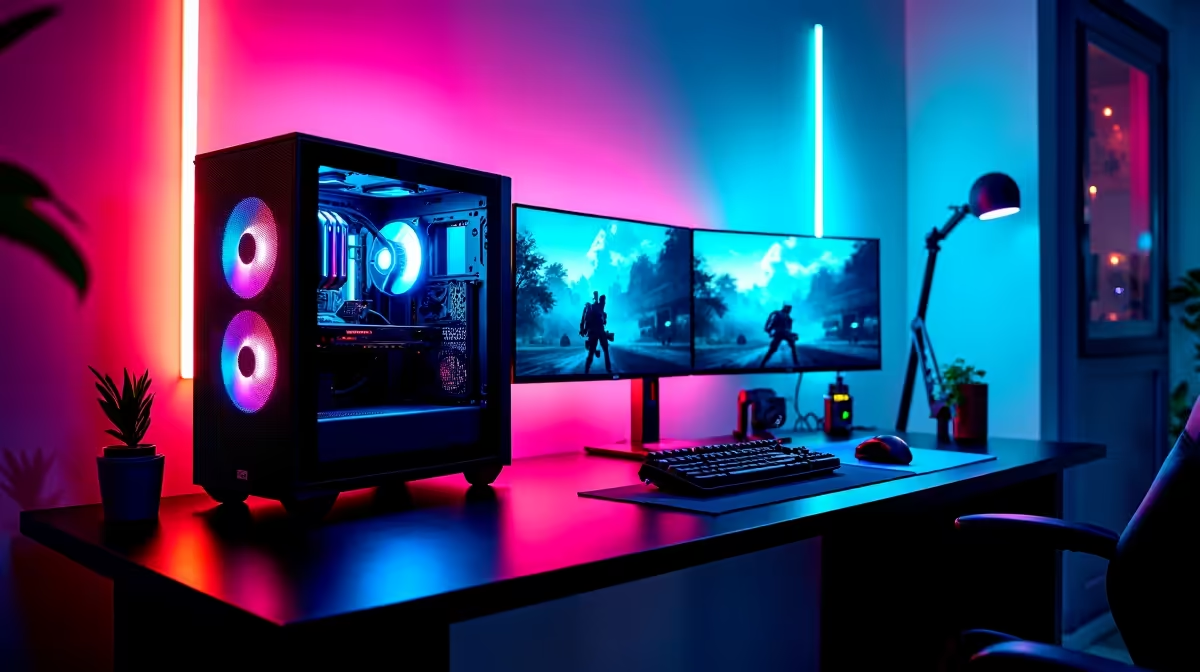
For Plettenberg Bay players who live in MMOs and live-service games, a CPU-forward build wins: a Ryzen 7, 32GB RAM, and an RTX 4060 Ti keep raids and capital cities smooth at 1440p. Expect the tower to cost about R20,000 to R26,000, paired with a 1440p high-refresh monitor. A 2TB SSD up front saves the painful reinstall when constant patches and expansions fill the drive. A quiet, cool build suits the daily return to events and raids that live-service play encourages.
The MMO Performance Recipe
The defining MMO challenge is rendering crowds and effects, which is a CPU and memory task. A modern eight-core processor avoids the frame-time stutter that weaker chips show in busy areas, and 32GB RAM keeps the game smooth with addons and overlays loaded. The GPU plays a supporting role at this resolution.
Built For Long Sessions
Live-service play means returning daily for events and raids, so a quiet, cool build and a comfortable setup matter. A 1TB to 2TB NVMe SSD keeps the frequent patches and large zone loads quick. A 1440p 144Hz monitor balances crisp interface text with smooth combat, ideal for the genre's long evenings.
FAQ
Why prioritise the CPU for MMOs?
Because the heaviest load comes from rendering many players and effects in hubs and raids, which is CPU-bound. A strong processor smooths exactly the moments that matter most.
Is 32GB RAM overkill for gaming?
For most single-player games 16GB is fine, but MMOs and live-service titles with addons benefit from 32GB, which prevents stutter in memory-heavy scenes.
How big are modern MMO installs?
Many exceed 100GB and grow with each expansion. A 1TB SSD suits one or two, while a 2TB drive is better if you keep several installed at once.
Pro Tip
For a live-service main game you play daily, invest in a 2TB SSD up front. Constant patches and expansions fill storage fast, and reinstalling a huge MMO to free space is a painful afternoon.