Quick Answer
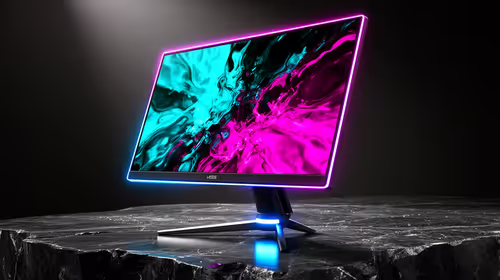
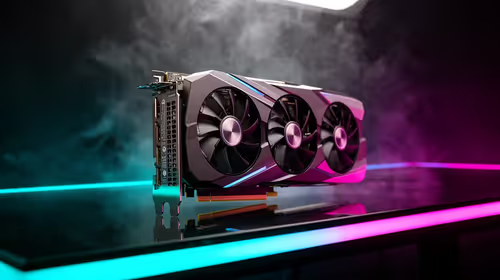
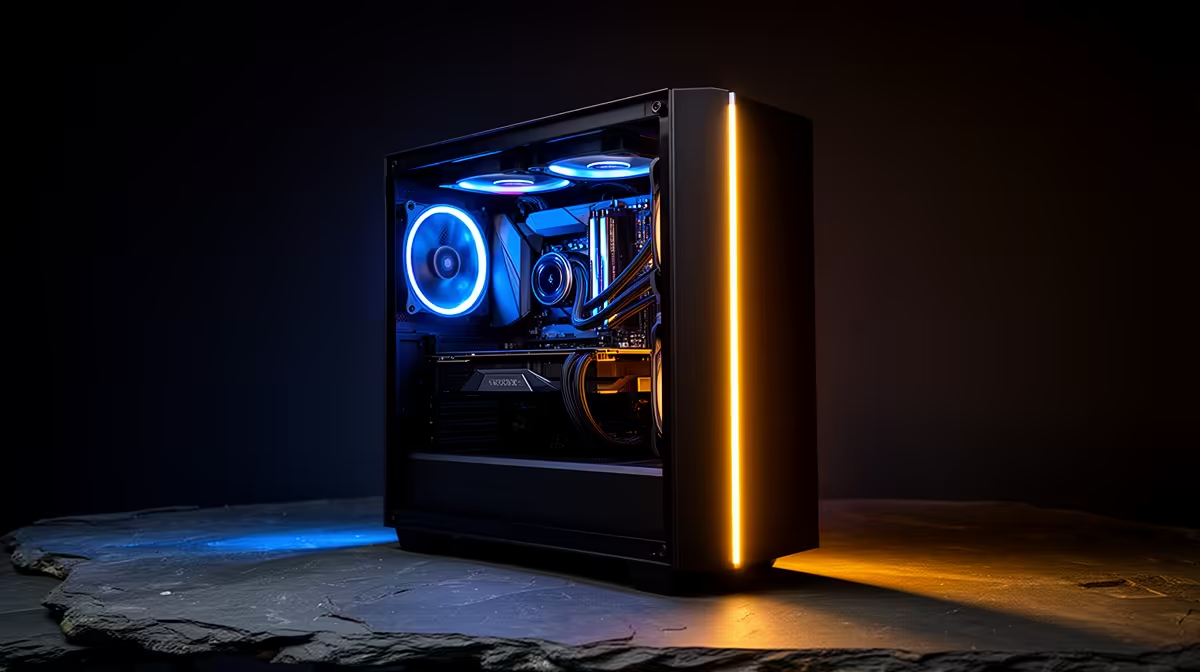
The best setup for a UCT Actuarial Science student in Brackenfell is a compact desktop built around a Ryzen 5 7500F or Intel Core i5-13400F, GeForce RTX 4060, 32GB DDR5 and a 1TB NVMe SSD. Plan on roughly R22,000 to R32,000 for the tower and R3,000 to R6,000 for a 24-inch 1080p 144Hz monitor; that is enough for Excel models, RStudio, Python notebooks, SQL exercises and large PDF lecture packs and 90 to 140 fps at 1080p high in esports titles and about 60 fps in many heavier games.
Build Around The Course Workload
Actuarial Science work changes the parts list. Prioritise the CPU, memory and SSD before cosmetic extras because Excel models, RStudio, Python notebooks, SQL exercises and large PDF lecture packs punish a slow drive and low RAM more than they punish a plain case. A named baseline such as a Ryzen 5 7500F, MSI B650M motherboard, 32GB DDR5-6000 and 1TB NVMe gives a cleaner study machine than an older high-watt tower with only 16GB RAM.
Keep The Gaming Target Sensible
For gaming, the GeForce RTX 4060 tier is the value line. It can drive a 1080p 144Hz screen well, and architecture or engineering buyers can step up to RTX 4070-class graphics when rendering matters more than price. Do not spend the monitor budget on an oversized case; a good IPS panel changes every lecture slide, spreadsheet and match you play.
Fit It To Brackenfell
Brackenfell students should treat remote lecture days seriously because the northern-suburbs commute to UCT is long during peak traffic. UCT students should also budget for a headset, webcam, surge-protected multi-plug and enough storage for OneDrive, Git repositories, project files and game installs. A 2TB SSD is worth adding when the total still stays under about R35,000.
FAQ
Is a desktop better than a laptop for UCT Actuarial Science?
A desktop gives more performance per rand and is easier to cool during long study sessions. Choose a laptop only if you need the same machine in lectures every day; otherwise keep the main power at the desk and use cloud sync for campus files.
How much RAM should a Actuarial Science student buy?
16GB is workable for basic notes and browsing, but 32GB is the correct target for Actuarial Science because it keeps browser tabs, data files and study apps open together. Architecture and engineering students with large models can justify 64GB sooner.
What should be upgraded first later?
Add a second 1TB or 2TB NVMe SSD first, then consider a GPU jump if the monitor moves to 1440p. The CPU choices above have enough headroom for several semesters of UCT coursework.
Setup check
Measure the desk in Brackenfell, choose 32GB DDR5 and a 1TB NVMe SSD first, then add the monitor only after the tower budget is clear.