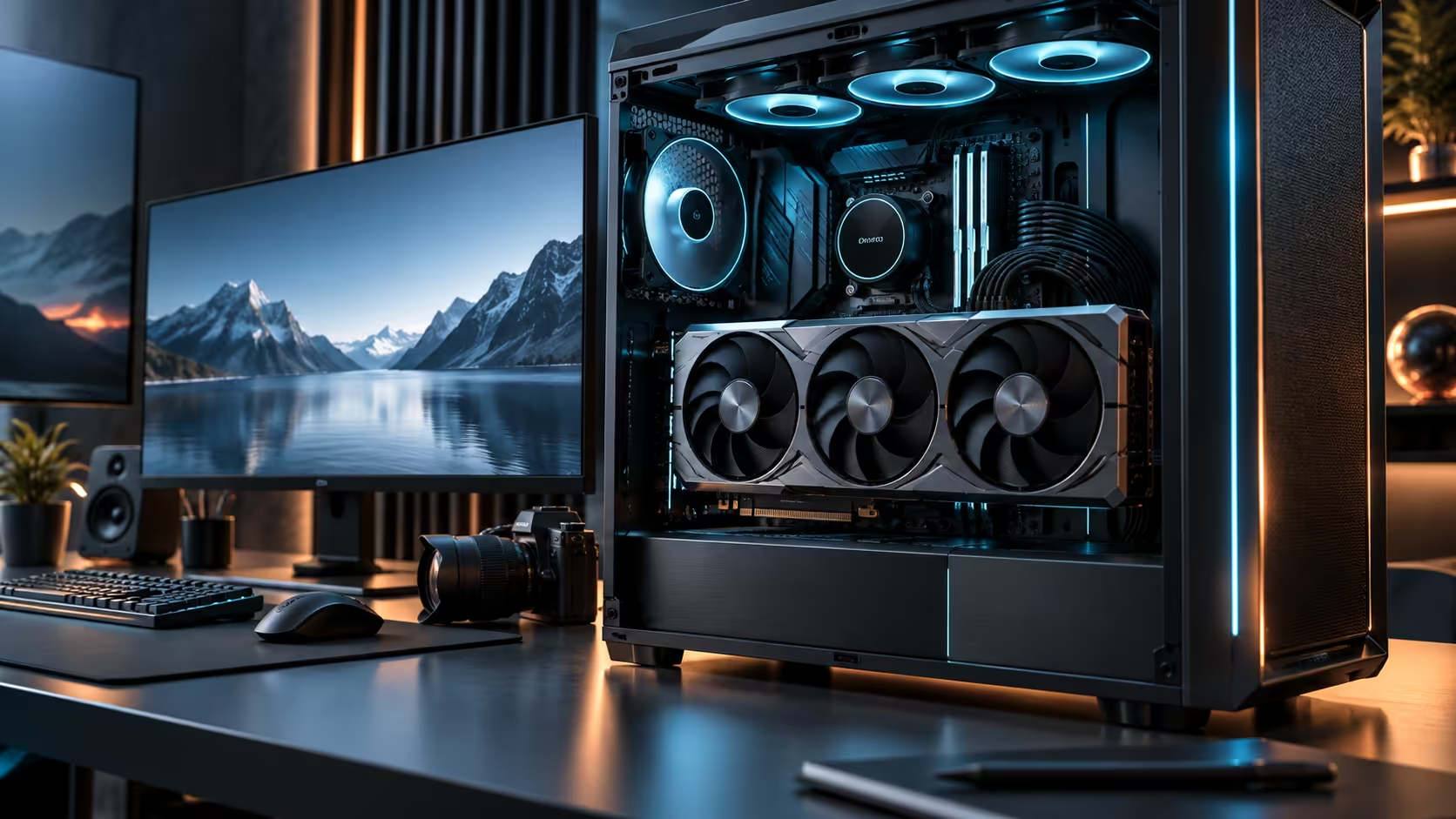
Three parts decide whether a high-end build actually holds together under a warm Gauteng afternoon, and the order you fund them in matters as much as the parts themselves. Building a high-end gaming PC in South Africa comes down to spending on the graphics card first, the power supply second, and cooling third, in that order and not reshuffled.
Quick Answer
Put the money into the card, then the power supply, then cooling, and buy all three from a local retailer rather than importing any of them separately. A R119,999 ROG Astral Edition 20 sets the shape of the whole build, the parts around it keep it stable in a warm home office, and buying locally keeps the warranty path in the country if something needs attention. That order of spending matters more than the exact rand split between the three.
🎯 The card decides everything that follows
Once the card is chosen, its GC-HPWR and 16-pin power connector, its 361mm length and 4.7-slot width, and its thermal output all become fixed requirements the rest of the build has to satisfy, not variables you can still adjust. Buying the power supply or the case before settling on the card is how a build ends up with the wrong connector or a case that will not clear the width, both of which cost more to fix afterward than the 10 minutes it takes to confirm compatibility before spending on anything else.
🔌 Power supply: buy headroom, not the minimum
Size the supply with real margin over the card's stated draw rather than picking the smallest unit that technically covers it on paper. In South Africa specifically, the grid delivers a stable 230V supply, so the concern here is not the mains itself but giving the supply room to handle both the card and a demanding CPU spiking together without running near its ceiling continuously, which shortens a supply's working life over time.
Local stock also means a fault is resolved through a nearby courier rather than a lengthy overseas shipping process, which matters on a supply feeding a card this expensive.
❄️ Cooling for a South African room, not a lab
Ambient temperature in a home office during a Gauteng summer afternoon can sit well above what cooling reviews are benchmarked at, since most published thermal figures come from climate-controlled test labs held around 21 degrees Celsius. A cooler rated adequate in a cool room can run noticeably warmer in a closed study on a hot day, so build in margin rather than choosing the minimum cooler the CPU technically needs.
Airflow through the case matters as much as the cooler itself here. A case with restricted intake fighting a warm room gives even a well-chosen cooler less to work with, so check the CPU cooler range alongside the case's own airflow rating rather than treating cooling as a single component decision.
🇿🇦 Why buying all three locally matters
A card, supply and cooler bought as a set from a local retailer share one warranty process rather than three separate ones split across regions, which matters if a fault appears after weeks of use rather than in the first days; a courier collection here is typically resolved within days, against a wait that can pass 30 days on an international return. The power supply range stocked locally carries that same advantage, and pricing everything together against a full build rather than as separate international purchases usually works out close in total cost once shipping, duty and the return risk on a private import are counted honestly.
🛒 Where to start pricing the actual list
Once the order of spending is settled, the graphics card lineup is the sensible first tab to open, since the exact model and its confirmed connector and dimensions decide the specific supply and case you then need to price against it. Working from the card outward, rather than assembling a parts list alphabetically or by category, can save 60 minutes or more of repricing components against the wrong connector or wattage figure later.
Frequently Asked Questions
What order should I buy parts in for a high-end build?
Card first, power supply second, cooling third. Each later decision depends on requirements the earlier one fixes, so reversing the order risks a mismatch.
Does South Africa's power supply need special consideration for a build like this?
The 230V grid itself is stable and standard. The real local consideration is ambient room temperature during summer, which affects cooling margin more than the mains supply does.
Why buy all three components from the same local retailer?
It keeps warranty and support under one process rather than split across regions, which shortens any resolution time if a fault appears in the card, supply or cooler.
Does a warm room actually shorten a component's life?
Sustained higher operating temperatures generally do reduce a component's working life over years of use, which is why building in cooling margin for a warm room matters more here than it would for the same build in a consistently cool climate.
Is a bigger power supply always safer for a high-end build?
Genuine headroom above the card's draw matters more than sheer size. An oversized but poor-quality unit is not automatically better than a correctly sized, well-reviewed one.
Ready to build in the right order for a South African summer?
Fund the card, then the supply, then cooling, and keep all three local.