Quick Answer
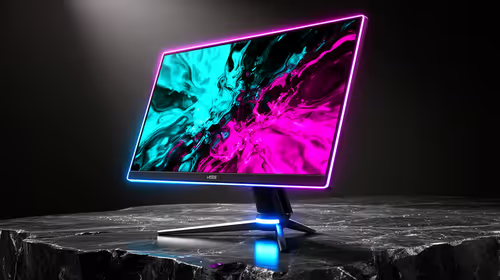
A 240Hz 1440p build that handles 1080p video editing in SA starts at R32,000 — a Ryzen 7 7700X with an RTX 4060 Ti, 32GB DDR5, and 2TB NVMe covers smooth 1080p DaVinci Resolve timelines with NVENC hardware export, and delivers 180–230 fps at 1440p in esports titles. Including a 27-inch 1440p 240Hz IPS monitor (~R8,000), the total is around R40,000.
1080p Editing Benefits From the 240Hz Display
At 240Hz, the DaVinci Resolve and Premiere Pro interface — timeline scrubbing, node graph navigation, colour wheel responses — renders at 240 frames per second. The workflow feels significantly more fluid than at 60Hz, reducing the mental friction of rapid cut decisions and colour adjustments. For SA creators spending 6–8 hours daily in Resolve, the UI responsiveness at 240Hz is a genuine productivity benefit.
The RTX 4060 Ti exports a 30-minute 1080p 60fps timeline in 3–4 minutes via NVENC, and the Ryzen 7 7700X handles software-encode tasks and parallel creative processes 35% faster than a 6-core chip.
Build List: ~R32,000
- CPU: Ryzen 7 7700X — ~R7,500
- Motherboard: MSI B650-A PRO — ~R3,200
- RAM: 32GB DDR5-5600 — ~R2,400
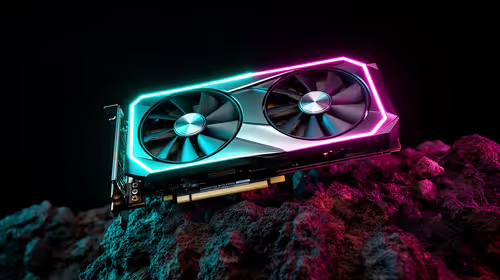
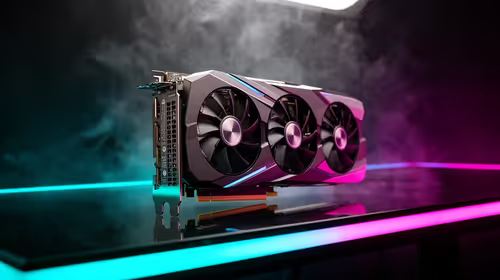
- GPU: RTX 4060 Ti — ~R12,500
- SSD: 2TB PCIe 4.0 NVMe — ~R1,600
- Case + 750W 80+ Gold PSU — ~R3,000
- Total: ~R30,200
FAQ
Is the RTX 4060 Ti sufficient for 1080p colour grading at 240Hz?
Yes — the RTX 4060 Ti handles real-time 1080p playback with full colour grading, LUT application, and basic noise reduction in DaVinci Resolve without dropped frames. For complex Fusion compositing layers, enable Smart Cache for automatic caching of complex sections — the 2TB NVMe stores cache files at high throughput without impacting playback.
Does a 240Hz monitor improve colour grading accuracy compared to 60Hz?
Colour accuracy is not affected by refresh rate — it's determined by the panel's colour gamut coverage and calibration. A 240Hz IPS at 98% sRGB is identically accurate to a 60Hz IPS at 98% sRGB for colour work. The 240Hz benefit is purely in workflow responsiveness and the dual-use gaming capability.
What's the fastest export workflow for a 1080p SA YouTube channel on this build?
In DaVinci Resolve Deliver page: codec H.264 Master, enable NVENC, CBR at 12 Mbps, 1920×1080, 60fps. A 30-minute timeline exports in 3–4 minutes. Upload to YouTube on a 50 Mbps Vumatel connection takes approximately 8 minutes for a 2.7GB file — total turnaround from export to live upload under 15 minutes for a 30-minute video.
video editing at 240Hz, calibrate your 1440p monitor with a hardware colorimeter (Datacolor SpyderX, available locally) and set the profile in DaVinci Resolve under Preferences → Colour Management → Display ICC Profile — this ensures colour decisions made at 240Hz gaming panel specs are accurate for final web-delivery colour grades.