Comparing streaming microphones for private digs and shared flats is really about matching the mic to a small, noisy room and a tight budget. The headline specs matter far less than how well the mic rejects roommates, traffic, and keyboard noise while you talk.
Quick Answer
For digs and shared flats, compare USB cardioid condensers in the roughly R900 to R2,000 band (a HyperX SoloCast at ~R900 up to a QuadCast at ~R1,800). Pick by polar pattern (cardioid), a hardware mute, and a built-in pop filter; that covers lectures, Discord, and casual streams without paying for studio features a shared room cannot use.
How to compare for a shared room
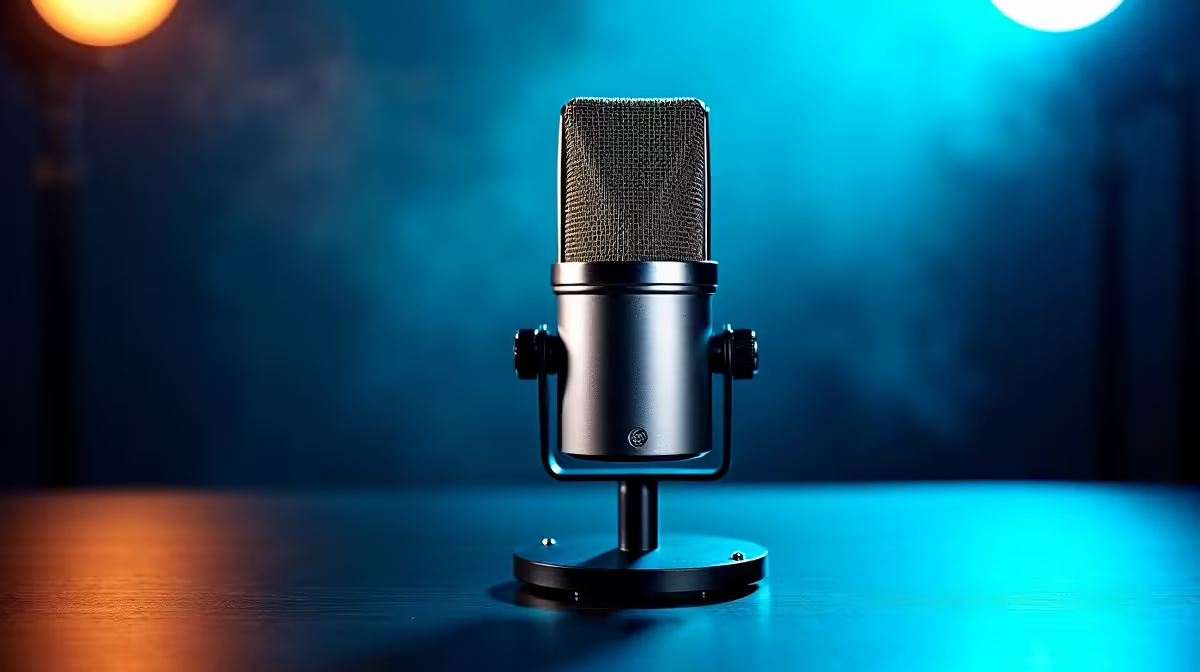
Start with the polar pattern: cardioid captures your voice from the front and rejects side noise, which is exactly what a shared flat needs. Then weigh practical extras: a hardware mute for when a flatmate walks in, a built-in pop filter or shock mount to tame plosives and desk knocks, and a gain dial so you can set levels without software. 24-bit/48kHz is the right sample spec; ignore higher rates. A boom arm matters more than capsule price because mic distance fixes most room problems.
What separates the options
A R900 SoloCast-class mic is the floor: cardioid, plug-and-play, fine for calls and casual streams. A R1,500 to R1,800 QuadCast-class mic adds a shock mount, gain dial, and pop filter that genuinely help in a noisy res. Above R2,500 you reach XLR setups that need an interface and desk space a digs room rarely has. Compare warranty and local stock too, because a mic you can replace easily beats a marginally better one with no support path.
FAQ
What mic specs matter for streaming from a shared flat?
A cardioid polar pattern, a hardware mute, and a pop filter matter most; they reject roommate and street noise and tame plosives. Sample rates above 48kHz and multi-pattern modes add nothing for a shared room.
Is a R900 mic good enough for digs?
For lectures, Discord, and casual streams, yes. A R900 cardioid USB mic on a boom arm sounds clean. Step up to a R1,500 mic mainly for the shock mount and gain dial, not for raw audio quality.
Do I need an audio interface in a small room?
No. A plug-and-play USB cardioid mic is the right call for a cramped desk. XLR interfaces add cost and clutter for quality you cannot hear over a stream, so they are overkill in digs.
foam windscreen and set the mic 10-15cm from your mouth on a boom arm. In a shared room, that placement does more for clarity than spending up to a pricier capsule.
Compare cardioid USB mics around R900 to R1,800, choose one with a mute and pop filter, and put any saving into a boom arm that fixes more room noise than a costlier mic would.