Quick Answer
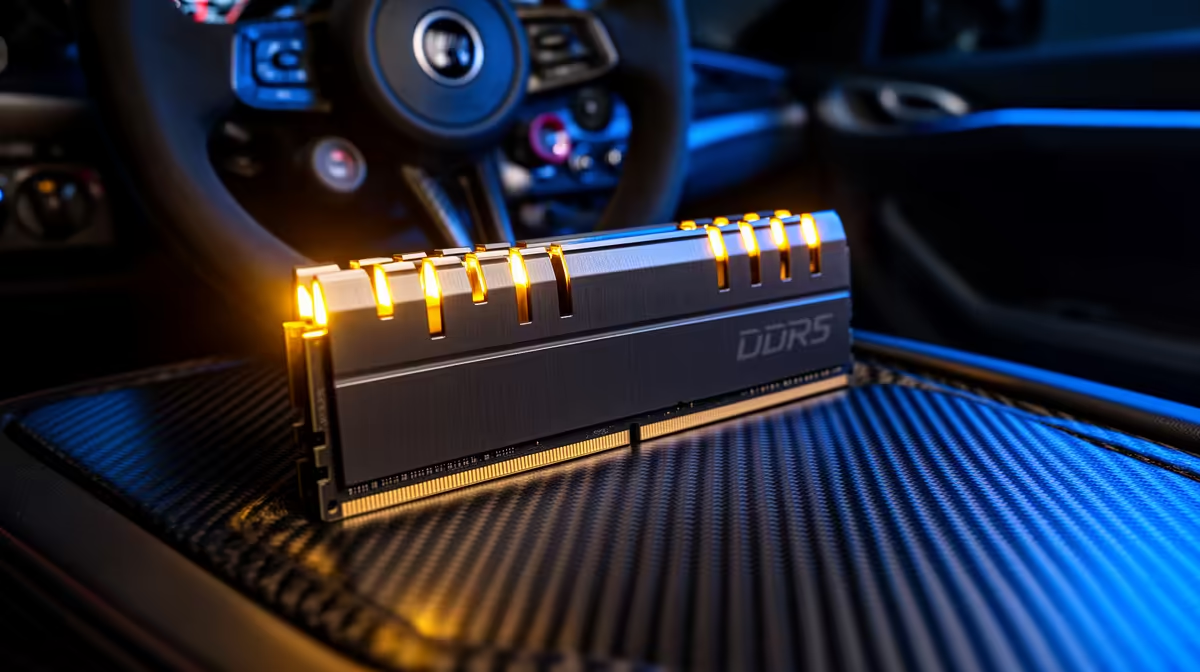
For a racing wheel cockpit, DDR5 is rarely the bottleneck: a stable 32GB DDR5-6000 kit (about R1,400 to R2,200 at Evetech) is plenty for iRacing, ACC or Le Mans Ultimate. The GPU and a high-refresh wheel-friendly monitor matter far more than memory speed for sim racing.
Where RAM Sits In A Sim-Racing Rig
Sim titles like Assetto Corsa Competizione and iRacing lean on the GPU and a strong single-thread CPU, with RAM mostly holding the track, car models and physics. 16GB runs most sims, but 32GB stops stutter when you add Discord, a telemetry overlay like Racelab, and a browser of setups. A DDR5-6000 CL30 kit gives clean frame pacing, which matters because wheel feel depends on consistent frame times feeding force feedback.
Starter To Serious Cockpit Path
Start with a 32GB DDR5-6000 kit; it is the practical floor for a modern triple-screen or VR-curious cockpit. Faster RAM past 6000 MT/s gives almost nothing here, so put budget into a GPU that can hold 90 to 120 fps across triples, and a wheelbase and pedals that suit your sim. RAM is the component you tune last in a sim rig once frame pacing and force feedback are already smooth.
FAQ
How much RAM do I need for iRacing or ACC?
32GB is the comfortable target once you stack a telemetry overlay, Discord and a browser of setups alongside the sim. 16GB still runs the games, but 32GB removes the multitasking stutter that hurts consistency.
Does faster DDR5 improve force feedback?
Only indirectly. Force feedback depends on stable, consistent frame times, so smooth frame pacing helps more than raw memory speed. A 6000 MT/s CL30 kit is the sensible ceiling for a cockpit.
Should I spend on RAM or GPU for sim racing?
GPU first, by a wide margin. Triple screens and VR are GPU-hungry, so a stronger card holding 90 to 120 fps beats faster RAM every time for sim racing.
Lock a 32GB DDR5-6000 kit and EXPO it on, then spend the rest of the budget on the GPU and wheelbase that actually shape your lap times.