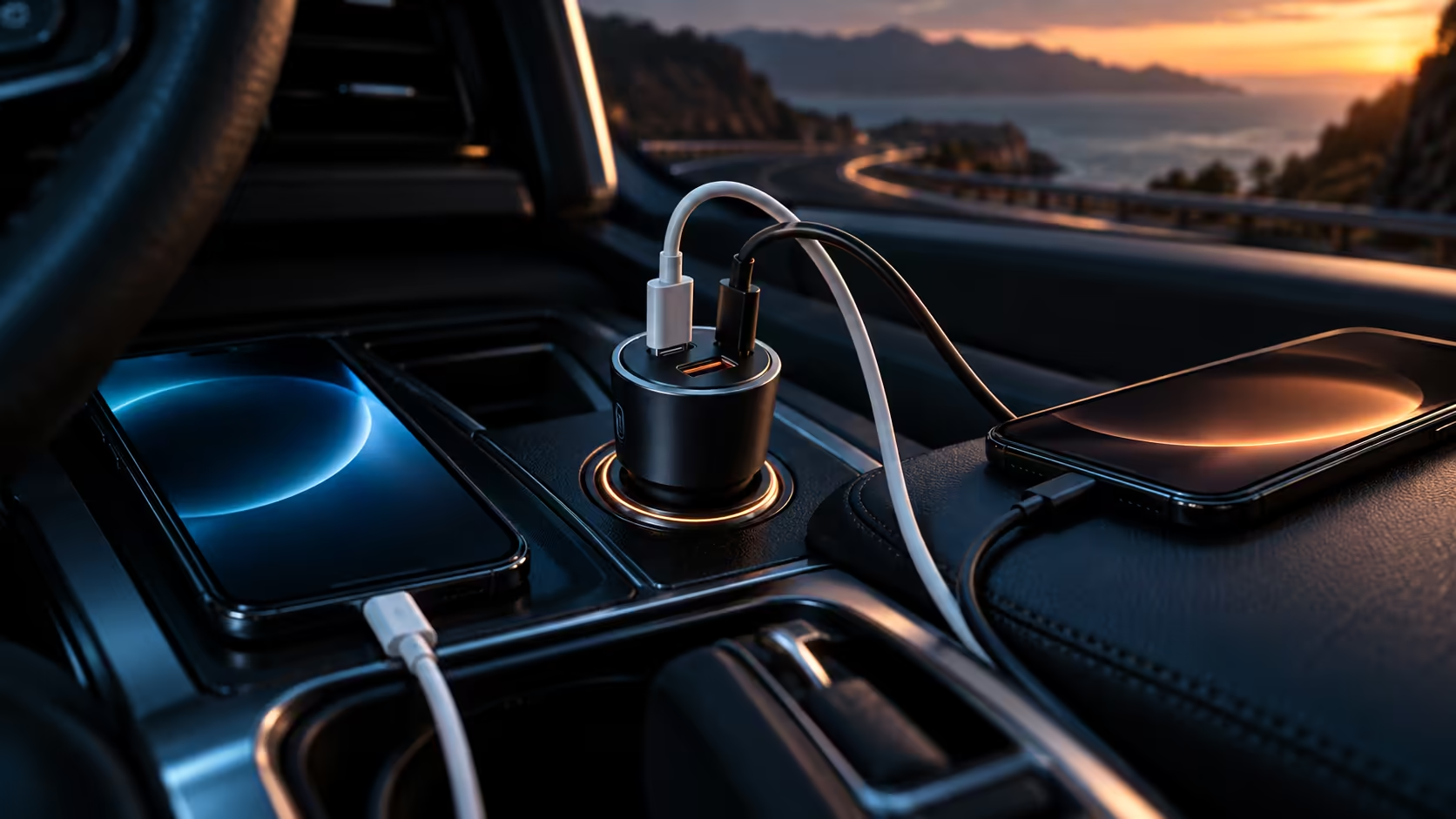
The word reliable in a car charger budget is doing different work than the word "fast". Speed is a wattage figure anyone can print on a box; reliability is the harder, more expensive thing to actually build in, and it is worth understanding what that extra cost buys before assuming a cheaper unit is simply the same thing at a discount.
Quick Answer
Reliability in a car charger mostly means components sized with genuine safety margin, protection circuitry that actually works under real conditions, and a design tested against the kind of electrical noise a car's 12V rail produces. Anker's model at R349 pairs a 30W PPS-capable USB-C output with a 22.5W USB-A one, and its own page states that the MultiProtect feature covers all three of over-voltage, over-current and overheating. Spending noticeably less usually means that kind of margin has been trimmed to hit a lower price.
🛡️ What "reliable" actually costs to build
A charger's protection circuitry, the parts watching for over-voltage, over-current and excess heat, adds real component cost and design effort beyond simply wiring up a converter. Building it properly means testing across the roughly 6V to 14.4V swing a real 12V rail can put out between cranking and charging, not just a clean lab bench supply, since a protection circuit that only works under ideal conditions is not protecting against anything a real car actually does.
That testing and component margin is invisible from the outside, since a poorly protected charger and a well-protected one can both claim similar protections in their marketing copy. The honest signal is a brand with a track record and named, specific protections rather than a vague "safe charging" claim, and a price that reflects genuine component cost rather than sitting suspiciously below what proper protection circuitry typically requires.
🇿🇦 Certification and local support add to the number
A charger sold and warrantied locally has already cleared whatever import and compliance checks apply here, and typically carries a warranty period of 12 months or more with a support path that does not require shipping a fault overseas. That local presence is part of what a slightly higher, locally set price is paying for, compared with an unrated import that skipped those checks to hit a lower number.
Where a fault does occur, the value of that local warranty only becomes obvious in hindsight, when a locally bought charger is a short return rather than a costly overseas shipping problem on an item that was already cheap to begin with.
💰 What a "reliable" budget should not include
Reliability is not the same conversation as extra wattage or extra ports, both of which are separate features rather than proxies for build quality. A charger with a higher headline wattage is not automatically better protected, and a charger with three ports instead of two is not automatically more electrically sound; both can be built cheaply or properly regardless of how many features they list. Seeing which units on the best-sellers list buyers keep coming back to is a decent gut check, though it never substitutes for actually reading what a given listing states about itself.
Budgeting for reliability means budgeting for the protection circuitry and component quality specifically, checked against named protections and a track record, rather than assuming a bigger number anywhere on the box implies a safer product underneath it. A cable built to the same standard is worth the same scrutiny, since a well-protected charger paired with a poor-quality lead still leaves one weak link in the chain. A power bank bought to the same standard is worth the identical scrutiny for anyone budgeting for reliable charging away from the car too.
Frequently Asked Questions
Does a higher price always mean a more reliable charger?
Not automatically, though a price that sits well below what proper protection circuitry typically costs is a reasonable warning sign worth checking against the listing's stated protections.
Is reliability the same thing as wattage?
No. Wattage describes charging capability; reliability describes how well the charger handles real electrical conditions and protects both itself and the connected device.
Why does a car specifically need a more reliable charger than a wall adapter?
A vehicle's electrical system moves through a far wider range than a steady household outlet ever does, especially the moment the starter fires and again once the alternator takes over, which puts more genuine stress on a charger's protection circuitry.
Is a locally bought charger worth paying slightly more for over an import?
For most buyers, yes, given how much more straightforward a local warranty claim is compared with returning a fault to an overseas seller.
Does a track record matter more than what one listing says?
Both matter together. A track record suggests the stated protections are likely to hold up in practice, while the listing itself is still the specific evidence for the exact model being bought.
Is it worth replacing a charger that has never shown a fault?
Not urgently, though an old unit without stated Power Delivery or named protections is worth comparing against a current model the next time a genuine upgrade is on the table.
Ready to budget for a charger that will actually hold up?
Browse the car charger range and check the named protections before comparing on price alone.