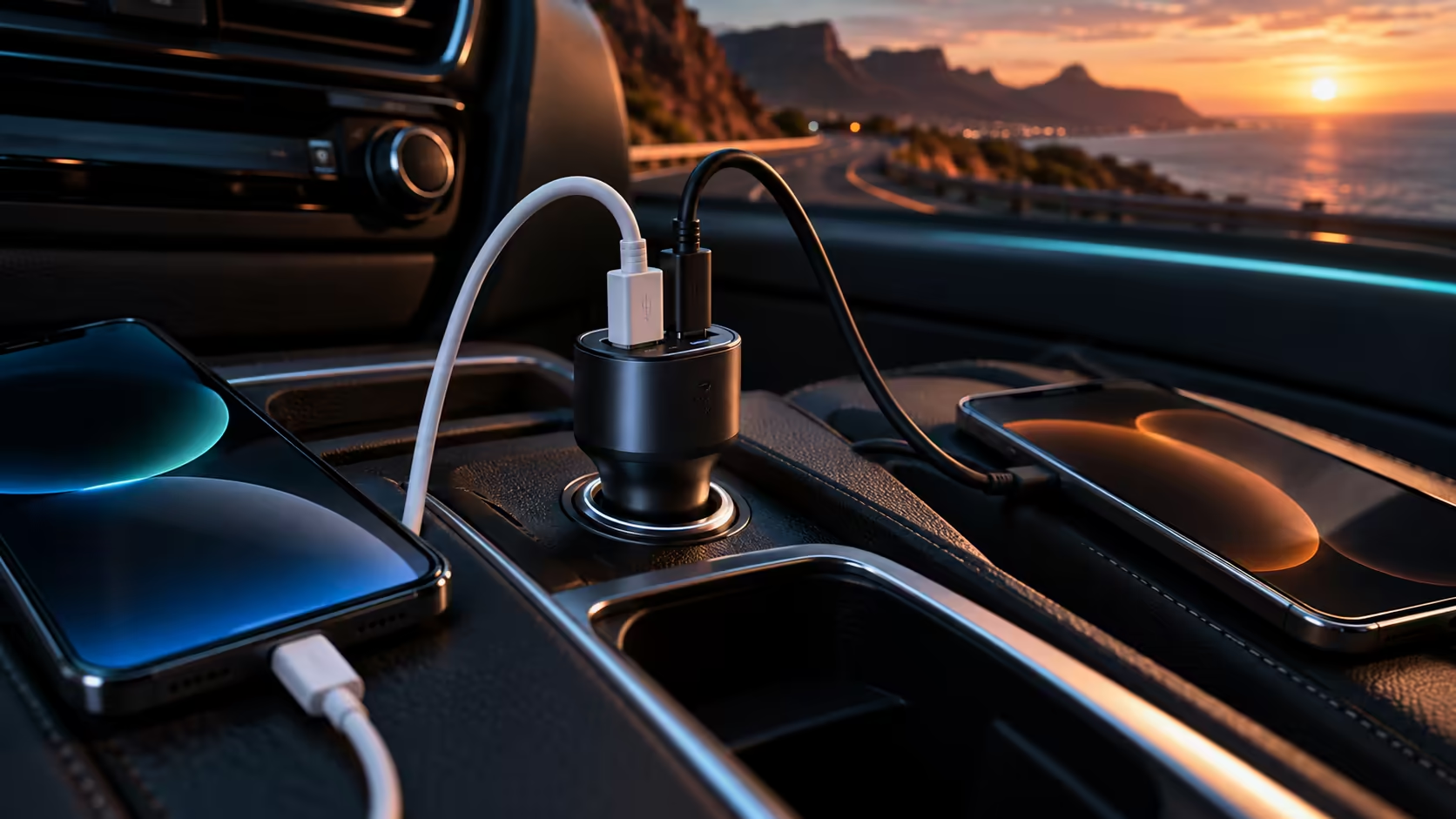
Car chargers on South African shelves run from bargain bin to premium desk-charger money, and the gap between them is not marketing. A dual-port car charger at R349 sits at a specific point on that ladder, and knowing what changes above and below it is what turns a price into an actual decision rather than a guess.
Quick Answer
R349 is roughly where a car charger stops being a plain 5V plug and becomes a proper Power Delivery device with a second output. Below that band you are mostly buying chargers without PD or PPS at all; above it you are usually paying for a higher wattage ceiling or extra ports you may never fill in a two-person car. Anker's two-port unit sits at that R349 line with 30W USB-C PPS and 22.5W USB-A.
💰 What each band actually buys
Under roughly R150, most car chargers on sale locally are single-port units without any Power Delivery negotiation, delivering a fixed 5V regardless of what is plugged in. They charge an old phone adequately and a modern flagship slowly, because the phone can never ask for more than the fixed voltage on offer.
From around R250 to R400, chargers generally add real Power Delivery, a second port, and often PPS on top. This is the band a 30W-plus charger with a genuine second output tends to sit in, R349 among them, and it is the first price point where the number on the box reflects an actual negotiated protocol rather than a single fixed voltage.
Past roughly R600, the extra spend usually goes toward a higher wattage ceiling, useful for charging a tablet or a small laptop rather than a phone, or toward three or more ports aimed at a car regularly carrying several passengers. For a typical two-person car, that additional capacity is capacity that rarely gets used.
🇿🇦 Why local buying changes the sum
A cheaper charger ordered from overseas rarely stays cheaper once shipping, import duty and a clearing fee land on a small parcel, and those costs barely shrink for a low-value item. A R150 import can land well past what the local R349 unit costs once every fee is added.
The bigger cost shows up if the imported unit fails, which is common with unrated chargers pushed past their real limits. Returning a locally bought charger is a short trip or a courier collection; returning one bought from abroad usually means the postage alone outweighs whatever was saved buying it there in the first place.
🚗 What actually justifies paying more
The honest reason to spend above R349 is a genuine need for higher wattage, charging a tablet or topping up a small laptop from the same socket, or a household with more than two regular users needing more than two ports at once.
Neither of those applies to a typical solo driver or two-person car charging phones. For that case, the R349 tier already covers Power Delivery, PPS on the faster port, and a second output for a passenger, which is the full feature set most people plugging a phone in on a commute actually use.
🧾 Reading a listing before you commit
A listing worth trusting states the protocol by name, Power Delivery and, ideally, PPS, rather than just a wattage figure on its own. It also states the second port's individual rating separately from the first, since a charger that only quotes a combined total is hiding exactly the number that matters once two devices are active.
Checking a full spec list against the price is a better habit than comparing prices alone across a few listings, because two nearly identically priced chargers can still run completely different charging protocols underneath. A power bank is worth pricing in separately if the plan includes charging away from the car occasionally, since it solves a different problem to a car charger rather than replacing one. Small accessories bought at the same time are worth the same scrutiny on their own listed specifications.
💳 What R349 buys against the alternative of doing nothing
The comparison worth making is not only against other chargers, but against the cost of not upgrading from whatever old-style socket or unrated adapter is already in the car. A phone slowly losing charge on a bad connection during every commute has a real cost in convenience, in battery cycles spent recovering lost ground later at home, and occasionally in a flat phone at the wrong moment.
Measured against that, R349 for a charger that reliably outpaces normal phone use on a daily commute is a modest one-time cost against a recurring, low-grade annoyance.
Frequently Asked Questions
Is a R349 car charger a budget option or a proper one?
It sits at the entry point for genuine Power Delivery with a second port, not at the bottom of the market. Cheaper units below that band typically lack PD entirely.
Does paying more always mean faster charging?
Not necessarily. Past a certain point extra spend usually buys higher wattage aimed at tablets or laptops, or more ports, rather than a faster charge for a phone that already caps its own request.
Is importing a cheaper charger worth it?
Rarely, once shipping, duty and clearing fees are added to a small parcel, and the return path on a fault is far more costly than with a local purchase.
Do I need a higher wattage charger if I only ever charge phones?
Usually not. Most current phones cap their own charging request well within a 30W port's ceiling, so extra wattage above that mainly benefits larger devices.
Ready to buy at the right price point for what you actually need?
Have a look at the car charger range and match the wattage to the devices you actually charge.