Quick Answer
For data science coursework, compare AR glasses on display resolution, weight, and eye comfort, not hype: a 1080p-per-eye pair under 80g lets you run extra virtual screens for code and notebooks. Expect R6,500 to R12,000 landed in South Africa for models like the XReal One or Viture Pro.
What Actually Matters For Coursework
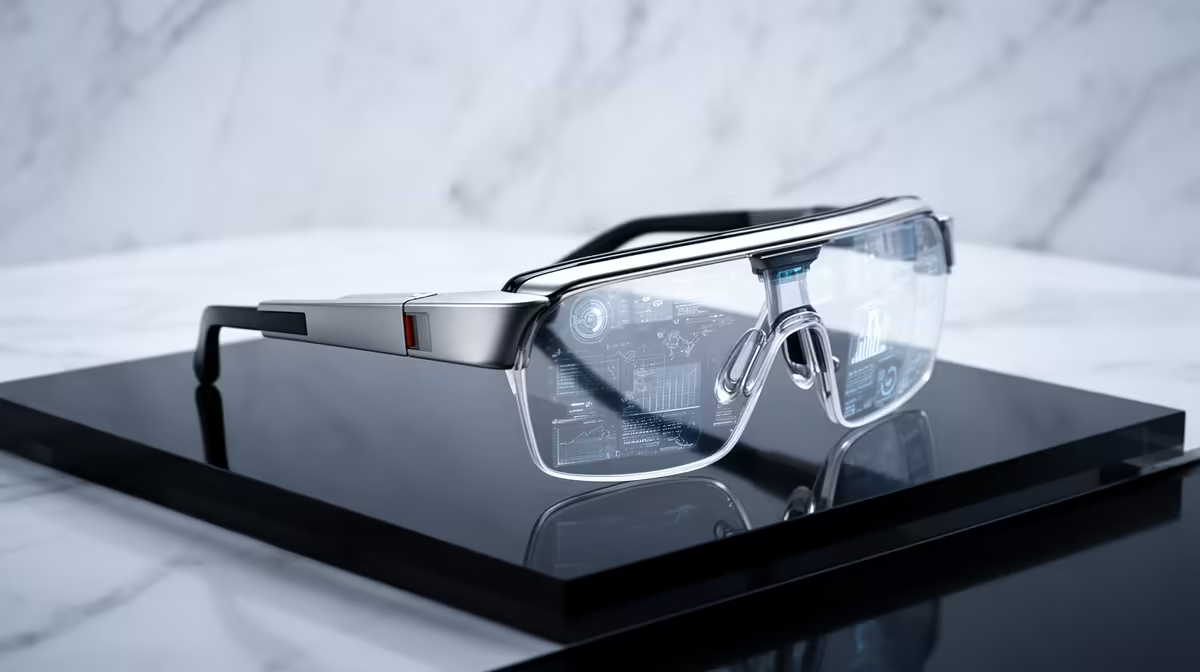
AR glasses for study are essentially a portable extra monitor, so judge them on the things that affect reading code and dashboards for hours. A resolution of 1080p per eye keeps text in a Jupyter notebook or IDE sharp, while a field of view around 45 to 50 degrees decides how much you see at once. Weight under 80g and a comfortable nose bridge matter most, since you wear them through long study blocks. Ignore marketing about spatial games and focus on whether you can comfortably read a terminal.
Brightness rated in nits and adjustable focus help in a bright SA library or a dim res room. A pair that connects over USB-C to your laptop avoids extra dongles.
Compare The Real Trade-Offs
The XReal One and Viture Pro sit around R6,500 to R12,000 once imported and offer roughly 1080p per eye. Heavier units strain your nose past an hour, so weight beats a slightly wider field of view for coursework. Check that the glasses present as a standard external display, so your operating system treats them as a second 1080p monitor with no special software needed for your data tools.
Practical Fit For SA Students
Budget for landed cost, since most AR glasses are imported, and confirm your laptop's USB-C port carries DisplayPort video. A pair that mirrors or extends to a virtual 130-inch screen lets you keep a notebook on one side and documentation on the other, useful when a small laptop panel cramps multi-window data work. Prescription insert support is worth checking if you wear glasses.
FAQ
Are AR glasses useful for data science study?
Yes, as a portable second screen. A 1080p-per-eye pair lets you keep code, notebooks, and documentation visible at once without carrying a monitor, which suits cramped res desks and library work.
What should I prioritise when comparing AR glasses?
Prioritise per-eye resolution of 1080p, a weight under 80g, eye comfort, and plug-and-play USB-C display support. Field of view and brightness matter next; spatial gaming features are irrelevant for coursework.
How much do AR glasses cost in South Africa?
Models like the XReal One or Viture Pro land around R6,500 to R12,000 once imported. Budget for that landed cost and confirm your laptop's USB-C port outputs video before buying.
laptop's USB-C port supports DisplayPort video output before buying AR glasses; without it, the glasses cannot act as a second screen for your code and notebooks.