Quick Answer
Compare practical limits first and skip hype specs that do not change the workload. For timeline editing, proxy files and exports, use the spec floor first, then compare price and warranty support. A practical SA shortlist can use Corsair 4000D Airflow, Lian Li Lancool 216, DeepCool CH370 and Cooler Master TD500 as reference options, with a cautious local price band around R800 to R3,500.
What To Check First
For timeline editing, proxy files and exports, the PC case should remove a real limit instead of adding another part to manage. Start with mesh airflow, GPU clearance above 330 mm, CPU cooler clearance around 160 mm and at least two fans. Then check whether the current PC, desk, room or study setup can actually use the upgrade. SA buyers should also consider courier timing and local warranty handling.
Practical Spec And Price Floor
Use numbers to keep the decision honest. The practical reference is 330 mm GPU clearance, 160 mm cooler clearance, 2 to 4 fans and 240 mm or 360 mm radiator support where needed. In the broad R800 to R3,500 band, the cheapest option can cost more after adapters, fans, cables or replacement. If two choices are close, choose the one that gives lower noise and easier future upgrades every week.
SA Setup Check
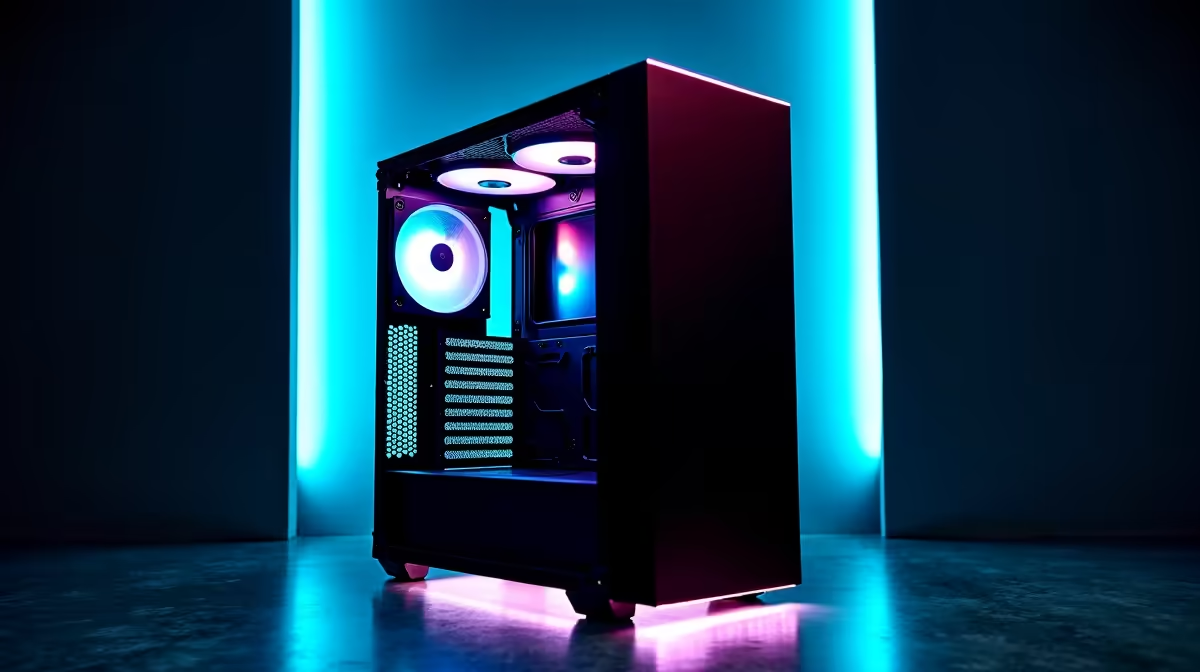
Airflow and clearance beat cosmetic extras. Check GPU length, CPU cooler height, radiator support, front-panel USB and included fan count before paying for glass or lighting. A clean build needs routing space behind the motherboard tray.
FAQ
What should SA buyers check first?
Start with the job: timeline editing, proxy files and exports. Then confirm mesh airflow, GPU clearance above 330 mm, CPU cooler clearance around 160 mm and at least two fans. This catches expensive mistakes before the price comparison starts.
Is the cheapest PC case good enough?
It can be good enough if it meets the spec floor and has local warranty support. If it misses 330 mm GPU clearance, 160 mm cooler clearance, 2 to 4 fans and 240 mm or 360 mm radiator support where needed, the saving can disappear through adapters, replacements or another upgrade.
When is paying more worth it?
Pay more when the extra spend gives lower noise and easier future upgrades that you will notice every week. Skip premium extras that do not change fps, comfort, noise, reliability or the workload result.