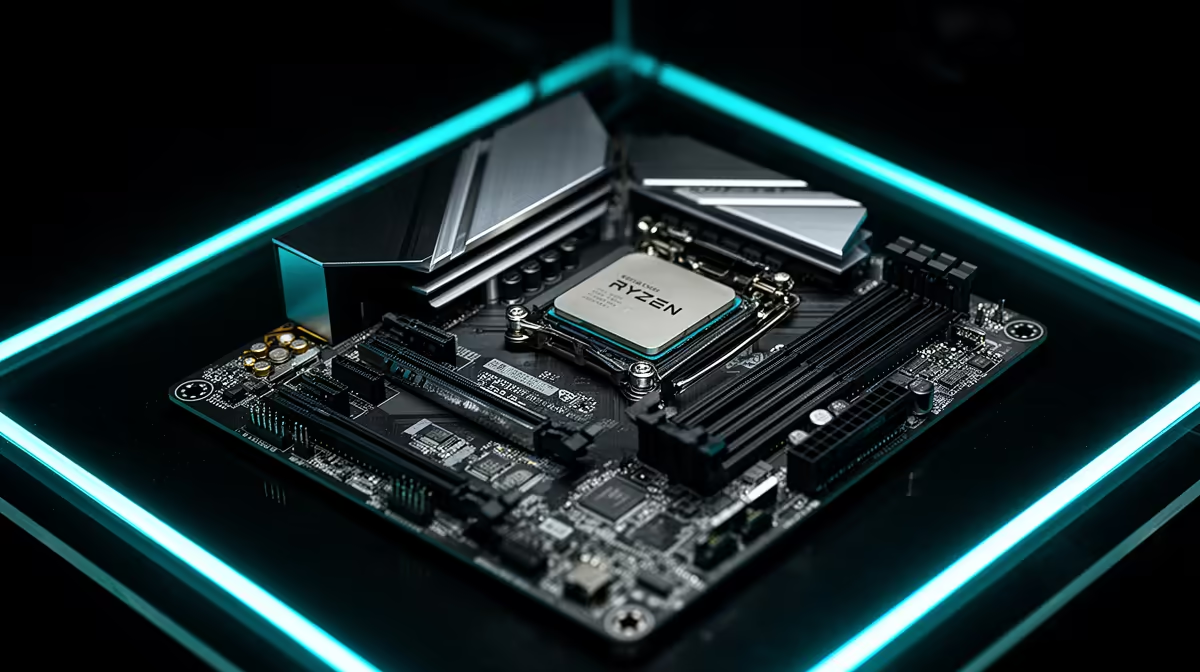
A fresh dead pixel on a Ryzen 7 9800X3D build is annoying, but it rarely means the part is faulty. Most cases trace back to settings, cabling or firmware rather than dead hardware.
Quick Answer
A true dead pixel stays black and cannot be revived, but most reported cases are stuck pixels that pixel-cycling software fixes. Inspect on full-screen white and black first, then run a 20-minute pixel exerciser before considering a warranty claim. Verify the cable supports your resolution at 120 Hz or higher rather than silently dropping to 60 Hz.
Confirm it is actually dead, not stuck
View solid red, green, blue, white and black screens full-screen. A dead pixel is black on every colour; a stuck pixel shows one colour and is often recoverable, so the distinction decides your next step.
Run a pixel-cycling tool
A flashing RGB exerciser run for 15 to 30 minutes revives many stuck sub-pixels. It is free, reversible and worth trying on a Ryzen 7 9800X3D build before anything more drastic.
Try gentle, careful pressure as a last resort
With the screen off, a soft cloth and very light pressure on the exact spot while powering on sometimes seats a stuck pixel. Stop immediately if you feel resistance, as too much force damages the panel.
Before you assume the part is faulty
Hardware faults are the rare exception, not the rule, with a Ryzen 7 9800X3D build. Most dead pixel complaints come down to a default Windows setting, an under-spec cable bought to save a few Rand, or a driver that shipped before your exact panel was supported.
FAQ
Will a better cable really help with a Ryzen 7 9800X3D build?
It can. A certified cable rated for your resolution and refresh prevents the silent fallback modes that cause many of these display complaints.
When is it time to claim warranty?
Once you have documented the fault on a plain test image and exhausted the settings, cable and driver fixes. Keep photos and notes so the claim moves quickly.
Can the same approach apply across my whole setup?
The principles do: confirm native settings, update drivers, verify cabling. Adapt the exact steps to each device, but the order of checks stays the same.
Spend where it changes your experience Save yourself a courier trip: confirm settings, cable and driver health before assuming the part is dead.