Quick Answer
Ghosting on an RTX 5080 build in South Africa is a display issue, not a GPU fault. The RTX 5080's high frame rates make a panel look its best, so smearing comes from refresh-rate or overdrive settings. Set the panel to its rated refresh, overdrive to Normal, and enable G-Sync to clear it.
A Powerful GPU Is Not The Cause
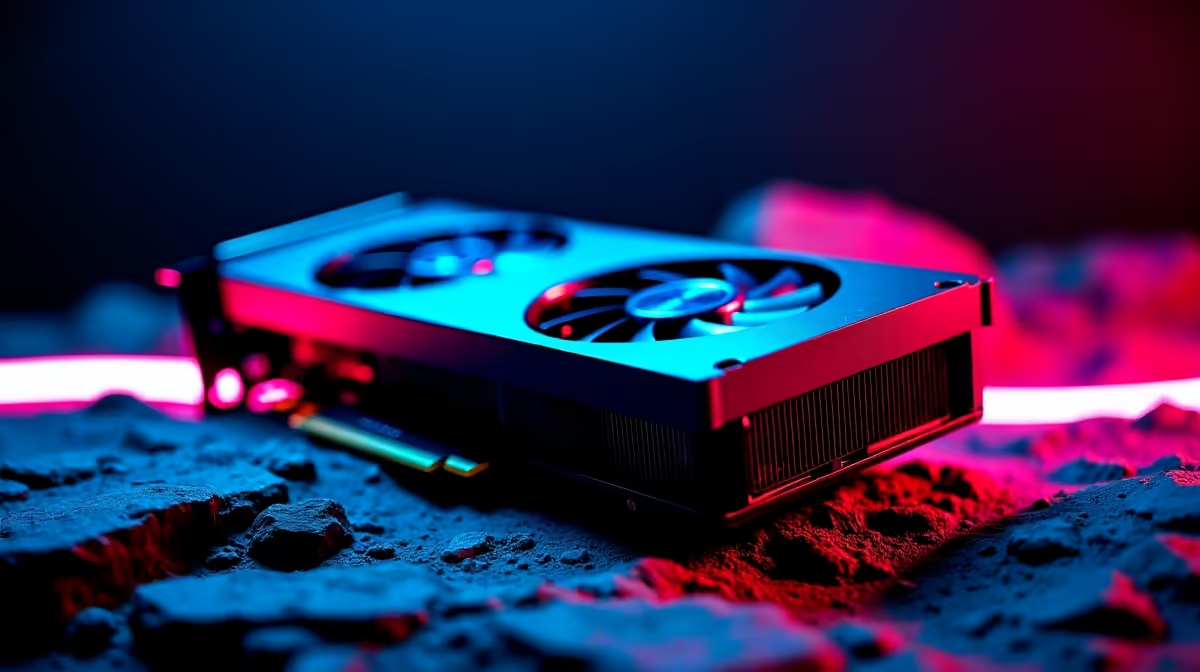
Ghosting, the trail behind moving objects, is a property of the monitor's pixels and settings, never the graphics card. An RTX 5080 produces very high, stable frame rates, which actually improves perceived motion clarity. When smearing appears on a 5080 build, the culprit is the display, most often a refresh rate that dropped to 60Hz after assembly, which makes even a top panel look smeary until corrected.
Tune The Display For High Frames
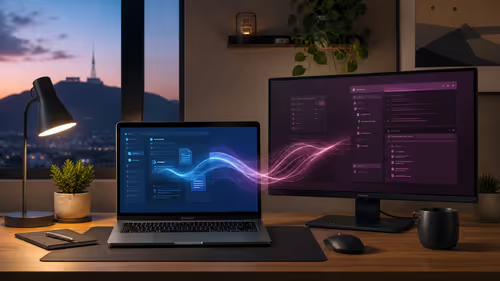
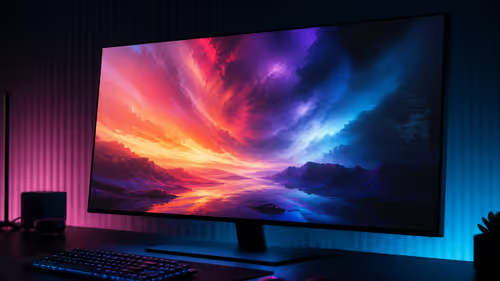
Set the monitor to its full rated refresh in Windows, then set overdrive to Normal or Medium in the monitor menu for clean transitions. Enable G-Sync to match the panel to the 5080's high frame output and keep motion clean during dips. Use a DisplayPort 1.4 cable so the panel runs at full refresh, and at 4K consider DLSS 4 Frame Generation to keep frame rates well above the panel's response window.
FAQ
Can an RTX 5080 cause ghosting?
No. The 5080 drives high, stable frame rates that improve motion clarity. Ghosting is a monitor issue from pixel response and settings, usually a refresh rate reverted to 60Hz.
How do I get clean motion from an RTX 5080?
Set the monitor to its full rated refresh, enable G-Sync, and tune overdrive to Normal. At 4K, DLSS 4 Frame Generation keeps frame rates high, which further smooths motion.
What cable suits an RTX 5080 and a high-refresh panel?
A DisplayPort 1.4 cable carries high refresh and resolution reliably, so the panel runs at full speed. An undersized cable can cap refresh and reintroduce smearing.
Display tip
The RTX 5080 is not the cause. Set the monitor to full refresh, overdrive to Normal, and enable G-Sync. Use DLSS 4 at 4K to keep frames high and motion clean.