When a Steam Deck refuses to climb past 60Hz, treat it as a configuration chain: display mode, cable, monitor menu, then driver, in that order.
Quick Answer
Open Display settings, then Advanced display, and pick the panel's top rate from the refresh-rate menu. If only 60Hz appears, swap to a DisplayPort 1.4 or HDMI 2.1 cable, enable the high-rate mode in the monitor's own menu, and set the refresh again. A 144Hz panel that trains down usually has a cable or a stale GPU driver behind it. The payoff shows up the moment you stop guessing and start testing.
Rule out the accessory, then the display
Peripherals like a mouse, headset, keyboard, DAC, or router do not set the screen's refresh rate, so do not let an unrelated upgrade distract you. Confirm the rate in display settings on the GPU output, then check the accessory's own polling or sample rate separately. Keeping the two diagnoses apart stops you chasing a refresh fault inside a device that never controlled it. Once a Steam Deck is sorted here, the rest of the diagnosis falls into place.
Use a cable rated for the refresh you want
Bandwidth is the silent killer of high refresh. A 1440p 165Hz panel needs DisplayPort 1.4 or HDMI 2.1; an older HDMI lead trains down to 60Hz to stay stable. A proper cable runs roughly R450 to R1,200, far cheaper than the GPU or monitor people replace by mistake. Plug into the dedicated GPU ports, never the motherboard, when a card is installed. Keep a Steam Deck simple here and the fix becomes obvious.
Set the rate where Windows hides it
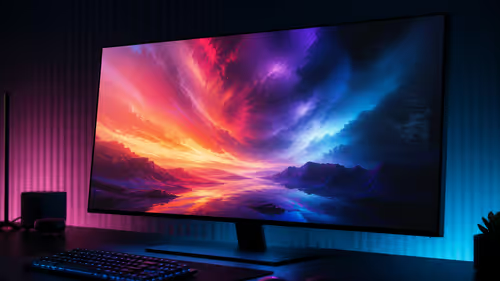
The refresh control sits under Settings, System, Display, Advanced display. Pick the highest rate listed for the active panel, not the default 60Hz. If you run more than one monitor, each is set separately, so a second screen can quietly stay at 60Hz while the main one runs high. Apply, confirm the prompt, and watch for any tearing that suggests the wrong mode. With a Steam Deck in front of you, work the check before reaching for your wallet.
FAQ
Why is my refresh rate option greyed out?
A greyed-out rate almost always means the cable cannot carry it or the panel's high-rate mode is off. Swap to a DisplayPort 1.4 or HDMI 2.1 lead, enable the OC mode in the monitor menu, then reopen Advanced display settings and the higher rates should appear. Local buyers running a Steam Deck get the steadiest result by following this order.
Should I set the rate in Windows or the GPU control panel?
Set it in both so they agree. Windows Advanced display settings is the master, but the GPU control panel can override per-game, so a mismatch causes flicker or a drop back to 60Hz. Match them, then reboot to confirm. With a Steam Deck, the proof is in repeating the same scene, not in guessing.
Will a higher refresh rate hurt performance?
A higher refresh rate only shows frames the GPU already produces, so it does not reduce performance; it just removes the artificial 60fps ceiling. If frame rate is the limit, lower a few settings rather than the panel's refresh. This is where a Steam Deck owners most often go wrong, so take it slowly.
Match the monitor to your frame rate Once the refresh is set correctly, shortlist Evetech panels whose refresh matches what your GPU delivers so you pay for frames you will actually see. This is the part seasoned local builders never skip.