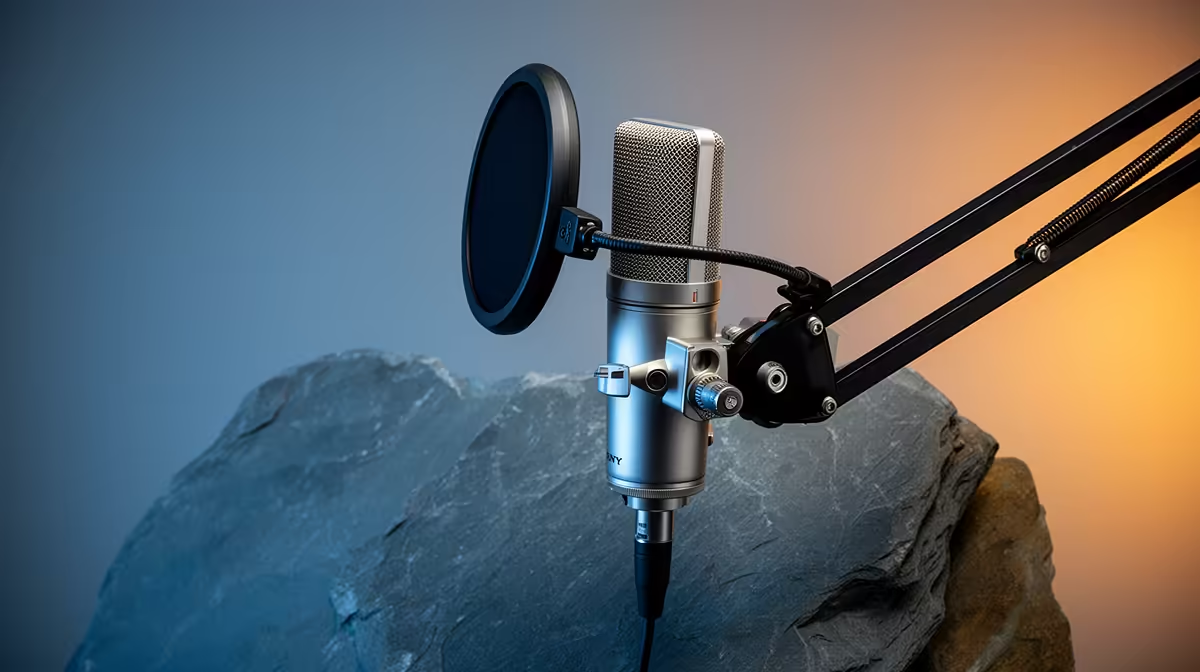
Plosives are the popping bursts of air that hit your microphone on every hard P and B sound, and they wreck an otherwise clean recording. Positioning a microphone with a pop filter and boom arm correctly stops those bursts before they reach the capsule. The short version is a screen set a few inches off the mic, the mic at mouth height, and a slight off-axis angle so your breath skims past the diaphragm rather than slamming into it.
Quick Answer
Mount the pop filter roughly two to four inches in front of the capsule, set the boom arm so the mic sits at mouth height, and angle the mic about 20 to 45 degrees off-axis so plosives glance past it. That gap and angle together diffuse the air bursts that cause popping without dulling your voice.
Set the Boom Arm First
The boom arm exists to put the microphone exactly where you want it and to keep it off the desk surface, away from keyboard thumps and mouse clicks travelling up through the wood. Clamp it to a sturdy edge of your desk, then swing it into a position where you can speak straight ahead without leaning forward or craning your neck.
Raise the mic to lip or chin height in your normal seated posture. Comfort matters more than people expect here, because a relaxed position lets you hold a consistent distance and tone through a whole session. If you find yourself stretching toward the mic, the arm is in the wrong spot, not you.
Dial In the Distance to Your Mouth
How far your mouth sits from the capsule depends on the mic. A dynamic broadcast-style mic rewards close work, around two to four inches, which adds warmth and shuts out room noise. A more sensitive condenser usually sounds better a little further back, closer to six inches, so it does not pick up every breath and lip smack. Start in that range, record a test, and adjust by feel.
The point is consistency. Once you find a distance that sounds right, the boom arm holds it there so every sentence lands at the same level.
Place the Pop Filter
Now add the pop filter between your mouth and the capsule. The sweet spot is roughly two to four inches in front of the mic, not pressed against it. That spacing gives the mesh room to break up the puff of air from a plosive before it ever reaches the diaphragm. Mount it on its gooseneck so the screen sits parallel to the front of the mic, covering the area your voice travels through.
A pop filter works by physics, not magic. The fast burst of air from a P or B sound hits the mesh, spreads out, and arrives at the capsule as a gentle, harmless flow instead of a sharp pressure spike. That is the difference between a clean take and one peppered with thumps.
The Off-Axis Trick That Does the Rest
Even with a filter, aiming your mouth dead-on at the capsule invites trouble. Angle the mic so you speak across it rather than into it, about 20 to 45 degrees to one side. Your breath then travels past the diaphragm instead of striking it head-on, which tames both plosives and harsh sibilant S and SH sounds.
This combination, a filter for the bulk of the air burst and an off-axis angle for the rest, removes nearly all popping without any software cleanup. If you are building a setup from scratch, the headphones and headset range at Evetech pairs well with a desktop mic so you can monitor your levels while you fine-tune the placement.
Test, Then Lock It In
Record yourself saying a few plosive-heavy lines, something like "Peter picked a big batch." Listen back on headphones. If you hear pops, nudge the filter slightly further out or increase the off-axis angle a touch. Once it is clean, the boom arm keeps everything fixed in place for next time. For monitoring options that make these checks easy, the headset best sellers at Evetech cover closed-back pairs that block out the room so you can hear exactly what the mic is capturing.
Frequently Asked Questions
How far should the pop filter be from the microphone?
Around two to four inches in front of the capsule. Close enough to catch the air bursts, far enough that the mesh has room to diffuse them. Pressing it right against the mic reduces its effectiveness.
What height should the microphone be on a boom arm?
At mouth height, roughly lip or chin level, in your normal seated posture. You should be able to speak straight ahead comfortably without leaning in or tilting your head down.
Does a pop filter replace the need to angle the mic?
No, they work together. The filter handles most of the plosive air, and angling the mic 20 to 45 degrees off-axis lets the remaining breath skim past the capsule rather than hitting it directly.
Why does my recording still pop with a pop filter fitted?
Usually the filter is too close to the mic, or you are speaking straight into the capsule. Move the screen a little further out and introduce a slight off-axis angle, then test again.
Why use a boom arm instead of a desk stand?
A boom arm lifts the mic off the desk surface, isolating it from keyboard and mouse vibrations, and it lets you position the capsule precisely at mouth height while freeing up desk space.
A clean voice starts with the right gear in the right place. Browse the headphones and headset range at Evetech to round out your recording setup with monitoring you can trust.