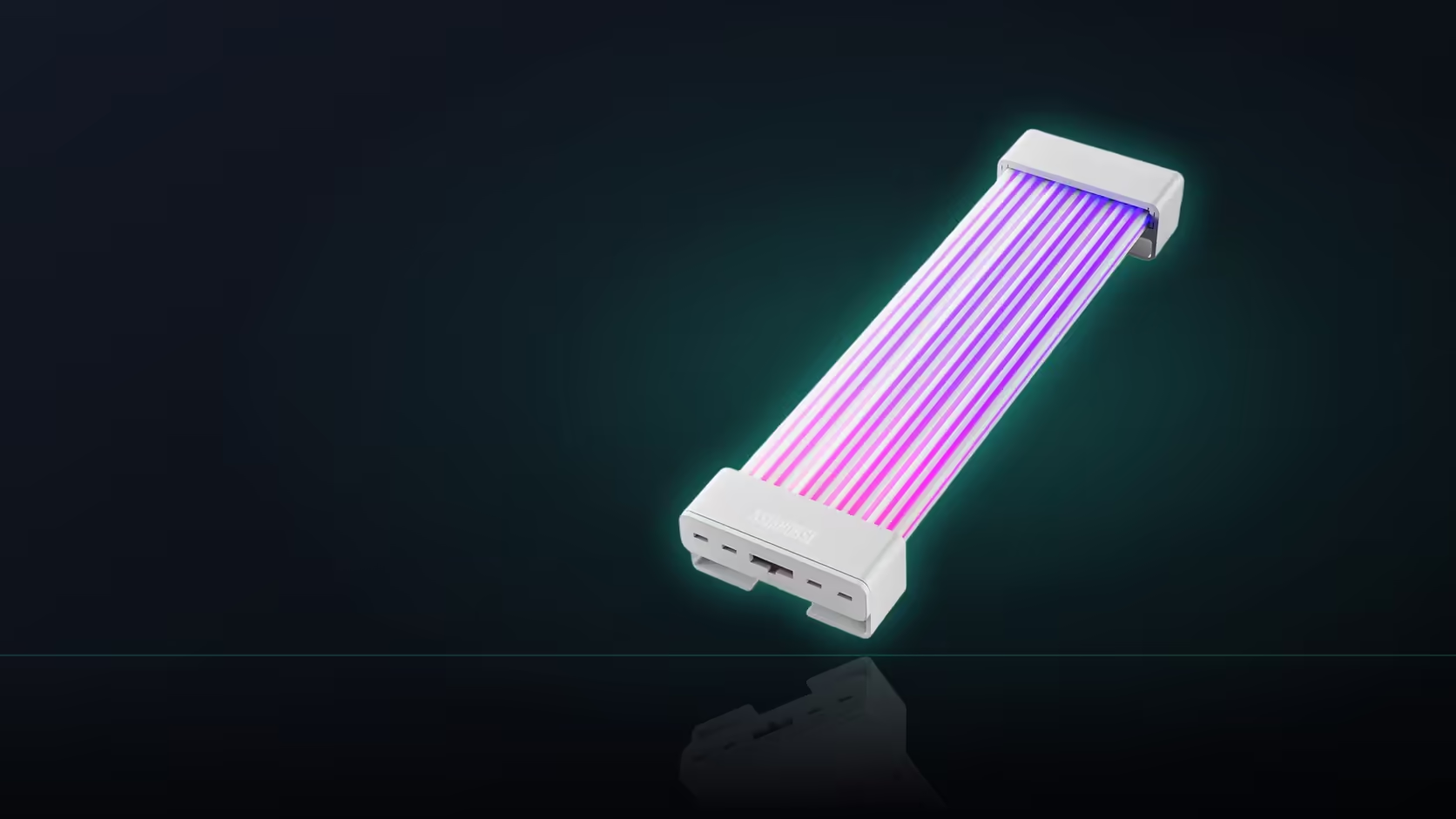
Fitting one shell at a time, clipping each on as soon as it feels right, is the fastest way through an install - and the surest way to end up with a pair that doesn't quite read as a pair once the panel's back on. AsiaHorse's Aurora ARGB cover kit genuinely rewards a slower first step: laying both shells out near the case opening before either one gets fastened.
Quick Answer
Position both shells from the Aurora kit near the case opening without clipping either one shut, then look at the pair together before committing to a final spot for either. The 24-pin cover and the eight-pin graphics cover differ in width and length, so two lit spans that each look reasonable in isolation can still read as unbalanced once both are actually in place across the case interior.
🎭 Why a dry fit beats fitting one shell at a time
The R699 kit is judged as a pair once it's lit, not as two separate decorations - and the relationship between the two spans, how they sit relative to each other across the case, only really becomes visible once both are positioned at the same time. Fitting one, clipping it shut, then moving to the second means judging the pair's balance after the first decision is already locked in.
⚖️ What actually makes a two-shell layout look unbalanced
A few things show up repeatedly: spans sitting at odd angles relative to each other rather than following some kind of visual logic, or one shell reaching deep into the case window while the other barely registers in it. Neither individually looks wrong - it's the comparison between the two that reveals the problem.
The size difference complicates this further
Because the shells differ in proportions - the board cover wider and shorter, the graphics cover narrower and longer - they were never going to read as identical elements even in a perfectly balanced layout. That's fine, but it does mean the goal isn't matching them exactly; it's finding a pairing that reads as intentional despite the difference.
📐 Should the two spans run parallel to each other?
Not necessarily, since the cable runs they follow aren't themselves parallel in most case layouts. What actually matters is that the final arrangement looks like a considered choice rather than wherever each cable happened to end up - which is a subjective call, but one that's far easier to make with both shells visible together than one at a time.
⏱️ How much time does a proper dry fit take?
A few minutes with the side panel off is the honest answer, and that's a small cost set against the alternative of unclipping and repositioning a shell that's already fastened - which, once cables are tied down and neighbouring parts are back in place, is considerably more work than getting it right the first time.
🪟 Can the panel be refitted briefly to check?
Holding it in place for a moment, even loosely, shows how much of each span the window actually frames - which is ultimately the view that matters more than how the shells look with the case fully open. It's worth doing before either shell is clipped shut for good.
🚫 What if only one position genuinely works?
Fitting one shell and leaving the other off is a legitimate outcome of a proper dry fit - better by far than forcing a second shell into a position that never looked right, purely because the kit arrived as a pair. Evetech's cable management accessories can help tidy whatever run is left uncovered in that case. And if neither shell ends up sitting right at all, the case lighting range has other directions worth exploring instead.
Frequently Asked Questions
Why dry-fit both shells rather than clipping each on as you go?
Because the pair is judged together, and the relationship between the two spans only becomes visible once both are positioned at once.
What tends to make a two-shell layout look unbalanced?
Spans sitting at odd angles to each other, or one reaching deep into the window while the other barely appears in it at all.
Does the size difference between the shells complicate this?
It does - one is wider and shorter, the other narrower and longer, so they were never going to read as identical elements.
Should the two lit spans run parallel to each other?
Not necessarily, since the cable runs themselves aren't parallel in most layouts - what matters is that the arrangement looks intentional.
How long does a proper dry fit actually take?
A few minutes with the side panel off, which is small compared with the effort of repositioning a shell that's already fastened.
Is it worth refitting the panel briefly during this process?
Yes - holding it in place shows how much of each span the window actually frames, which is the view that ultimately matters.
What if only one shell ends up with a good position?
Fitting that one alone is a legitimate outcome, and generally better than forcing the second into a spot that never looked quite right.
Planning how your two Aurora shells will sit together?
See Evetech's cable management accessories to tidy the runs before you commit to a final layout.